Skip to content
Briefings are running a touch slower this week while we rebuild the foundations.See roadmap
Iran Conflict 2026
27MAR

OFAC sanctions Hengli, China's number two teapot

4 min read
14:13UTC

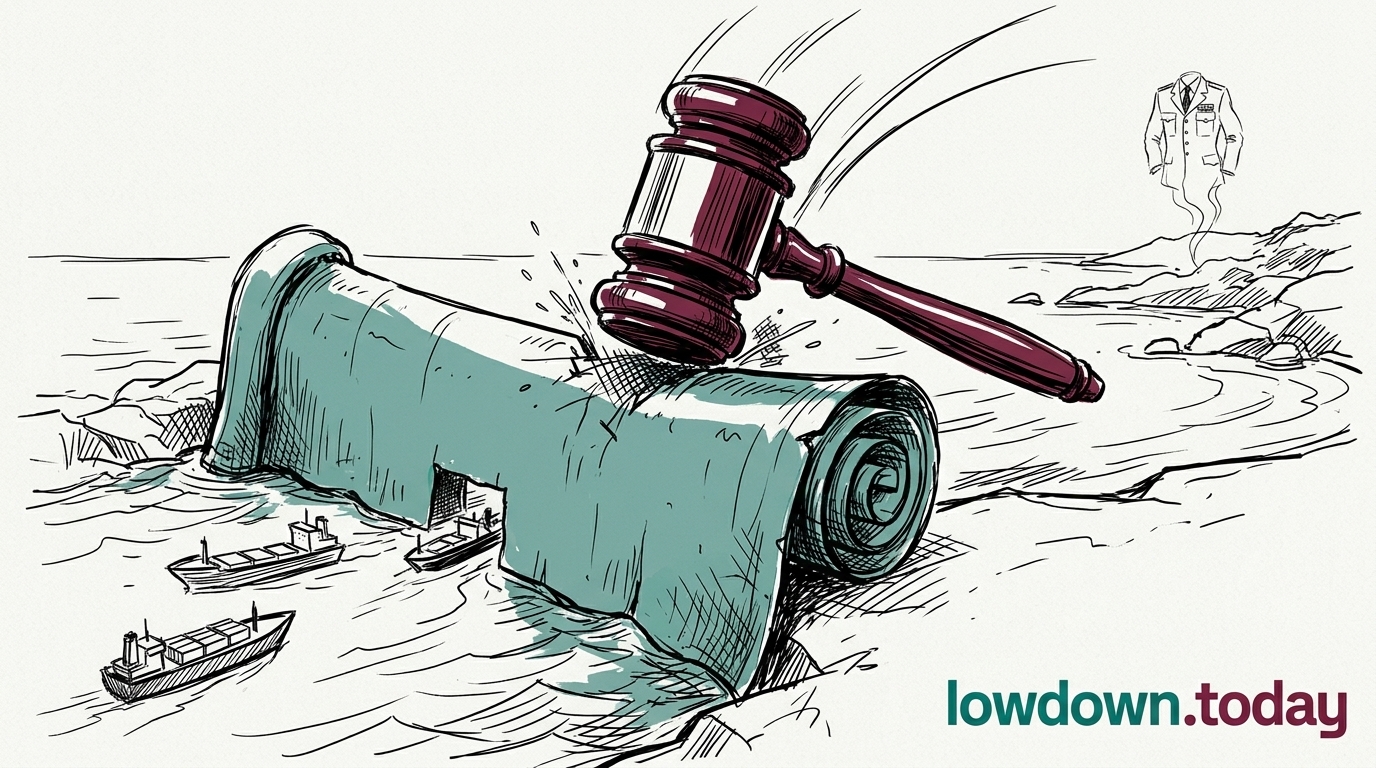
OFAC designated Hengli Petrochemical of Dalian on 24 April, the first Chinese refinery sanctioned in the 2026 war, and Treasury Secretary Scott Bessent attached nuclear-programme language to a shadow-fleet action for the first time.

ConflictDeveloping
Key takeaway

First Chinese refinery sanctioned in the war; first nuclear-programme language on a shadow-fleet action.

OFAC designated Hengli Petrochemical (Dalian) Refinery Co. Ltd on 24 April under press release sb0472, alongside 19 shadow-fleet vessels and 20 shipping companies across Hong Kong, Panama, Marshall Islands, the UAE, Vietnam, Liberia and the Cayman Islands 1. Hengli is China's second-largest independent "teapot" refinery, processing roughly 400,000 barrels per day, and the first Chinese refinery designated in the 2026 war. Five Chinese entities were already on the SDN list; Hengli is the largest by volume. It received Iranian crude from Sepehr Energy Jahan Nama Pars, the oil sales arm of Iran's Armed Forces General Staff, generating what Treasury called "hundreds of millions of dollars in revenue for the Iranian military".

Treasury Secretary Scott Bessent framed the action in terms no shadow-fleet designation has used before: "Economic Fury is imposing a financial stranglehold on the Iranian regime, hampering its aggression in the Middle East, and helping to curtail its nuclear ambitions." 2 Prior shadow-fleet rounds carried Hormuz, missile or oil-revenue framing; this is the first time Treasury press machinery has attached a nuclear-programme rationale to a teapot-refinery action.

The legal architecture matters. Shadow-fleet OFAC rounds typically sit under Executive Order 13846 (Iran sanctions) or 13224 (counter-terrorism). Nuclear framing invokes separate statutory authority under the Iran Nuclear Agreement Review Act and potentially INARA's expanded enforcement provisions, which widens the toolkit for future rounds. The action paired with the 24 April NSPM-2 missile and drone designations of fourteen targets , so Treasury produced two signed instruments inside 24 hours while the National Security Council was preparing envoys for Pakistan and was told to stand down.

Deep Analysis

In plain English

Iran sells most of its oil to China. To get around US sanctions, the oil travels on ships that hide their identity, switch flags, and use shell companies registered in places like Hong Kong, Panama, and the Cayman Islands. This network is called the 'shadow fleet'. The US has been sanctioning parts of this network throughout the war. Friday's action went further: it named Hengli Petrochemical, one of China's biggest oil refineries, as a buyer of Iranian oil that was generating hundreds of millions of dollars for the Iranian military. The most significant new element is the language Treasury Secretary Scott Bessent used: he publicly said these oil sales were funding Iran's nuclear programme. That framing matters because it signals the US may use nuclear-weapons-specific laws on top of standard sanctions, which carry heavier penalties for anyone doing business with the designated companies.

Deep Analysis
Root Causes

The Iran Nuclear Agreements Review Act (INARA) requires the administration to certify every 90 days whether Iran is compliant with nuclear commitments. Treasury has been building a sanctions architecture under NSPM-2 and the September 2025 UNSC snapback authority. Bessent's nuclear framing on the Hengli designation fills the gap between OFAC's oil-revenue authority and INARA's nuclear-programme authority, allowing Treasury to pursue both simultaneously without a new presidential executive order.

Brent closed at $105.73 on 24 April, 57% above the pre-war baseline. Designating China's second-largest teapot refinery sends a structural signal to the oil market that supply disruption is being actively tightened, reinforcing the price pressure without a new military action.

What could happen next?
  • Precedent

    The nuclear framing on a shadow-fleet designation creates a template for applying INARA enforcement provisions to oil-revenue actions, bypassing the need for new presidential executive instruments.

    Medium term · 0.78
  • Risk

    China's Ministry of Commerce may announce retaliatory trade measures against US firms operating in China in response to the Hengli designation, as it did after the Huawei action.

    Short term · 0.62
  • Consequence

    The General License V wind-down with no published deadline creates compliance uncertainty for Hengli's 400,000 b/d customer base; buyers must choose between continuing under legal risk or switching supply immediately.

    Immediate · 0.85
First Reported In

Update #79 · Islamabad 3 collapses; Witkoff grounded, talks stall

US Department of the Treasury· 25 Apr 2026
Read original
Different Perspectives
Markets
Markets
Brent crude rose 2.2 per cent to $96.34 on 10 June, reversing a 7 per cent weekly decline built on deal optimism, as the overnight exchange repriced the Strait of Hormuz risk premium in a single session. The move reflects transit-risk repricing rather than supply shock: Iran's exports had already collapsed to below 300,000 barrels per day.
Pakistan
Pakistan
Pakistan's Naqvi channel, the only mediation track carrying both civilian and military buy-in, was stress-tested by live ordnance within 48 hours of the 6-7 June Tehran visit. Whether Washington informed Islamabad of the imminent strike plan while Naqvi was in Tehran remains undisclosed, putting the channel's neutrality under scrutiny.
Kuwait
Kuwait
Kuwait hosted the third Iranian strike on its soil since the 3 June airport drone attack, with Ali Al Salem airbase targeted in the three-country salvo. Its recent $1.98 billion Anduril Anvil counter-drone purchase signals it is rearming rather than reconsidering its hosting posture.
Bahrain
Bahrain
Bahrain absorbed the IRGC barrage via PAC-3 intercepts with its magazine already at 87 per cent depletion and no resupply before 2027. Sounding air-raid sirens over Manama, it faced the intercept burden with the thinnest defensive stack in the Gulf coalition.
Jordan
Jordan
Jordan reported all five incoming missiles intercepted with no injuries and no damage, a clean defensive performance that strengthens Amman's case for staying in the Western coalition without escalating its own posture. It now sits on Iran's target list for the first time despite not being a party to the Abraham Accords confrontation.
Iran / IRGC
Iran / IRGC
Foreign Minister Araghchi posted on X that US forces should 'leave our region if you want to be safe' and framed the exchange as a US defeat, while the IRGC claimed 21 targets hit and an F-35 hangar destroyed. The claims serve a domestic and Arab-audience framing rather than a verified battle-damage assessment.