Oxford Economics assessed that Brent Crude at $140 per barrel triggers a mild global recession, with world GDP contracting by an estimated 0.7% 1. Brent peaked at $126 this week before settling around $114. Bloomberg has reported that physical crude — the barrels refiners actually purchase — is trading at an effective $126 or more due to a record $14.20 backwardation premium over futures contracts . The gap between what refiners pay today and the recessionary threshold is, in practical terms, $14.
That margin has narrowed with each week of the war. Brent sat at $67.41 before hostilities; it crossed $100 by 17 March , touched $119 on the 19th , and reached $126 by the 22nd. The trajectory tracks the IEA's finding that global output has fallen by 8 million barrels per day — a shortfall that strategic reserve releases, Venezuelan crude waivers, and Jones Act suspensions have not offset . Multiple named analysts have forecast prices well above $140: Ann-Louise Hittle of Wood Mackenzie projected $150 in the near term; Vandana Hari of Vanda Insights described $200 as "already within sight"; Adi Imsirovic of the Oxford Institute for Energy Studies called $200 "perfectly possible" . Struyven at Goldman Sachs warned that Brent could exceed its 2008 record of $147.50 if Hormuz flows remain depressed for 60 days . The war is on day 24.
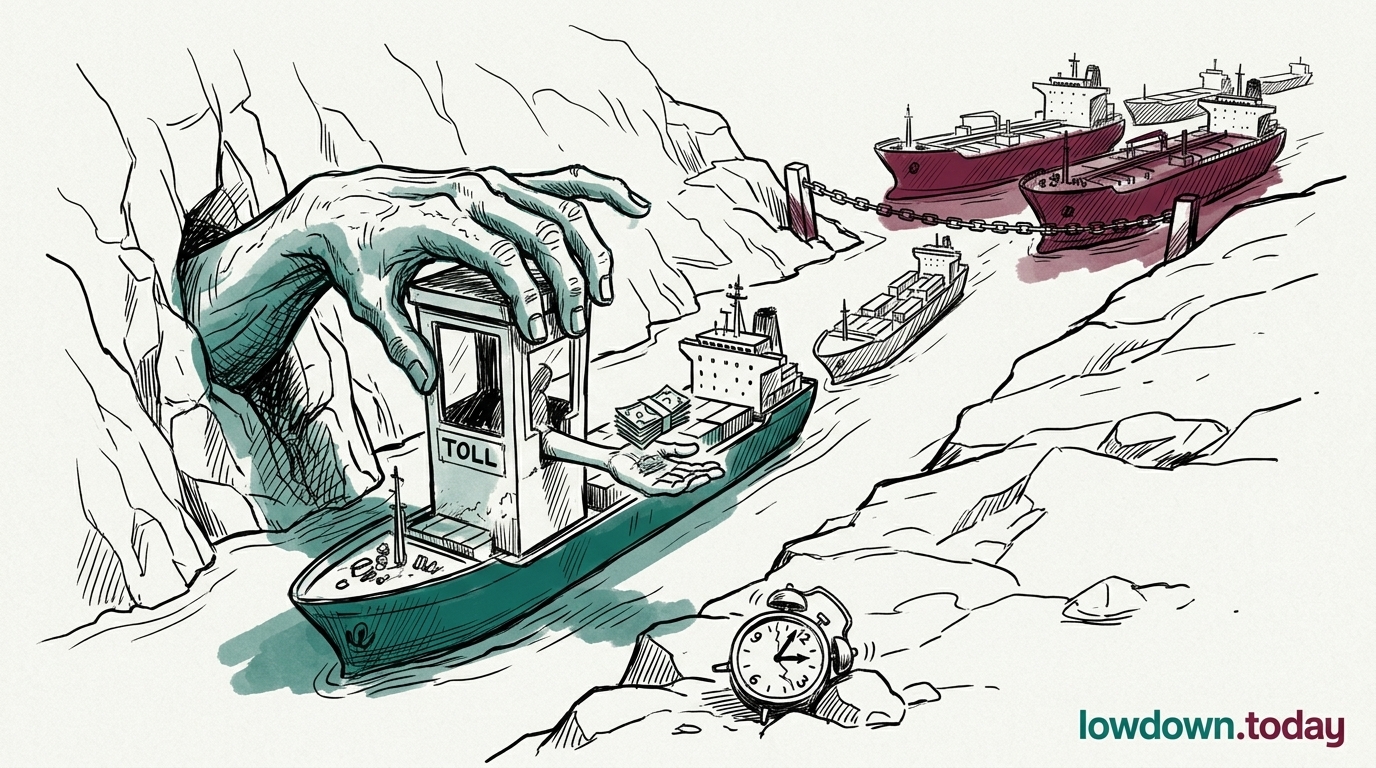
Oxford's -0.7% GDP figure describes a contraction comparable in depth to the 2001 US downturn — shallow by the standards of 2008–09, but sufficient to raise unemployment and compress government revenues across developed and developing economies simultaneously. The 1973 Arab Oil Embargo and the 1979 Iranian Revolution both produced global recessions through supply disruption; in each case, the price shock preceded the full economic contraction by six to nine months. The current disruption is more concentrated — a single chokepoint — and the conditions for reopening are moving away from resolution. Iran has linked Hormuz to the outcome of Trump's power-grid ultimatum: if US strikes destroy Iranian power plants, Tehran has threatened to close the strait indefinitely and refuse to reopen until the plants are rebuilt . That ultimatum expires tonight. Whether $140 arrives depends less on market fundamentals than on decisions being made in Washington and Tehran in the next 48 hours.