Skip to content
You can now search across every topic, entity and event.What's new
Iran Conflict 2026
21SEP

Northwood summit drafts Hormuz ROE without US

3 min read
15:34UTC

British and French planners are convening at the UK's Permanent Joint Headquarters on 20 April to draft Hormuz rules of engagement for the 40-nation Macron-Starmer maritime mission, with the United States not attending.

ConflictDeveloping
Key takeaway

Hormuz rules of engagement are being written at a British headquarters by a European coalition without the United States.

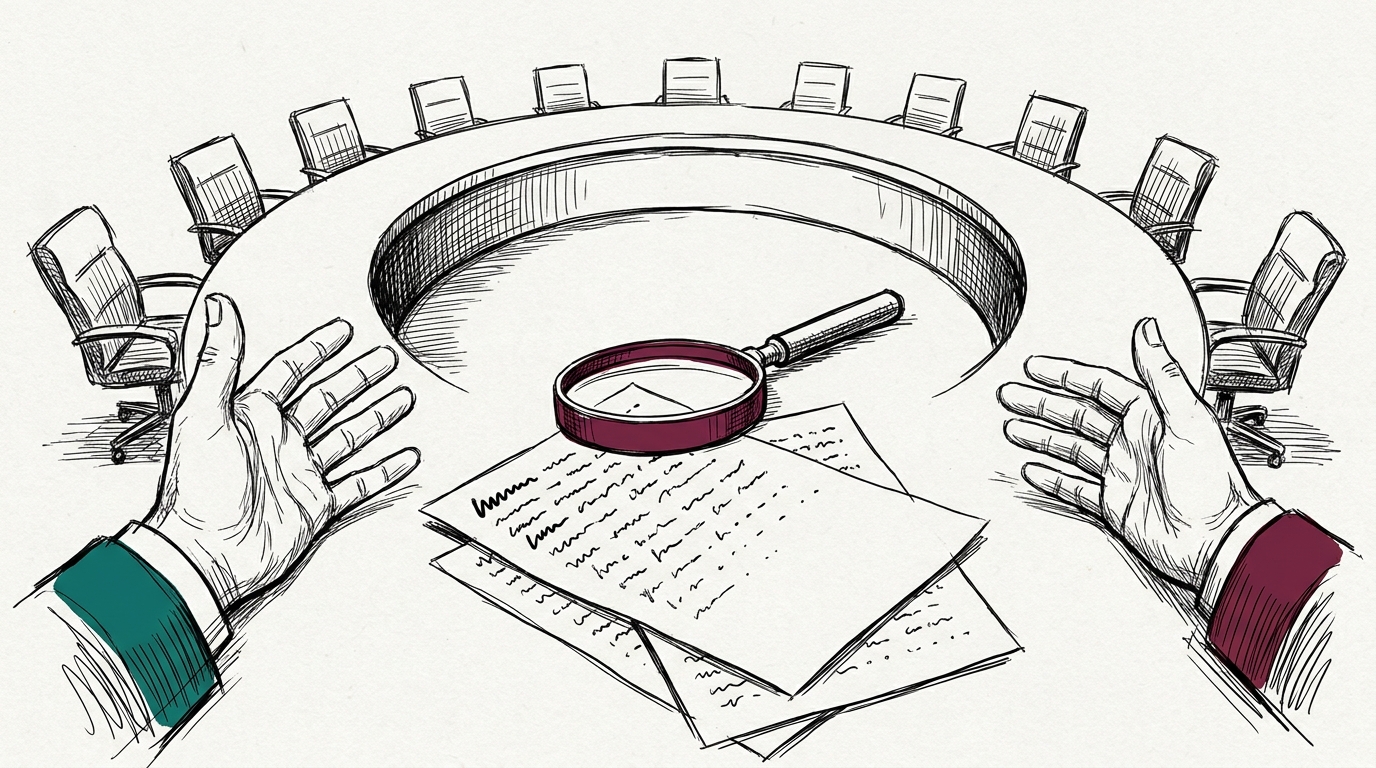
British and French planners are scheduled to convene the Northwood summit at Permanent Joint Headquarters (PJHQ), the UK's operational military headquarters in Northwood, on 20 April to draft Hormuz rules of engagement for the 40-nation Emmanuel Macron and Keir Starmer maritime mission 1. The United States has not been invited to the planning table.

Northwood was scheduled as the operational follow-on to the Paris 40-nation Hormuz conference of 17 April . Paris produced a posture; Northwood converts the posture into rules of engagement that naval commanders can carry to sea . The summit is authored by two European powers, hosted at a British operational headquarters, and staffed by planners from a coalition that has since expanded to 51 nations. Washington's absence is not a scheduling accident; it is the second Hormuz planning event in three days from which the US has been left out.

The practical question for Monday's tape is what rules the Northwood summit returns to the coalition. A maritime mission operating without published rules of engagement is a flag list; a mission with published rules is a posture. If the summit produces rules, Gulf states will have a document to sign on to ahead of the 22 April ceasefire expiry. If it does not, the 40-nation mission remains political architecture. Either way, a Hormuz security architecture authored by European powers without US participation is a new shape for the strait, and one that begins its operational life inside the same week GL-U lapses and the ceasefire is due to expire.


Deep Analysis

In plain English

Britain and France are planning a military mission to escort ships through the Strait of Hormuz ; the narrow waterway that connects the Persian Gulf to open ocean. On 20 April, military planners from Britain and France were meeting at the UK's Permanent Joint Headquarters in Northwood, a suburb of London, to write the rules for how that mission would operate. 51 nations have joined the coalition behind this mission. The United States is not one of them ; Washington has its own separate blockade operation and was not at the Northwood planning table. Northwood's planners face a specific operational problem: the IRGC granted radio clearance to two Indian tankers on 18 April and then opened fire on them anyway. Escort ships that can only respond after an attack has begun ; not before ; may arrive too late to stop IRGC gunboats that use the clearance-then-fire sequence.

Deep Analysis
Root Causes

The absence of the United States from Northwood reflects a structural reality established at the Paris conference on 17 April: Washington characterised its Hormuz posture as a blockade enforcement operation, not a freedom-of-navigation mission, making joint planning with European escorts who seek to challenge the blockade operationally incoherent.

The 40/51-nation mission's 'strictly defensive' mandate is a product of the widest-coalition consensus achievable: Saudi Arabia and Gulf Cooperation Council states have not confirmed participation, making a more assertive mandate diplomatically impossible without alienating regional partners whose port access the mission needs.

What could happen next?
  • Risk

    A 'strictly defensive' Northwood rules-of-engagement framework cannot prevent IRGC grant-and-fire attacks that begin after radio clearance ; the rules as described are structurally mismatched to the demonstrated threat.

  • Precedent

    51 nations drafting Hormuz naval rules of engagement without US participation marks the first independent European-led Gulf military planning exercise ; a precedent for autonomous European security action regardless of its operational outcome.

First Reported In

Update #73 · Russia yes, Iran no: Treasury signs only one waiver

CBS News· 19 Apr 2026
Read original
Different Perspectives
Shipping and insurance industry
UKMTO counted about 20 US-facilitated Hormuz transits a day to 11 September against only 6 visible on AIS, with traffic still around 90% below the 138-a-day pre-war baseline. War-risk underwriters cannot price hulls they cannot see, or resolve whether the tanker El Gaia hit a mine, as Iran claims, or a missile and drone, as CENTCOM says.
European refiners
European refiners
European refiners, including Poland's Orlen, absorbed a roughly $26 gap between Dated Brent at $130.80 on 15 September and ICE Brent futures settling at $103.87 on 18 September, a spread that widened from $13.45 on 9 September rather than newly opening. Their futures hedges no longer cover what they now pay for physical barrels.
Saudi Arabia
Saudi Arabia
Saudi Aramco zeroed European term customers' October allocations and rerouted roughly 60 million barrels to Asia through Ras Tanura and Sohar, using Red Sea and Gulf terminal capacity built years ago to cut Hormuz exposure. Riyadh reallocated existing supply rather than negotiating a shortfall with Europe.
Qatar
Qatar
Qatar's energy minister Saad al-Kaabi told Bloomberg at the Qatar Economic Forum on 20 September that Bessent's two-year Hormuz-obsolescence forecast is wrong, and that Doha has deliberately built no bypass pipeline. Qatar's gas exports run through one waterway by choice, not oversight.
Iran (foreign ministry and Majlis)
Iran's foreign ministry and 130 Majlis deputies moved toward NPT withdrawal this week, with lawmaker Hossein-Ali Haji Deligani filing a triple-urgency bill on 20 September that Speaker Qalibaf has not yet scheduled. Tehran treats treaty membership as leverage still on the table, not yet spent.
Russia and China
Russia and China
Moscow and Beijing vetoed the Panel of Experts' renewal, maintaining Resolution 2231 lapsed in October 2025 and the 2025 snapback was never validly triggered, so the sanctions architecture the Panel enforces has no current legal standing. Both governments frame the veto as upholding law, not shielding Tehran.



