Skip to content
You can now search across every topic, entity and event.What's new
Iran Conflict 2026
21SEP

Netanyahu sidelined by the deal on Iran

3 min read
15:34UTC

The Washington Post called the memorandum an informal referendum on Netanyahu's tenure; he was excluded from the diplomacy that ended the war and his cabinet now repudiates its terms.

ConflictDeveloping
Key takeaway

Netanyahu faces an autumn election on a deal he was excluded from negotiating.

For Benjamin Netanyahu, the deal reads at home as a verdict on him. The Washington Post called the Islamabad Memorandum of Understanding "an informal referendum on Netanyahu's tenure" ahead of Israeli elections this autumn 1; a PBS analyst called it a "strategic defeat" for Israel; Haaretz called it Netanyahu's "second worst fiasco" after 7 October 2. Critics say he led Trump into the war while overpromising the result, then misjudged the President's appetite for a long fight.

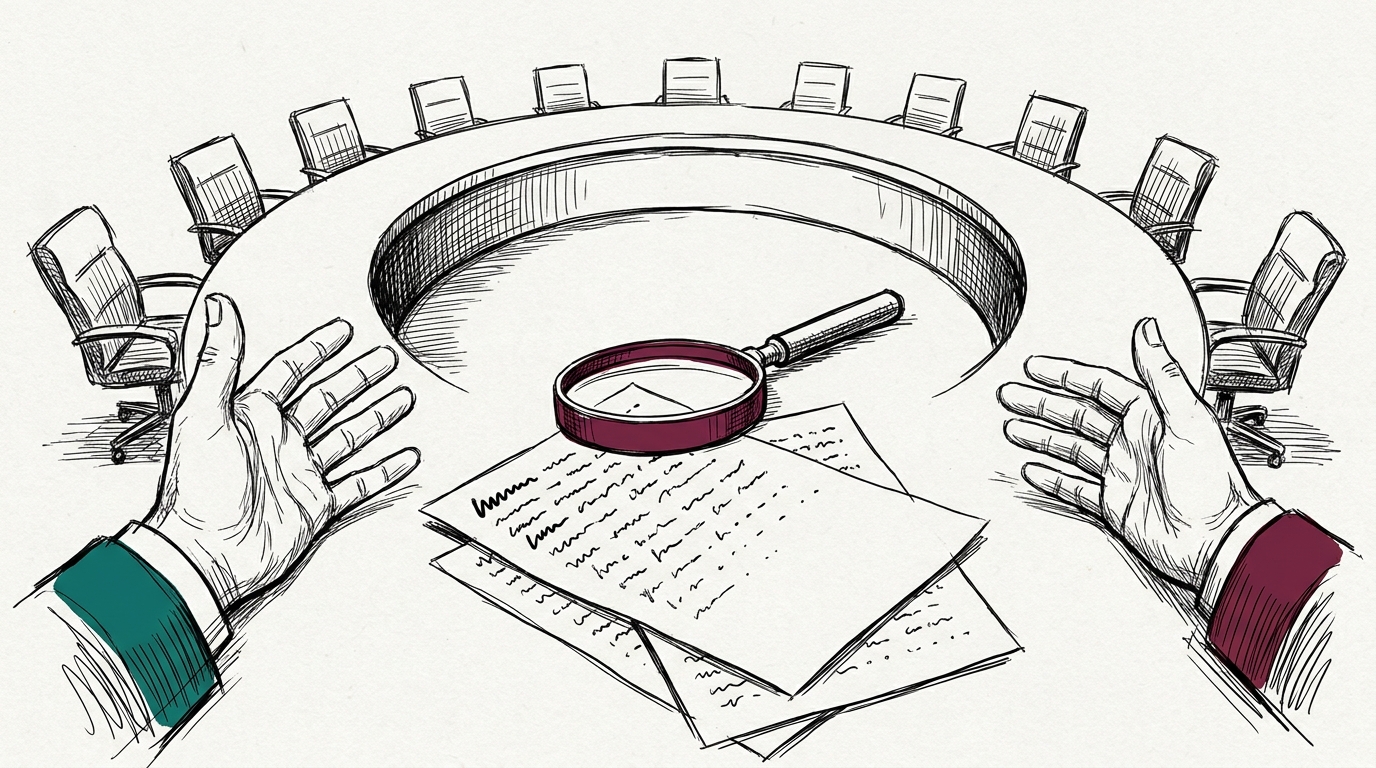
Netanyahu was sidelined from the diplomacy that ended it. The mediation ran through Qatar, Pakistan, Saudi Arabia and Turkey, none of it through Jerusalem . His own cabinet has repudiated the terms he was not consulted on: National Security Minister Itamar Ben-Gvir says "Trump's agreement does not bind us", and Finance Minister Bezalel Smotrich rejected the memorandum from the Knesset floor.

At a press conference Netanyahu insisted "as long as I am Prime Minister, Iran will not get nuclear weapons". That is a promise about the exact question the memorandum he was excluded from has deferred for 60 days. A leader who staked his standing on stopping Iran's bomb now faces an autumn election on a deal he did not write, cannot bind and which postpones the one outcome he built his career on guaranteeing.


Deep Analysis

In plain English

Israeli newspapers and media commentators are treating the Islamabad deal as a personal verdict on Benjamin Netanyahu, separate from foreign policy as a whole. He pushed the US into military action against Iran, promised it would end the nuclear threat, and found he had no seat at the table when the deal was made. Qatar, Pakistan, Saudi Arabia and Turkey ran the mediation; Netanyahu did not attend any round. The deal defers the nuclear question for 60 days, which was the exact question Netanyahu said military action would answer. His coalition partners Ben-Gvir and Smotrich have said publicly the deal does not bind Israel. Netanyahu at a press conference promised Iran would never get nuclear weapons on his watch, but the 60-day talks, from which he was excluded, now control that question.

Deep Analysis
Root Causes

Netanyahu's exclusion from the Islamabad process has a structural cause separate from any personal failing. The mediation ran through Qatar, Pakistan, Saudi Arabia, and Turkey because all four maintain active diplomatic channels with Tehran. Israel and Iran have been in active military confrontation since February 2026; no mediation requiring Iranian consent can include the party Iran is fighting as a co-mediator.

The political crisis at home follows from a promise Netanyahu could not keep: that the US military campaign, which Israel helped design, would produce verifiable Iranian nuclear disarmament. The Islamabad MOU defers that question for 60 days, which his coalition partners, Ben-Gvir and Smotrich, have read as a failure of the campaign's explicit goal.

What could happen next?
  • Risk

    If Israel's autumn election produces a coalition including Ben-Gvir and Smotrich in stronger roles, Israeli repudiation of the MOU's Lebanon terms becomes government policy rather than ministerial dissent.

  • Consequence

    Netanyahu's exclusion from the Islamabad process has permanently altered the US-Israel alliance dynamic: Washington negotiated a Middle East settlement that its closest regional partner repudiated on the day of signing.

First Reported In

Update #130 · Trump signed the war over; it kept going

Haaretz· 17 Jun 2026
Read original
Different Perspectives
Shipping and insurance industry
UKMTO counted about 20 US-facilitated Hormuz transits a day to 11 September against only 6 visible on AIS, with traffic still around 90% below the 138-a-day pre-war baseline. War-risk underwriters cannot price hulls they cannot see, or resolve whether the tanker El Gaia hit a mine, as Iran claims, or a missile and drone, as CENTCOM says.
European refiners
European refiners
European refiners, including Poland's Orlen, absorbed a roughly $26 gap between Dated Brent at $130.80 on 15 September and ICE Brent futures settling at $103.87 on 18 September, a spread that widened from $13.45 on 9 September rather than newly opening. Their futures hedges no longer cover what they now pay for physical barrels.
Saudi Arabia
Saudi Arabia
Saudi Aramco zeroed European term customers' October allocations and rerouted roughly 60 million barrels to Asia through Ras Tanura and Sohar, using Red Sea and Gulf terminal capacity built years ago to cut Hormuz exposure. Riyadh reallocated existing supply rather than negotiating a shortfall with Europe.
Qatar
Qatar
Qatar's energy minister Saad al-Kaabi told Bloomberg at the Qatar Economic Forum on 20 September that Bessent's two-year Hormuz-obsolescence forecast is wrong, and that Doha has deliberately built no bypass pipeline. Qatar's gas exports run through one waterway by choice, not oversight.
Iran (foreign ministry and Majlis)
Iran's foreign ministry and 130 Majlis deputies moved toward NPT withdrawal this week, with lawmaker Hossein-Ali Haji Deligani filing a triple-urgency bill on 20 September that Speaker Qalibaf has not yet scheduled. Tehran treats treaty membership as leverage still on the table, not yet spent.
Russia and China
Russia and China
Moscow and Beijing vetoed the Panel of Experts' renewal, maintaining Resolution 2231 lapsed in October 2025 and the 2025 snapback was never validly triggered, so the sanctions architecture the Panel enforces has no current legal standing. Both governments frame the veto as upholding law, not shielding Tehran.



