Skip to content
You can now search across every topic, entity and event.What's new
Iran Conflict 2026
21SEP

Iran studies US terms, denies any talks

4 min read
15:34UTC

Tehran says there are no negotiations — but a senior official confirms American terms arrived through mediators and are under review.

ConflictDeveloping
Key takeaway

Iran's partial CBS confirmation while publicly denying talks reveals factional signalling, not simple dishonesty.

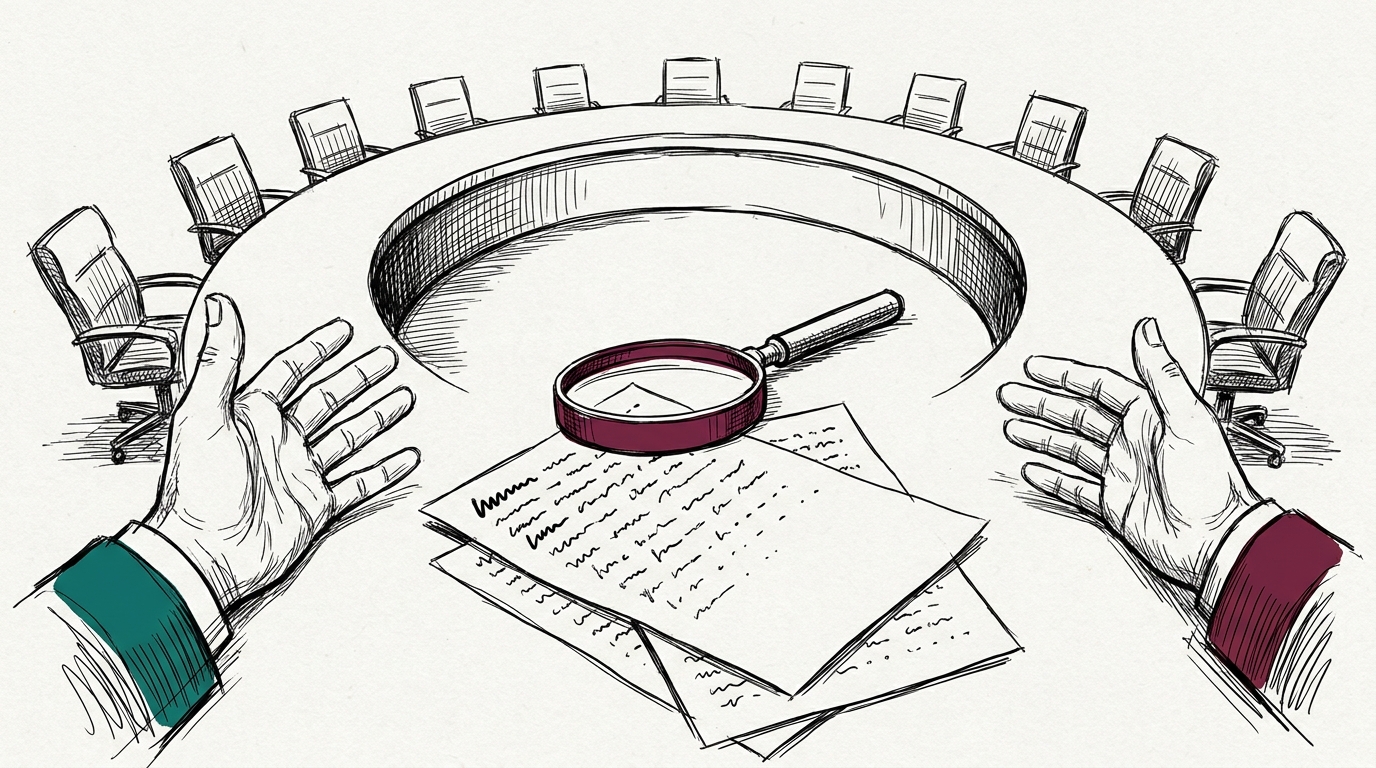
Parliamentary speaker Mohammad Bagher Ghalibaf — identified by Axios as Trump's claimed interlocutor 1 — posted that "no negotiations have been held with the US," calling Trump's claims an effort to "manipulate markets and escape the quagmire" 2. Foreign Ministry spokesman Baghaei acknowledged that "messages had been conveyed through several friendly countries" but denied direct talks. A senior Foreign Ministry official then told CBS News separately: "we received points from the U.S. through mediators and they are being reviewed" 3. Three statements, three registers, one government — each calibrated for a different audience.

The gap between public denial and private processing is where Iranian diplomacy has historically operated. During the secret Oman channel in 2012–2013 that produced the JCPOA, Tehran publicly denied bilateral contact with Washington for months while envoys met in Muscat. The Islamic Republic's political system requires that any engagement with the United States appear imposed by circumstances rather than sought — especially under a new Supreme Leader whose public absence since being named on 9 March has raised questions about whether he is functioning at all. Ghalibaf's use as a channel is itself a signal: he is the parliamentary speaker, not the foreign minister or a representative of The Supreme Leader's office. A legislative figure keeps any contact informal and deniable. Mediators are reportedly working to arrange a face-to-face meeting between him and the US delegation in Islamabad 4.

Whether that meeting happens depends on actors Ghalibaf does not control. The Jerusalem Post reported, citing unnamed sources, that the IRGC controls Mojtaba Khamenei rather than the reverse . The Guards run the Hormuz toll system — NOW collecting up to $2 million per vessel — and the daily missile volleys that have reached their 70th wave. They have no institutional incentive to negotiate away wartime authority and revenue. Ghalibaf himself ran for president in 2024 and lost to Pezeshkian; his political ambitions could be served or destroyed by association with US talks, and his emphatic public denial suggests he is hedging.

Iran's stated conditions for ending the war — articulated by Foreign Minister Araghchi on 17 March — include the removal of all US military bases from the region and reparations. Trump's 15-point list reportedly demands Iran's commitment to never possess a nuclear weapon. The distance between these positions is not a negotiating gap. It is two governments describing different conflicts. But the fact that US terms are being "reviewed" at all — after 25 days of bombardment that have killed at least 1,407 civilians including 214 children 5 — suggests that someone inside the Iranian system is looking for a door, even as the public posture remains defiance.


Deep Analysis

In plain English

Iran's most prominent officials are publicly saying 'we're not negotiating with America.' But separately, a senior foreign ministry official quietly confirmed to CBS that Iran received the US list of demands and is reviewing it. These are not confused or contradictory messages from the same people — they are targeted communications for different audiences. Ghalibaf is speaking to Iranian domestic hardliners who would view any talks as national humiliation. The foreign ministry official is keeping a diplomatic door open for the United States. Iran is managing two audiences simultaneously, which is a practised technique from its nuclear negotiation experience.

Deep Analysis
Synthesis

The divergence between Ghalibaf's categorical denial and the senior FM official's CBS confirmation suggests internal Iranian factional competition over negotiating authority, not a coordinated messaging strategy. The foreign ministry (pragmatist-aligned) is leaving a diplomatic door open; the parliamentary speaker (IRGC-linked) is closing it. These messages are directed at different principals and reflect a genuine institutional split over whether engagement under active bombardment is politically permissible.

Root Causes

Ghalibaf's specific accusation — that Trump's announcement is an attempt to 'manipulate markets' — reveals Iranian strategic awareness that the diplomatic statement was partly an information operation targeting oil prices. Iran is contesting the information warfare dimension of the US announcement, not merely disputing the factual diplomatic record. This is a more sophisticated counter-move than simple denial, and signals Iran has studied the economic architecture of US pressure.

What could happen next?
  • Meaning

    The senior FM official's CBS confirmation — 'we received points and are reviewing them' — preserves a negotiating thread that Ghalibaf's categorical public denial does not actually sever.

    Immediate · Reported
  • Risk

    If IRGC-aligned figures dominate Iran's response, any framework Ghalibaf reaches may lack the military compliance needed for implementation.

    Short term · Assessed
  • Precedent

    Iran's framing of US diplomatic announcements as market manipulation operations poisons the credibility of future US diplomatic claims in financial markets.

    Medium term · Suggested
First Reported In

Update #46 · Trump delays strikes; oil crashes to $99

NPR· 24 Mar 2026
Read original
Different Perspectives
Shipping and insurance industry
UKMTO counted about 20 US-facilitated Hormuz transits a day to 11 September against only 6 visible on AIS, with traffic still around 90% below the 138-a-day pre-war baseline. War-risk underwriters cannot price hulls they cannot see, or resolve whether the tanker El Gaia hit a mine, as Iran claims, or a missile and drone, as CENTCOM says.
European refiners
European refiners
European refiners, including Poland's Orlen, absorbed a roughly $26 gap between Dated Brent at $130.80 on 15 September and ICE Brent futures settling at $103.87 on 18 September, a spread that widened from $13.45 on 9 September rather than newly opening. Their futures hedges no longer cover what they now pay for physical barrels.
Saudi Arabia
Saudi Arabia
Saudi Aramco zeroed European term customers' October allocations and rerouted roughly 60 million barrels to Asia through Ras Tanura and Sohar, using Red Sea and Gulf terminal capacity built years ago to cut Hormuz exposure. Riyadh reallocated existing supply rather than negotiating a shortfall with Europe.
Qatar
Qatar
Qatar's energy minister Saad al-Kaabi told Bloomberg at the Qatar Economic Forum on 20 September that Bessent's two-year Hormuz-obsolescence forecast is wrong, and that Doha has deliberately built no bypass pipeline. Qatar's gas exports run through one waterway by choice, not oversight.
Iran (foreign ministry and Majlis)
Iran's foreign ministry and 130 Majlis deputies moved toward NPT withdrawal this week, with lawmaker Hossein-Ali Haji Deligani filing a triple-urgency bill on 20 September that Speaker Qalibaf has not yet scheduled. Tehran treats treaty membership as leverage still on the table, not yet spent.
Russia and China
Russia and China
Moscow and Beijing vetoed the Panel of Experts' renewal, maintaining Resolution 2231 lapsed in October 2025 and the 2025 snapback was never validly triggered, so the sanctions architecture the Panel enforces has no current legal standing. Both governments frame the veto as upholding law, not shielding Tehran.



