Skip to content
You can now search across every topic, entity and event.What's new
Iran Conflict 2026
3SEP

Iran MP confirms Hormuz toll in crypto

3 min read
16:40UTC

An Iranian lawmaker disclosed on Sunday 7 June, via IRGC-affiliated media, an official per-ship charge for Strait of Hormuz passage, taken in barter goods and cryptocurrency.

ConflictDeveloping
Key takeaway

An Iranian MP confirmed the IRGC's Hormuz toll, paid in crypto and goods to dodge dollar sanctions.

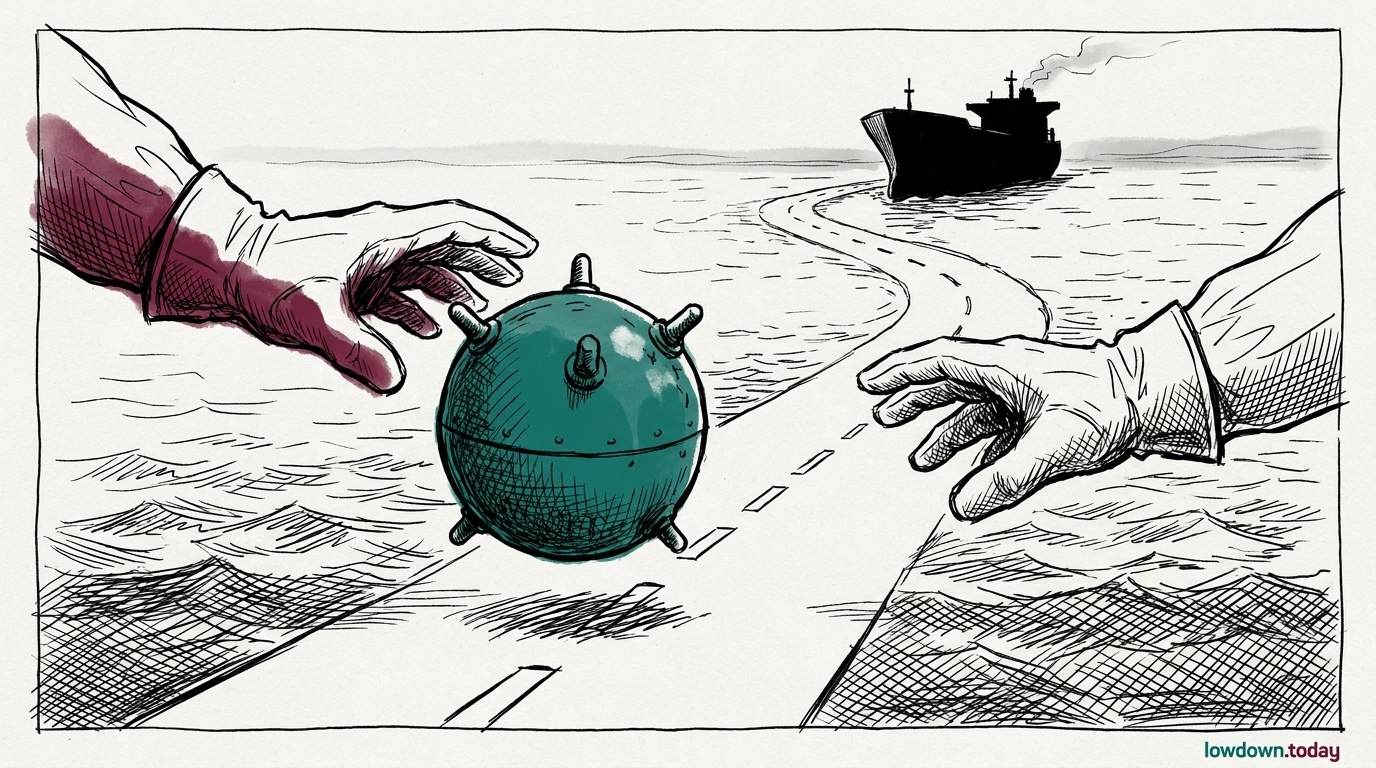
An Iranian parliamentarian disclosed on Sunday 7 June, to IRGC (Islamic Revolutionary Guard Corps)-affiliated media, an official charge of $1.5 to $2 million per ship for passage through the strait of Hormuz, paid in barter goods and cryptocurrency 1. The on-the-record confirmation and the named payment channel are the new elements; the charge had carried no acknowledged price before.

Goods and crypto settle outside the dollar-clearing system that OFAC (the US Treasury Office of Foreign Assets Control) sanctions reach. OFAC has designated Iranian crypto exchanges, yet the toll disclosure shows a goods-and-crypto rail still operating at scale. That finance mechanism, not the charge itself, is why much of the traffic pays rather than runs the US blockade.

CENTCOM (US Central Command) has redirected 127 vessels and disabled six ; the ships not on that list are, in many cases, the ones quietly paying. The operational toll system has been reported since March ; the parliamentary confirmation and the hard figure attached to it are the new beat.

This is the IRGC as revenue collector, a separate operation from the corps as missile force. The same guard that put 10 ballistic missiles onto Ramat David on Sunday is banking Hormuz transit fees in stablecoins on the same day.

Deep Analysis

In plain English

Iran's military has been charging ships a fee to pass through the Strait of Hormuz, the narrow waterway through which about a fifth of the world's oil flows. On 7 June, an Iranian member of parliament confirmed publicly that this fee is $1.5 to 2 million per ship, paid in either physical goods (barter) or cryptocurrency, not in US dollars. The reason they avoid US dollars is that the US Treasury has an agency called OFAC that can freeze or seize dollar transactions linked to Iran. Barter and crypto payments, settled outside the US banking system, are much harder to intercept. This is how Iran funds its military despite heavy US sanctions: ships pay, goods and crypto flow in, and the IRGC (Iran's elite military force) collects revenue that OFAC cannot easily touch.

Deep Analysis
Root Causes

OFAC's sanctions architecture was designed for dollar-clearing transactions: it can freeze accounts, block wire transfers, and designate institutions that process dollar payments. Barter goods settled at a Pakistani port and stablecoins routed through non-designated wallets both clear outside the dollar rails OFAC reaches.

The Persian Gulf Strait Authority (PGSA), created by Iran on 5 May 2026 as a state body, institutionalises the toll as formal sovereign revenue rather than an improvised levy, making its removal a treaty-level concession rather than a covert operation Washington can unilaterally interdict.

What could happen next?
  • Consequence

    The parliamentary confirmation makes the toll politically entrenched: any Iranian negotiator offering to end it as a concession now faces domestic opposition from Majlis figures who have publicly endorsed it as legitimate policy.

  • Risk

    OFAC's crypto-exchange designations (ID:3971) target the on-ramp layer but not the barter rail, meaning the payment channel can persist through physical goods settlement even if crypto flows are disrupted.

First Reported In

Update #121 · Trump said don't strike; Israel struck Iran

Institute for the Study of War· 8 Jun 2026
Read original
Different Perspectives
China's foreign ministry
Spokesman Lin Jian rejected Treasury Secretary Scott Bessent's 25 August warning that Iranian oil buyers face an "economic D-Day", saying sanctions do not help and that Beijing would safeguard its own rights and interests. China's Iranian crude imports had already halved for unrelated reasons.
Iraq's government and Erbil authorities
Erbil authorities said 10 explosive-laden drones were shot down over the city on 1-2 September with no casualties. Iraq's government condemned the attacks without naming Iran as their source, and neither Washington nor Baghdad confirmed the IRGC's claim to have hit US bases there.
Bahrain Defence Force
The General Command said air defences intercepted several Iranian missiles and drones on 1-2 September and called the use of such weapons against civilians and private property a flagrant violation of international humanitarian law.
Kuwait's Fire Force and foreign ministry
KUNA reported a hostile Iranian drone struck a residential complex in Kuwait City on 2 September; Fire Force spokesman Brigadier General Mohammad Al-Gharib said losses were confined to property. Kuwait's foreign ministry called the attack a clear breach of its sovereignty.
Jordan's Armed Forces
Petra carried a statement that air defences intercepted eight missiles violating Jordanian airspace early on 31 August and 10 of 13 fired on 1 September. The statement named no target and did not address the IRGC's claim to have struck Camp Titin and killed US personnel.
CENTCOM
CENTCOM
CENTCOM's 1 September target list named IRGC air defence, radar, maritime and mine-laying sites in Iran but no tanker, after Axios reported anonymous officials describing a Trump-approved "tanker for tanker" drone policy. A CENTCOM spokesman declined to confirm the policy and referred questions to policymakers.