Skip to content
You can now search across every topic, entity and event.What's new
Iran Conflict 2026
14AUG

Saudi crude abandons its Red Sea route

2 min read
09:56UTC

Saudi Arabia has loaded no crude through Bab el-Mandeb since the 23 July Houthi embargo, and 1.06 million barrels a day have poured into the Suez Canal instead.

ConflictDeveloping
Key takeaway

Saudi crude did not stop; it took the long way round through Suez at 106% higher canal traffic.

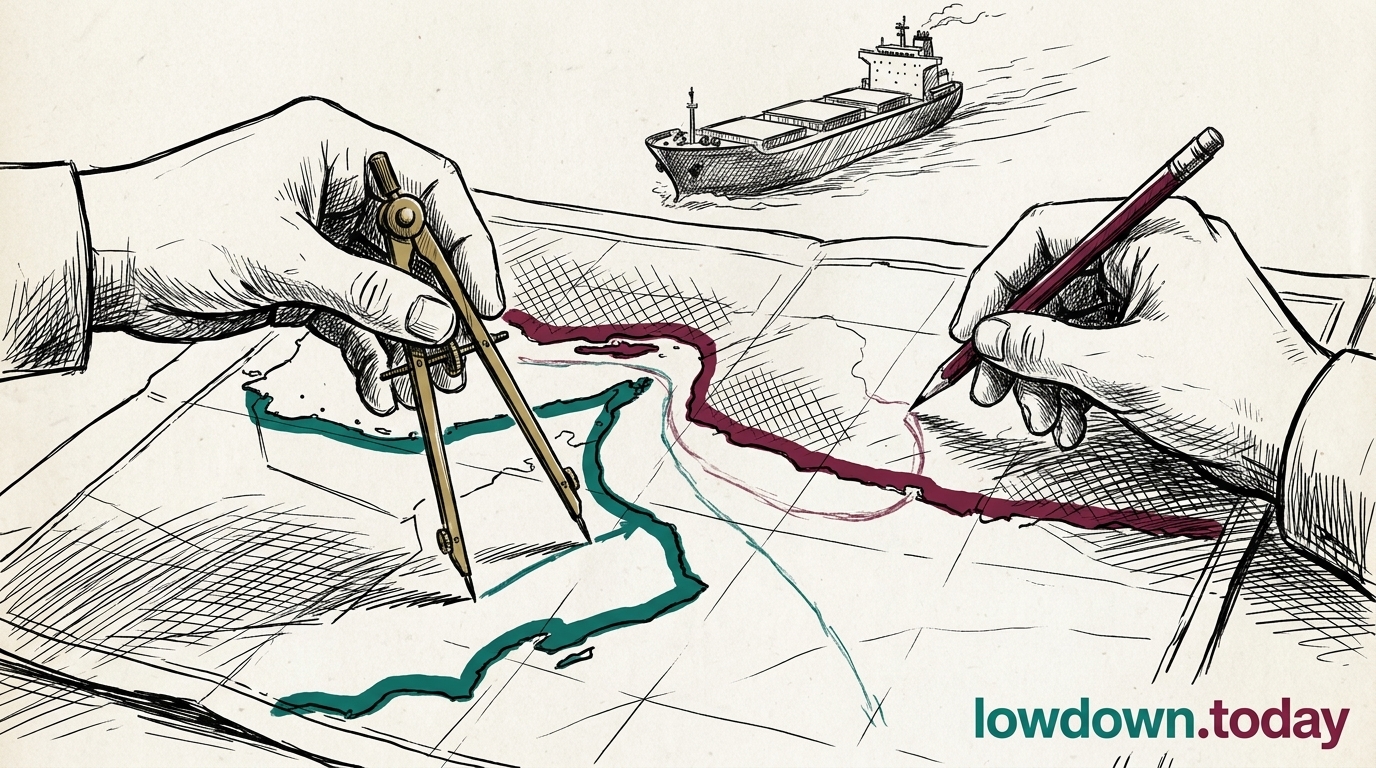
Saudi Arabia has loaded no crude for export through Bab el-Mandeb, the strait between Yemen and the Horn of Africa that links the Red Sea to The Gulf of Aden, since the Houthis declared an embargo on 23 July . The diverted volume has poured north into the Suez Canal, where crude traffic climbed 106% in a single week to 1.06 million barrels a day, on Kpler cargo tracking reported by AFP and carried on The AP and Reuters wires 1 2.

The Houthis are the armed movement that controls north-west Yemen and the eastern shore of the strait. Bab el-Mandeb is the southern gate for any Gulf cargo heading west toward Suez and the Mediterranean, so shutting it to Saudi loadings does not remove the barrels from the market; it reroutes them. Every cargo that once cleared the strait quickly now takes the long way round, and the arbitrage against Asian buyers resets with it.

To a spreads desk the position sits not in the flat price but in the physical shift. The reroute concentrates tonnage demand on the Yanbu-Suez leg, pulls crude north through a single contested corridor, and leaves the direction of Brent to swing on diplomatic headlines while the routing cost accrues on every barrel. Where that cost sits, and why the freight screens most desks read cannot see it, is the trade this week.

Deep Analysis

In plain English

Saudi Arabia normally ships crude oil out of Red Sea ports two ways: south through the Bab el-Mandeb strait near Yemen, or north through the Suez Canal towards Europe. When Yemen's Houthi rebels declared a blockade of the southern route on 23 July, tankers stopped using it completely, and traffic through Suez jumped 106% in a week to 1.06 million barrels a day. This matters because there is no easy third route; oil has to go one way or the other.

Deep Analysis
Root Causes

Saudi Red Sea crude has no third export corridor. Yanbu and Jeddah loadings must transit either Bab el-Mandeb south or the Suez/SUMED corridor north; a full Cape of Good Hope diversion adds roughly three weeks and was not attempted even during the 2024 Houthi campaign's worst weeks.

The binary nature of the route choice, rather than the Houthi threat itself, explains why the shift from partial bypass to total abandonment happened within days of the 23 July declaration instead of the gradual reallocation seen after the March peak documented by Wood Mackenzie.

What could happen next?
  • Consequence

    Suez Canal transit capacity, untested at this volume since March, becomes the binding constraint on Saudi Red Sea export flow rather than the Houthi blockade itself.

  • Risk

    A second chokepoint incident on the Suez/SUMED corridor would leave Saudi Red Sea crude with only the multi-week Cape of Good Hope diversion as a fallback.

First Reported In

Update #20 · Saudi crude reroutes to Suez, freight bites

The National· 27 Jul 2026
Read original
Different Perspectives
Zawtar municipality, Lebanon
Mayor Muhammad Ismail called the 12 August demolition of the Sheikh Naim Mahdi School the biggest blow of a month that has also taken a nursery, municipal buildings, and his own home. The school falls inside Lebanon's nominal ceasefire zone.
European Union
European Union
The EU's High Representative joined 31 other states on 13 August condemning Iran's use of the death penalty to silence dissent. The joint statement cites no single casualty figure, leaving the scale of what it condemns to three monitors that disagree with each other.
Hengaw
Hengaw
The Norway-based monitor recorded 67 Iranian executions in July alone, against the Abdorrahman Boroumand Center's full-year total of 916 and Iran Human Rights Monitor's roughly 463. None of the three reconciles its count with the other two.
Lloyd's List Intelligence and Kpler
Lloyd's List counted 78 weekly Hormuz transits to 9 August, down from 95, with non-Iranian-linked ships leaving fastest. Kpler-sourced reports for 11 August traffic diverge between outlets by more than double, leaving underwriters no single figure for the route.
United States Treasury
Treasury Secretary Scott Bessent told Newsmax on 13 August that Washington will announce measures with more detail the following week. He named no instrument, sanctions target, or effective date.
United Arab Emirates
The UAE foreign ministry named the IRGC as the perpetrator of the 13 August attack on two ADNOC vessels, called it piracy, and invoked UN Security Council Resolution 2817. The statement follows five months in which every UAE shipping claim rested on Abu Dhabi's word alone.