Skip to content
You can now search across every topic, entity and event.What's new
Iran Conflict 2026
7AUG

Yemen's front began with a blocked flight

2 min read
12:08UTC

SABA reports at least 17 soldiers killed at Saudi-backed camps in eastern Yemen, and Kpler data shows tankers thinning out of the Bab el-Mandeb.

ConflictDeveloping
Key takeaway

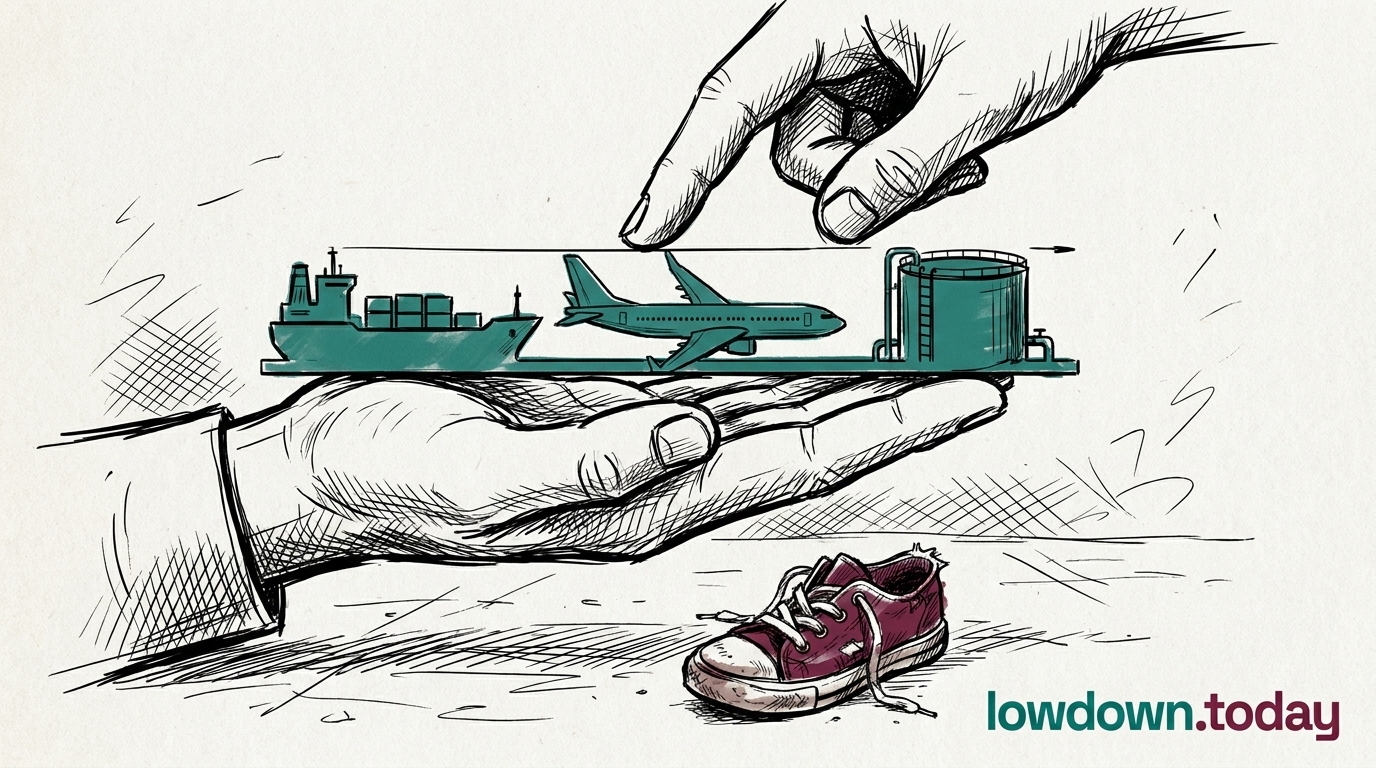
Both of the war's shipping chokepoints are tightening at the same time.

SABA (Yemen News Agency), the wire of the internationally recognised government in Aden, reported at least 17 soldiers killed at Saudi-backed camps in eastern Yemen 1. Kpler tracking data relayed by the Associated Press shows fewer tankers using the Bab el-Mandeb, the strait between Yemen and Djibouti that carries Red Sea traffic towards the Suez Canal, after the week's attacks.

AP dates the current escalation to Monday 13 July, when a Saudi strike on Sanaa airport stopped an Iranian Mahan Air flight carrying a senior delegation from the Houthis, the Iran-aligned armed movement that has held northern Yemen since 2014; the coalition later let the aircraft land at Hodeida instead 2. Since then the Houthis have struck Abha airport, Saudi shipping and Saudi oil facilities, Saudi-led forces have hit Hodeida and Kamaran, missiles and drones have landed on Yemeni military camps, and Mokha port has been damaged.

Shipping that left the Gulf had been running this way instead. Vessels now avoiding the Bab el-Mandeb have no third route to take, so the two straits tighten together rather than one relieving the other. The 2022 UN-brokered truce that held Yemen's war at a simmer for four years is at risk on AP's account.

Several operational details in that reporting rest on anonymous Yemeni, Gulf and Houthi officials. This movement has also claimed more than has been shown: on 5 August it announced two tanker strikes when UKMTO logged a single explosion , and its July claim against crude transport infrastructure was never independently verified .


Deep Analysis

In plain English

The Houthis are an armed movement that controls much of northern Yemen. Bab el-Mandeb is a narrow waterway between Yemen and Djibouti, used by ships travelling between Asia, Europe and the Red Sea. SABA reported 17 soldiers killed, while shipping data showed fewer tankers using the route. Violence in Yemen can therefore affect trade far beyond the country.

What could happen next?
  • Consequence

    Traffic disruption at Bab el-Mandeb removes part of the alternative route available to Gulf-bound shipping.

  • Risk

    Unverified claims and counter-claims may prompt ships to divert before authorities establish what happened.

First Reported In

Update #168 · Iran replaces the man who set its terms

Associated Press· 11 Aug 2026
Read original
Causes and effects
Different Perspectives
Shipping and insurance industry
UKMTO counted about 20 US-facilitated Hormuz transits a day to 11 September against only 6 visible on AIS, with traffic still around 90% below the 138-a-day pre-war baseline. War-risk underwriters cannot price hulls they cannot see, or resolve whether the tanker El Gaia hit a mine, as Iran claims, or a missile and drone, as CENTCOM says.
European refiners
European refiners
European refiners, including Poland's Orlen, absorbed a roughly $26 gap between Dated Brent at $130.80 on 15 September and ICE Brent futures settling at $103.87 on 18 September, a spread that widened from $13.45 on 9 September rather than newly opening. Their futures hedges no longer cover what they now pay for physical barrels.
Saudi Arabia
Saudi Arabia
Saudi Aramco zeroed European term customers' October allocations and rerouted roughly 60 million barrels to Asia through Ras Tanura and Sohar, using Red Sea and Gulf terminal capacity built years ago to cut Hormuz exposure. Riyadh reallocated existing supply rather than negotiating a shortfall with Europe.
Qatar
Qatar
Qatar's energy minister Saad al-Kaabi told Bloomberg at the Qatar Economic Forum on 20 September that Bessent's two-year Hormuz-obsolescence forecast is wrong, and that Doha has deliberately built no bypass pipeline. Qatar's gas exports run through one waterway by choice, not oversight.
Iran (foreign ministry and Majlis)
Iran's foreign ministry and 130 Majlis deputies moved toward NPT withdrawal this week, with lawmaker Hossein-Ali Haji Deligani filing a triple-urgency bill on 20 September that Speaker Qalibaf has not yet scheduled. Tehran treats treaty membership as leverage still on the table, not yet spent.
Russia and China
Russia and China
Moscow and Beijing vetoed the Panel of Experts' renewal, maintaining Resolution 2231 lapsed in October 2025 and the 2025 snapback was never validly triggered, so the sanctions architecture the Panel enforces has no current legal standing. Both governments frame the veto as upholding law, not shielding Tehran.



