Skip to content
Welcome, thoughtbot's Giant Robots listeners!Start here
Iran Conflict 2026
7AUG

Yanbu funnels nine-tenths of Saudi crude

2 min read
12:08UTC

Yanbu, the Red Sea terminal that handled 92% of Saudi seaborne crude in June, is now shipping about 3.75 million barrels a day, with 62% of it bound for Asian refiners.

ConflictDeveloping
Key takeaway

Yanbu now carries most of Saudi seaborne crude, sending 62% east and leaving the Atlantic basin dry.

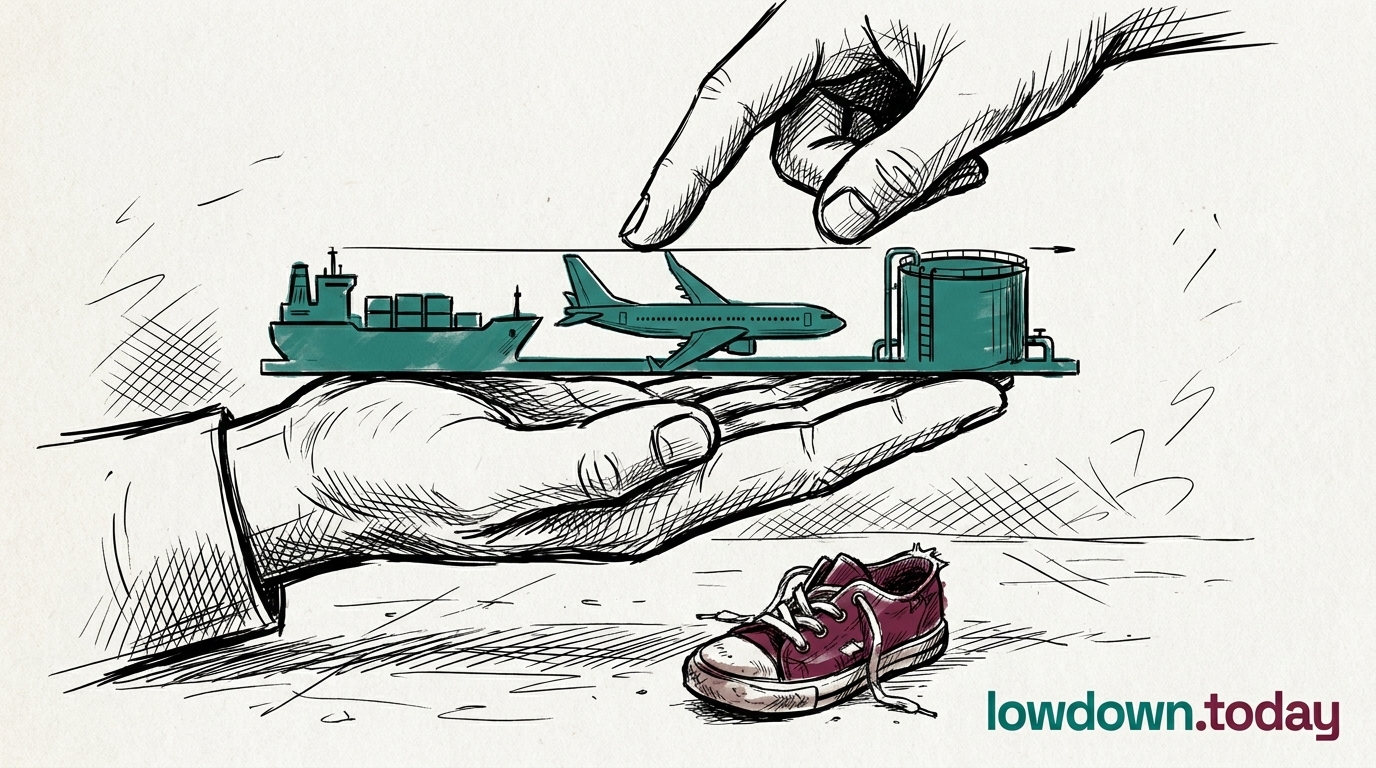
Yanbu, the Saudi Red Sea port that handled 92% of The Kingdom's seaborne crude exports in June, is now shipping about 3.75 million barrels a day of crude and condensate, Vortexa estimates, with 62% bound for India, Japan, China and South Korea⁠1. Yanbu sits on the western coast, north of the Bab el-Mandeb chokepoint the 23 July embargo closed to Saudi loadings, which is why the reroute has funnelled so much flow through it.

A single terminal carrying that share of a major exporter's crude concentrates the risk. It puts an entire seaborne supply chain behind one port and one corridor, so any further disruption to the Red Sea approach hits nine-tenths of the flow at once rather than a slice of it.

For desks pricing Brent-Dubai relative demand, the split between Atlantic and Middle Eastern grades, the destination mix matters more than the raw volume. The barrels are clearing east into Asian refiners while the Atlantic basin sees almost none of them. The reroute therefore tightens Suez tonnage without loosening European crude supply, so the tension shows up in freight and in the East-West arbitrage rather than in the Brent flat price.

Deep Analysis

In plain English

Saudi Arabia has several ports it can ship oil from, but right now almost all of it, 92% in June, goes through one terminal called Yanbu on the Red Sea coast. That is because a pipeline crosses the country specifically to feed Yanbu, letting oil skip the risky Strait of Hormuz. With the southern sea route also blocked, Yanbu has become The Kingdom's near-only export point, which means any problem there, a fire, an equipment fault, bad weather, would hit a much bigger share of Saudi oil exports than it normally would.

Deep Analysis
Root Causes

The Petroline pipeline crosses Saudi Arabia east to west specifically so crude can bypass Hormuz; that design choice means any Hormuz-related routing pressure funnels disproportionately onto Yanbu, the pipeline's Red Sea terminus, rather than distributing across The Kingdom's other ports.

With Bab el-Mandeb now closed as well, Yanbu has become the only viable outlet for both the pipeline's normal flow and the crude previously exported via the southern route, concentrating risk at a single physical point that has no operational twin.

What could happen next?
  • Risk

    A single operational disruption at Yanbu now threatens a much larger share of Saudi export capacity than it would under normal multi-terminal routing.

  • Consequence

    Asian refiners receiving 62% of Yanbu's flow become more exposed to any Yanbu-specific outage than they were when Saudi exports were split across the Red Sea and Gulf coasts.

First Reported In

Update #20 · Saudi crude reroutes to Suez, freight bites

AFP / AP / Reuters (Kpler and Vortexa data)· 27 Jul 2026
Read original →
Causes and effects
This Event
Yanbu funnels nine-tenths of Saudi crude
One terminal moving the overwhelming share of the kingdom's export crude puts an entire seaborne supply behind a single stretch of contested water, and sends most of it east rather than into the Atlantic basin.
Different Perspectives
Office for Budget Responsibility
The OBR's 28 October forecast assumed $82 oil for 2026 and 2027, from market prices for the ten working days to 19 August, and blamed dearer wholesale energy on the war without naming Iran. It expects CPI inflation close to 4% in early 2027 even at that price.
Hengaw, Kurdish rights group
Hengaw reported the 3 November hangings of Amirhossein Maleki and Amirhossein Ebrahimi in Isfahan, saying Ebrahimi was tortured into confessing and that nine of 12 people sentenced to death in the case have now been hanged. Iran's judiciary holds that the defendants killed members of the security forces.
FINTRAC, Canada's financial intelligence unit
FINTRAC worked with the US Treasury on the 6 November designation of eight money services businesses in British Columbia, Ontario and Quebec. Treasury says the businesses still operate, some under new names, so closing them falls to Ottawa.
Abdul Qadir al-Dakhil, Governor of Nineveh
Al-Dakhil cancelled three Mosul International Airport contracts on 7 November over alleged links to armed groups, after meeting Prime Minister Ali al-Zaidi in Baghdad. He named no group or company, and said the contracts will go to international companies.
Kuwait
Kuwait
Kuwait condemned the Houthi missile fired towards the Madinah region on 5 November and restated its support for Saudi Arabia, the Qatar News Agency reported. Its state tanker company, Kuwait Oil Tankers Company, is among the Gulf state fleets on Iran's expanded Hormuz list.
Scott Bessent, US Treasury Secretary
Treasury designated an alleged Chandigarh false-flag network on 4 November and eight Canadian exchangers on 6 November, while State sanctioned alleged MANPADS intermediaries. None of the actions touches an oil buyer; they target the paper, cash and procurement around Iran's trade.

Written with AI from Lowdown's published reporting. Not individually reviewed by an editor. Editorial standards.
