Skip to content
You can now search across every topic, entity and event.What's new
Iran Conflict 2026
31JUL

US warships transit Hormuz for mines

3 min read
09:24UTC

CENTCOM sent two destroyers through the strait on 11 April; the IRGC denied entry and threatened reprisal.

ConflictDeveloping
Key takeaway

CENTCOM's mine clearance during live talks signals the US is building a military track alongside diplomacy.

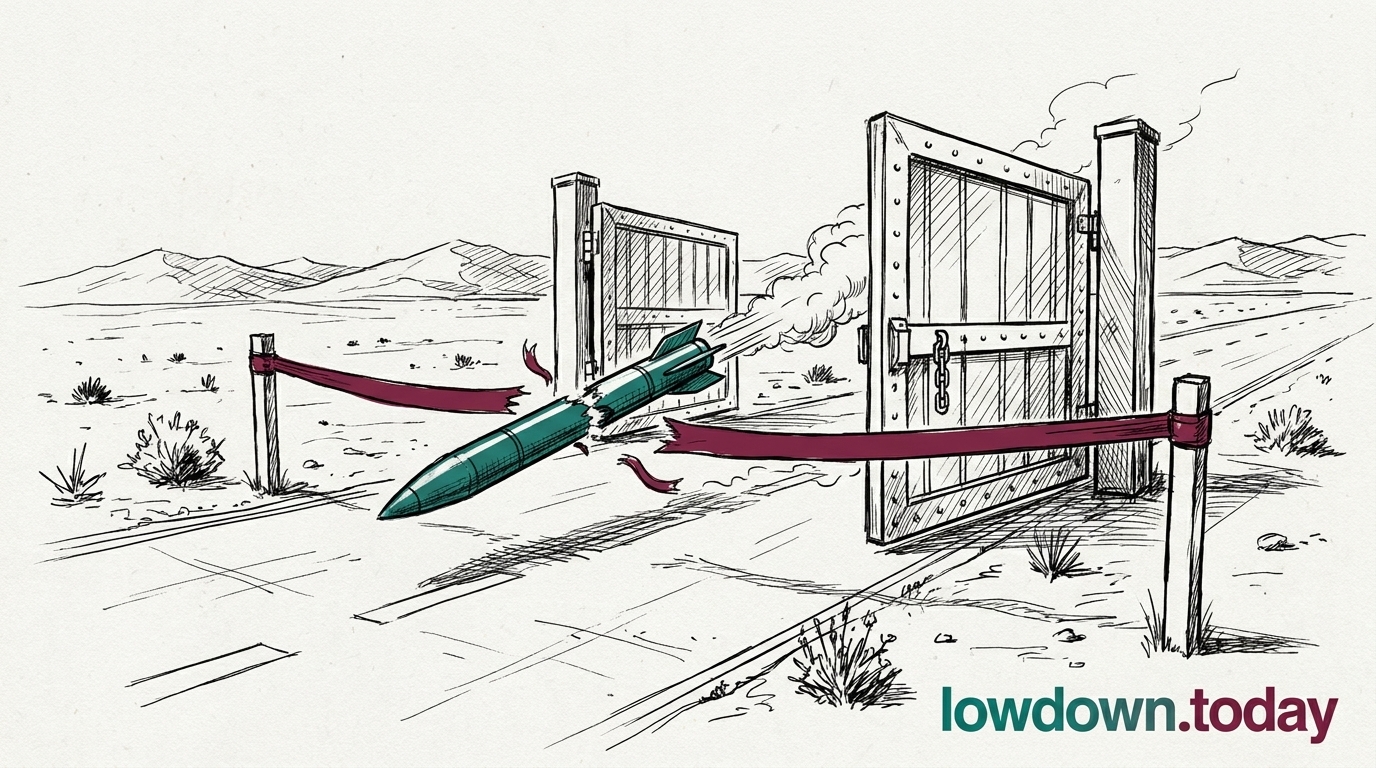
CENTCOM (US Central Command) announced on 11 April that USS Frank E. Petersen Jr. and USS Michael Murphy transited the Strait of Hormuz as part of a mine clearance mission. The operation was launched while Day 1 of the Islamabad talks was still under way. Trump framed it as "a favour to countries all over the world, including China, Japan, South Korea, France, Germany."

The IRGC Navy denied the ships had entered the strait at all, a direct contradiction of CENTCOM's own press release. Its statement went further: "Any attempt by military vessels to pass through the strait of Hormuz will be dealt with severely." The denial is notable because CENTCOM published the ships' names and mission profile; either the IRGC did not detect the transit or chose to deny it publicly while responding through other channels.

The operation is consistent with reporting that Iran deployed at least a dozen naval mines (Maham-3 moored and Maham-7 seabed limpet models) without systematically tracking every placement . Iran's inability to locate all its own mines created the operational rationale: the US framed clearance as a global service, not an act of aggression.

The timing carries its own message. Sending warships through a mined strait while your vice president is negotiating in a hotel 2,400 km away is not an accident. It sets a parallel track: diplomacy in Islamabad, military facts on the water. If the IRGC follows through on its threat, the confrontation would collapse the ceasefire window entirely.


Deep Analysis

In plain English

The Strait of Hormuz is the narrow channel through which about a fifth of the world's oil normally flows. Iran placed naval mines in the water to block it during the war. The US Navy sent two destroyers to start clearing those mines, on the same day that diplomats from both sides were sitting down for talks in Islamabad. Iran said the ships never actually entered the strait, which directly contradicts the US military's own announcement. The practical problem: even if the mines were cleared, Iran says the strait 'will never return to its previous status', meaning they intend to keep controlling who passes through. So clearing the mines physically does not solve the political problem of Iran's control over the waterway.

Deep Analysis
Root Causes

Iran's mine deployment without systematic tracking (established at ) was almost certainly a doctrinal choice rather than an operational failure: by seeding mines whose locations were not fully mapped, the IRGC ensured that any mine clearance operation would require prolonged foreign military presence in the strait, creating a permanent provocation it could exploit.

CENTCOM's decision to run the operation on Day 1 of the Islamabad talks reflects a US doctrine of maintaining freedom of navigation as non-negotiable regardless of diplomatic context, the same doctrine that produced Operation Praying Mantis in 1988.

What could happen next?
  • Risk

    An unintentional mine contact by either CENTCOM vessel during the clearance operation, or by any of the 600-plus stranded vessels in the Gulf, would trigger an escalation sequence with no ceasefire management mechanism in place.

    Immediate · High
  • Consequence

    The IRGC's public denial that US ships entered the strait creates an information environment where any subsequent incident can be characterised by Iran as unprovoked, pre-positioning Tehran's narrative for escalation.

    Short term · High
  • Precedent

    If the US completes mine clearance without Iranian military response, it establishes the precedent that CENTCOM can operate in the strait during an active ceasefire without Iranian permission, a significant shift in the operational baseline.

    Medium term · Medium
First Reported In

Update #66 · Islamabad collapses: 10 days to expiry

CENTCOM· 12 Apr 2026
Read original
Different Perspectives
Shipping and insurance underwriters
Underwriters can price Houthi strikes because the group announces its targets, but an unclaimed drone at Damietta and a mandatory Iranian insurance scheme both deny them a pattern to price against. War-risk premiums are increasingly being set by the absence of a claimant, not the scale of the damage.
Jordan
Jordan
Azraq absorbed its fourth Iranian strike in seven weeks, again drawing no direct Jordanian retaliation, only an American one. Amman's exposure, hosting US basing without the Patriot density of Gulf allies, has not changed even as the war around it widens.
Houthi movement
Houthi movement
The Houthis' 20 July blockade of Saudi-linked shipping is the injury Riyadh's new 43-nation coalition directly answers, yet the group itself was never asked to join and remains outside every proposal on the table. Sanaa-aligned commentators call the coalition a paper reassurance for insurers rather than a deployable force.
Egypt's Cabinet
Egypt's Cabinet
Egypt confirmed the Damietta blaze was an attack, not an accident, on soil the war had never touched before. Cairo now faces an unclaimed threat to a facility supplying roughly 7% of its domestic gas, with no author to hold accountable and no pattern yet to defend against.
Oman
Oman
Muscat is running the only channel Iran will use, a voluntary Hormuz fee modelled on Malacca, but stayed out of Saudi Arabia's new naval coalition entirely. Oman's mediating leverage depends on treating Hormuz as shared and non-exclusive, the opposite of what Tehran is now demanding of it.
Iraq's Prime Minister
Al-Zaidi cancelled his first official Riyadh visit and convened the Coordination Framework, the coalition that keeps him in power and whose factions sit inside the PMF that Saudi jets just struck. He is caught between a five-year Saudi investment relationship and armed groups inside his own state he does not fully control.



