Skip to content
You can now search across every topic, entity and event.What's new
Iran Conflict 2026
31JUL

Truxtun and Mason run the gauntlet

3 min read
09:24UTC

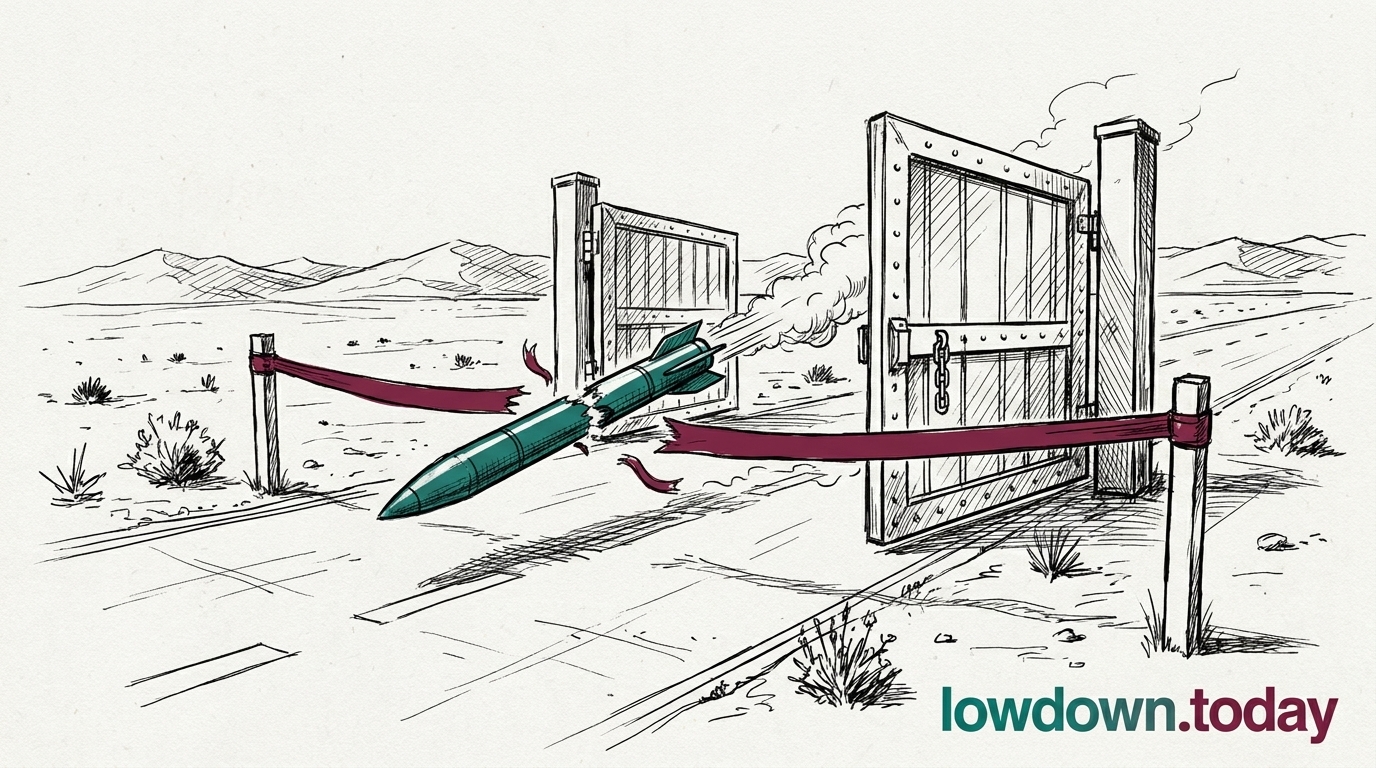
USS Truxtun and USS Mason completed the first armed Hormuz escort transit on 4 May under sustained IRGC fire, sinking six to seven Iranian small craft and shepherding two American-flagged merchant vessels through unscathed.

ConflictDeveloping
Key takeaway

American destroyers won the first contact; Iran's territorial claim over the strait was untouched.

USS Truxtun (DDG-103) and USS Mason (DDG-87) made the first successful armed escort transit of the Strait of Hormuz under sustained IRGC (Islamic Revolutionary Guard Corps) fire on Monday 4 May, the opening day of Project Freedom . CENTCOM (US Central Command) said its destroyers defeated 'each and every threat' from small boats, cruise missiles and drones; attack helicopters and naval gunfire accounted for the losses, with CBS News reporting seven Iranian craft sunk and Al Jazeera six 1. Two American-flagged merchant vessels followed the destroyers through. No US casualties; both ships unscathed.

The attacks came from the Bandar Abbas flotilla, with cruise missiles from IRGC Navy coastal batteries and drones launched from southern provinces 2. Iran claimed it had hit a US naval vessel, a claim CENTCOM denied 3. The boat-loss count matters because the IRGC told the Majlis (Iran's parliament) on Saturday 2 May that 60 per cent of its small attack-boat fleet had survived the opening Israeli airstrikes . On Tehran's own arithmetic, six or seven losses is a tolerable rate of attrition: the doctrine that treats the strait as home water remained intact through the contact.

The Truxtun and Mason transit ran through a corridor Iran's elected legislature now treats as territorial. The Majlis National Security Commission ratified a 12-article Hormuz sovereignty law on 2 May , built on Mojtaba Khamenei's written claim of 'new management' over the waterway . CENTCOM's written order, like the version issued before Project Freedom, covers Iranian-port traffic only and does not incorporate Trump's Truth Social toll-interdiction provision . The American flag passed through the channel; the Iranian institutional claim over it did not move.


Deep Analysis

In plain English

Two US Navy destroyers sailed through the Strait of Hormuz on 4 May while Iran fired missiles, drones and fast-attack boats at them. Both destroyers shot down every attack and came through without a scratch. Two American cargo ships behind them completed the journey safely. The Strait of Hormuz is a narrow waterway between Iran and the Arabian Peninsula through which about a fifth of the world's oil passes. Iran has been blocking ships since late February. This was the US Navy's first attempt to force a ship through under fire, and it worked militarily. But Iran lost only a handful of small boats, and its threat to keep attacking has not gone away.

Deep Analysis
Root Causes

The doctrinal asymmetry behind this engagement runs to 1979: the IRGC Navy was constitutionally designed to be a politicised guerrilla force inside the regular navy's structure, not a symmetric peer. Its small-boat doctrine derives from the Iran-Iraq 'tanker war' (1984-1988), when speedboat swarms and Silkworm missiles proved more cost-effective than the conventional surface engagements Iran lost.

CENTCOM's written operational order for Project Freedom was never published in the Federal Register, and no presidential executive instrument has appeared on the White House actions index across 67 days of conflict.

A commander executing a mission with no executive instrument cannot publicly define escalation thresholds, which is why CENTCOM reported the 4 May engagement as purely 'defensive' while simultaneously confirming six to seven Iranian craft destroyed. That gap in the legal record gives the IRGC a standing information advantage in any post-engagement narrative contest.

What could happen next?
  • Consequence

    IRGC will now calibrate follow-on attacks based on the ammunition and kill-chain data revealed by the 4 May engagement, making the next escort transit higher-intensity.

    Short term · 0.72
  • Precedent

    The first successful contested escort transit sets a legal and operational precedent that Project Freedom can be repeated, increasing pressure on Iran to negotiate before the pause ends.

    Immediate · 0.81
  • Risk

    Without a signed AUMF, CENTCOM cannot define escalation thresholds publicly; any Iranian escalation to anti-ship ballistic missiles produces a presidential decision with no institutional guardrails.

    Short term · 0.68
First Reported In

Update #89 · Truxtun gets through; Trump pulls back

Al Jazeera· 6 May 2026
Read original
Different Perspectives
Shipping and insurance underwriters
Underwriters can price Houthi strikes because the group announces its targets, but an unclaimed drone at Damietta and a mandatory Iranian insurance scheme both deny them a pattern to price against. War-risk premiums are increasingly being set by the absence of a claimant, not the scale of the damage.
Jordan
Jordan
Azraq absorbed its fourth Iranian strike in seven weeks, again drawing no direct Jordanian retaliation, only an American one. Amman's exposure, hosting US basing without the Patriot density of Gulf allies, has not changed even as the war around it widens.
Houthi movement
Houthi movement
The Houthis' 20 July blockade of Saudi-linked shipping is the injury Riyadh's new 43-nation coalition directly answers, yet the group itself was never asked to join and remains outside every proposal on the table. Sanaa-aligned commentators call the coalition a paper reassurance for insurers rather than a deployable force.
Egypt's Cabinet
Egypt's Cabinet
Egypt confirmed the Damietta blaze was an attack, not an accident, on soil the war had never touched before. Cairo now faces an unclaimed threat to a facility supplying roughly 7% of its domestic gas, with no author to hold accountable and no pattern yet to defend against.
Oman
Oman
Muscat is running the only channel Iran will use, a voluntary Hormuz fee modelled on Malacca, but stayed out of Saudi Arabia's new naval coalition entirely. Oman's mediating leverage depends on treating Hormuz as shared and non-exclusive, the opposite of what Tehran is now demanding of it.
Iraq's Prime Minister
Al-Zaidi cancelled his first official Riyadh visit and convened the Coordination Framework, the coalition that keeps him in power and whose factions sit inside the PMF that Saudi jets just struck. He is caught between a five-year Saudi investment relationship and armed groups inside his own state he does not fully control.



