Skip to content
You can now search across every topic, entity and event.What's new
Iran Conflict 2026
31JUL

Iran zone now spans Fujairah, Khorfakkan

4 min read
09:24UTC

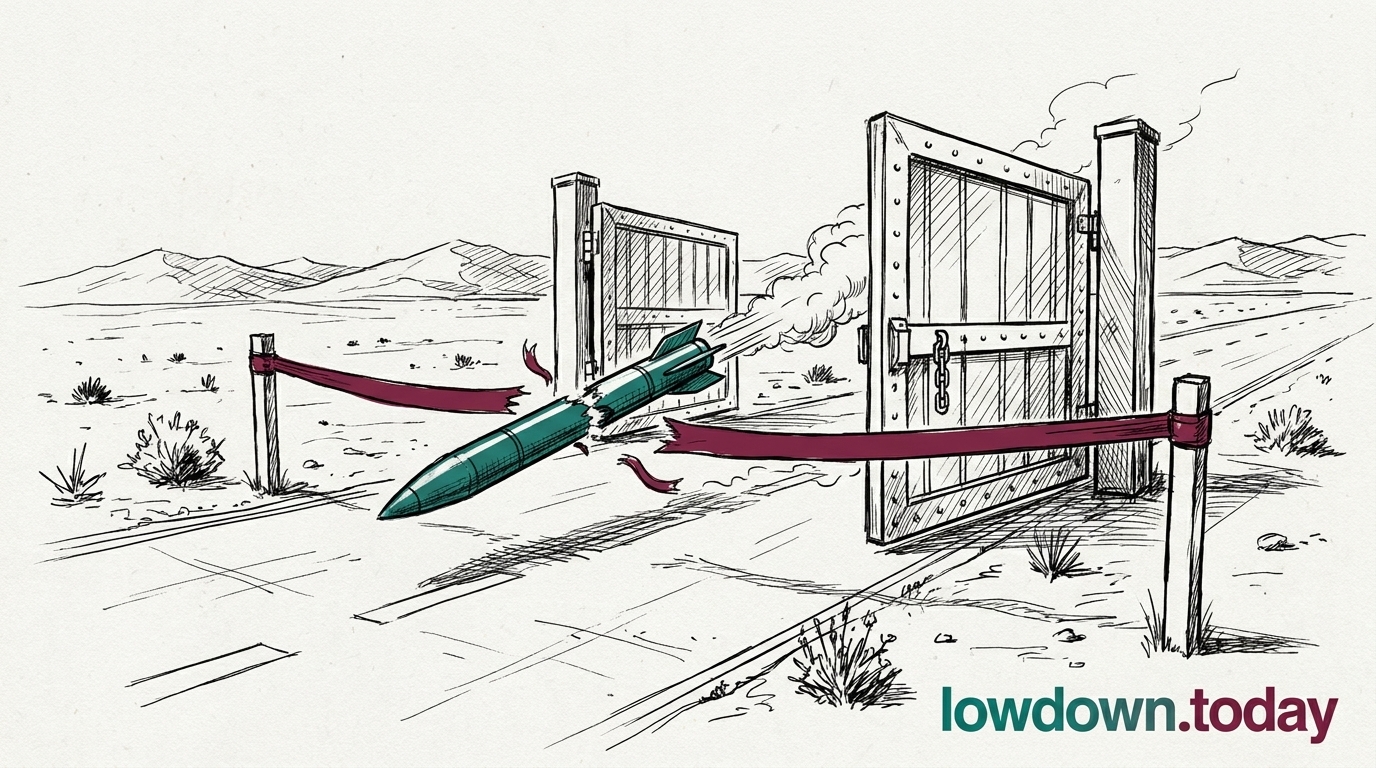
Iran extended its declared maritime control area over Fujairah and Khorfakkan on 4 May, then struck the Fujairah oil terminal with drones and missiles, the first attack on the UAE since the 16 April Trump ceasefire.

ConflictDeveloping
Key takeaway

Iran's expanded zone closes the UAE's bypass ports; the Trump ceasefire remains the named regime.

Iran extended its declared maritime control area on Monday 4 May to cover Fujairah and Khorfakkan, the two Gulf of Oman ports the UAE relied on to bypass the blocked Strait of Hormuz 1. Iranian drones and missiles struck the Fujairah oil terminal the same day, the first attack on UAE territory since the Trump ceasefire of 16 April. UAE air defences engaged 15 missiles and four drones; one drone got through and sparked a fire at the terminal, wounding three Indian nationals 2. A UAE-linked tanker was struck twice in the strait, and South Korean-operated HMM Namu (Hyundai Merchant Marine) caught fire while at anchor off the UAE the same day.

The expansion drags two Emirati ports inside the kinetic zone for the first time in the war. Fujairah and Khorfakkan sit on The Gulf of Oman side of the peninsula and were the workaround the UAE used to keep crude flowing while the strait was closed; Iran's announcement removes the workaround. Emirati shippers that diverted to Fujairah after the 28 February escalation are now back inside the same risk envelope they thought they had left behind. UAE quit OPEC (Organisation of the Petroleum Exporting Countries) on Friday 1 May and turned to Asian buyers when Brussels declined the first post-conflict tanker ; the new zone closes the maritime route for that trade until either the Iranian announcement is rolled back or Emirati air defences carry the full intercept load.

Pete Hegseth, the US Defence Secretary, told reporters the ceasefire 'remains in place' despite the kinetic exchange, the first explicit administration position that engagement and ceasefire status can coexist 3. The contradiction is now operational policy: the Trump 16 April ceasefire still names the regime even as Iranian munitions land on UAE soil and American destroyers sink Iranian small craft in the same week.


Deep Analysis

In plain English

Iran struck a major oil port in the United Arab Emirates on 4 May and simultaneously declared that the UAE's two main bypass ports are now inside its military control zone. Since Iran blocked the Strait of Hormuz in mid-April, ships had been rerouting through UAE ports to avoid the strait. Iran has now closed that workaround too. Fujairah, the port that was struck, is one of the world's biggest ship-refuelling hubs. UAE air defences shot down 15 of the 19 incoming missiles and drones, but one drone got through and started a fire; three Indian workers at the terminal were wounded in the strike. Iran had not struck the UAE since a ceasefire was announced in mid-April; 4 May broke that three-week lull.

Deep Analysis
Root Causes

The Fujairah bypass route exposed a structural gap in Iran's toll enforcement: vessels rerouting around Hormuz through Fujairah and Khorfakkan were generating zero toll revenue for the IRGC and demonstrating to global shippers that alternatives existed. The IRGC's doctrine requires there to be no viable alternative; the existence of a functioning bypass contradicted the enforcement architecture the Majlis sovereignty law created.

India's stake is the second structural driver: three of the injured workers at Fujairah were Indian nationals, and Indian shipping has been the largest non-Chinese user of the Fujairah bypass since mid-April. The strike functionally ends India's ability to claim neutral status while continuing to use Fujairah as its primary Gulf energy logistics hub.

What could happen next?
  • Consequence

    India's ability to maintain diplomatic neutrality collapses if Fujairah remains inside the Iranian enforcement zone, as Indian nationals and Indian-routed energy cargoes are now directly at risk.

  • Risk

    The elimination of the Fujairah bypass closes the last commercially viable alternative routing, concentrating all price pressure on a single Hormuz chokepoint and raising the floor for any insurance-market re-opening.

First Reported In

Update #89 · Truxtun gets through; Trump pulls back

CBS News· 6 May 2026
Read original
Different Perspectives
Shipping and insurance underwriters
Underwriters can price Houthi strikes because the group announces its targets, but an unclaimed drone at Damietta and a mandatory Iranian insurance scheme both deny them a pattern to price against. War-risk premiums are increasingly being set by the absence of a claimant, not the scale of the damage.
Jordan
Jordan
Azraq absorbed its fourth Iranian strike in seven weeks, again drawing no direct Jordanian retaliation, only an American one. Amman's exposure, hosting US basing without the Patriot density of Gulf allies, has not changed even as the war around it widens.
Houthi movement
Houthi movement
The Houthis' 20 July blockade of Saudi-linked shipping is the injury Riyadh's new 43-nation coalition directly answers, yet the group itself was never asked to join and remains outside every proposal on the table. Sanaa-aligned commentators call the coalition a paper reassurance for insurers rather than a deployable force.
Egypt's Cabinet
Egypt's Cabinet
Egypt confirmed the Damietta blaze was an attack, not an accident, on soil the war had never touched before. Cairo now faces an unclaimed threat to a facility supplying roughly 7% of its domestic gas, with no author to hold accountable and no pattern yet to defend against.
Oman
Oman
Muscat is running the only channel Iran will use, a voluntary Hormuz fee modelled on Malacca, but stayed out of Saudi Arabia's new naval coalition entirely. Oman's mediating leverage depends on treating Hormuz as shared and non-exclusive, the opposite of what Tehran is now demanding of it.
Iraq's Prime Minister
Al-Zaidi cancelled his first official Riyadh visit and convened the Coordination Framework, the coalition that keeps him in power and whose factions sit inside the PMF that Saudi jets just struck. He is caught between a five-year Saudi investment relationship and armed groups inside his own state he does not fully control.



