Skip to content
You can now search across every topic, entity and event.What's new
Iran Conflict 2026
31JUL

Iran's UN mission claims unlimited enrichment right

3 min read
09:24UTC

Iran's Permanent Mission at the UN told reporters on 2 May there is 'no legal limit' on uranium enrichment under IAEA supervision, the first explicit unlimited-rights claim since the Agency was locked out on 11 April.

ConflictDeveloping
Key takeaway

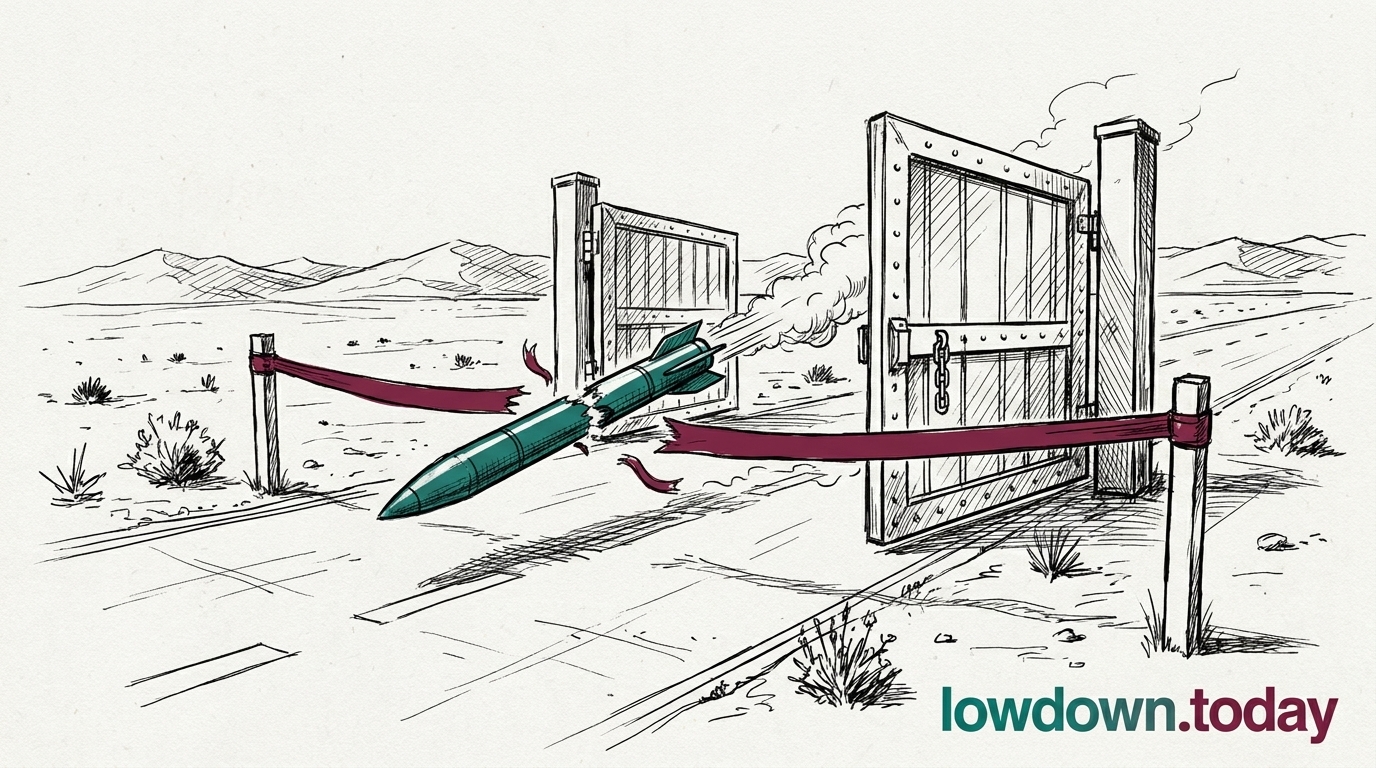
Iran asserts an enrichment ceiling tied to inspectors it refuses to readmit, holding both positions in parallel.

Iran Permanent Mission to the United Nations told reporters in New York on 2 May that there is 'no legal limit' on the level of uranium enrichment, provided it is conducted under IAEA supervision 1. The IAEA is the International Atomic Energy Agency, the United Nations watchdog tasked with verifying that nuclear material is not diverted to weapons. Iran's mission added that its 'entire stockpile of enriched uranium has been under full supervision of the IAEA and there has been no report of any diversion'. The statement is the first explicit Iranian legal claim of unlimited enrichment rights since the war began.

The Majlis voted 221-0 on 11 April to suspend all IAEA cooperation, and the Agency has had no on-site access since the Israeli strikes . IAEA Director-General Rafael Grossi told the Associated Press on 29 April that 18 containers of 60%-enriched uranium were sealed in the Isfahan Uranium Conversion Facility tunnel in June 2025 and are 'likely still' there, with no inspector confirmation since . The mission claims supervision as the legal foundation; the parliament vote and the Isfahan lockout removed supervision in practice. The two positions cannot both be operative.

Tehran is reserving a legal posture for whatever inspection mechanism eventually returns, while declining to readmit the inspectors who would test it. Negotiating posture and operational reality stay on separate ledgers, leaving the mission free to advance the legal claim because no one in Vienna can currently verify or refute it. The ceiling argument also reframes any future Western demand for sub-20% enrichment as a political concession by Tehran rather than a treaty obligation, since under the mission's reading there is no treaty obligation to concede. The 18 sealed Isfahan containers are the unverifiable hinge between the legal claim and the physical facts.


Deep Analysis

In plain English

Iran's representative at the United Nations told reporters on 2 May that Iran has no legal ceiling on how highly it can enrich uranium, as long as the United Nations nuclear inspectors are watching. The catch: those inspectors were locked out of Iran on 11 April after Iran's parliament voted to suspend all nuclear cooperation, and they still have no access. So Iran is claiming a legal right that depends on oversight it has blocked. The UN nuclear agency's chief said on 29 April that 18 containers of highly enriched uranium are sitting in a sealed Iranian bunker with nobody able to check what is in them.

Deep Analysis
Root Causes

Araghchi's enrichment rights claim ties directly to Iran's ceasefire negotiating position: if Tehran accepts a weapons-level enrichment cap before a ceasefire is signed, it loses the nuclear leverage that is its primary strategic currency. By asserting unlimited rights now, while the IAEA is locked out and cannot measure the actual enrichment level, Iran preserves the ambiguity that prevents any pre-ceasefire nuclear settlement from locking in a number.

The specific formulation 'no legal limit provided IAEA supervision applies' is careful: it conditions unlimited rights on a supervision mechanism that does not currently exist. Tehran is simultaneously asserting maximum rights and providing a diplomatic off-ramp (restore inspection access and we will accept the supervision condition) without naming the terms of that restoration.

What could happen next?
  • Risk

    Iran's claim of unlimited enrichment rights under a supervision framework it has simultaneously blocked removes the only technical basis on which the US could claim a ceasefire agreement includes nuclear disarmament; it separates the ceasefire from the nuclear file more explicitly than any previous Iranian statement.

  • Precedent

    The legal formula 'unlimited rights under IAEA supervision' establishes an Iranian negotiating floor that any post-war agreement must either accept or explicitly override, constraining future Iranian governments from accepting a lower enrichment cap without parliamentary amendment.

First Reported In

Update #87 · China blocks OFAC; Iran writes; Trump tweets

Iran Permanent Mission to the United Nations (via PressTV)· 3 May 2026
Read original
Different Perspectives
Shipping and insurance underwriters
Underwriters can price Houthi strikes because the group announces its targets, but an unclaimed drone at Damietta and a mandatory Iranian insurance scheme both deny them a pattern to price against. War-risk premiums are increasingly being set by the absence of a claimant, not the scale of the damage.
Jordan
Jordan
Azraq absorbed its fourth Iranian strike in seven weeks, again drawing no direct Jordanian retaliation, only an American one. Amman's exposure, hosting US basing without the Patriot density of Gulf allies, has not changed even as the war around it widens.
Houthi movement
Houthi movement
The Houthis' 20 July blockade of Saudi-linked shipping is the injury Riyadh's new 43-nation coalition directly answers, yet the group itself was never asked to join and remains outside every proposal on the table. Sanaa-aligned commentators call the coalition a paper reassurance for insurers rather than a deployable force.
Egypt's Cabinet
Egypt's Cabinet
Egypt confirmed the Damietta blaze was an attack, not an accident, on soil the war had never touched before. Cairo now faces an unclaimed threat to a facility supplying roughly 7% of its domestic gas, with no author to hold accountable and no pattern yet to defend against.
Oman
Oman
Muscat is running the only channel Iran will use, a voluntary Hormuz fee modelled on Malacca, but stayed out of Saudi Arabia's new naval coalition entirely. Oman's mediating leverage depends on treating Hormuz as shared and non-exclusive, the opposite of what Tehran is now demanding of it.
Iraq's Prime Minister
Al-Zaidi cancelled his first official Riyadh visit and convened the Coordination Framework, the coalition that keeps him in power and whose factions sit inside the PMF that Saudi jets just struck. He is caught between a five-year Saudi investment relationship and armed groups inside his own state he does not fully control.



