Skip to content
You can now search across every topic, entity and event.What's new
Iran Conflict 2026
31JUL

EU targets shadow fleet operators

4 min read
09:24UTC

With 1,337 ships in Russia's shadow fleet, Brussels abandons vessel-by-vessel seizures for a systemic assault on the shipowners, brokers, and registries that keep the fleet running.

ConflictDeveloping
Key takeaway

Targeting brokers, registries, and insurers could collapse shadow fleet viability — but only if China's enabling role is simultaneously addressed.

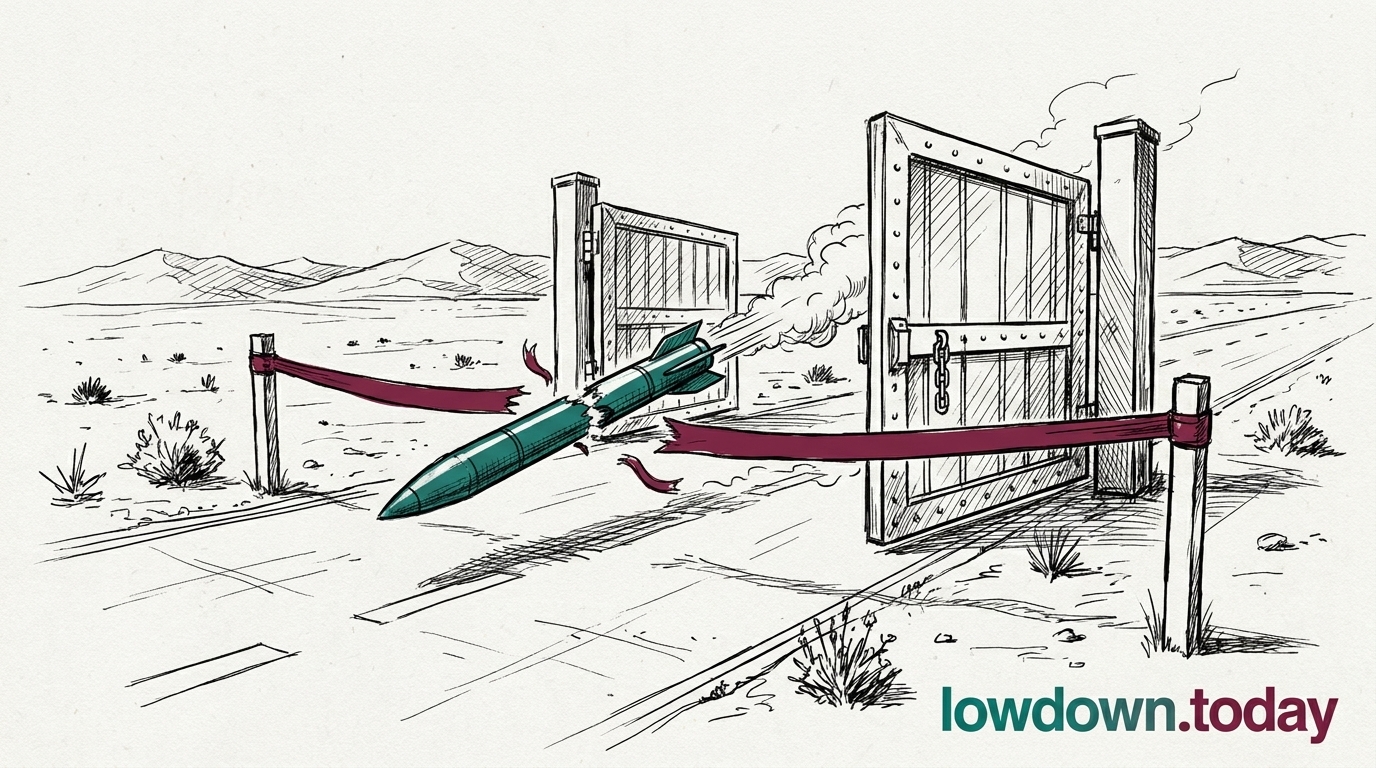
EU High Representative Kaja Kallas declared on 18 March that the EU will target shadow fleet operators — shipowners, brokers, and registries — rather than continuing to pursue individual vessels. Russia's shadow fleet numbers 1,337 vessels . At the current pace of three seizures in three weeks, vessel-by-vessel enforcement would take decades to clear it. Kallas's announcement reframes the objective: instead of catching ships, dismantle the commercial infrastructure that dispatches them.

The logic is upstream enforcement. A shadow fleet voyage requires a willing shipowner, a broker to arrange the cargo, a registry to provide a flag, and — until recently — an insurer to cover the hull. Sanctioning the companies and individuals who perform these functions could ground multiple vessels per action, rather than one boarding per coast guard operation. The EU's approach mirrors counter-narcotics strategy, where targeting logistics networks has historically proved more disruptive than seizing individual shipments.

Russia has already moved to blunt this strategy. Maritime intelligence firm Windward reported that Sovcomflot has reflagged 56% of its fleet to Russia's own ship registry 1, placing those vessels beyond the jurisdictional reach of European flag-state enforcement. Ships sailing under the Russian flag, with Russian insurance and Russian classification society oversight, are functionally immune to the legal instruments European courts applied in the Ethera, Caffa, and Sea Owl I cases. The reflagging accelerated after Western classification societies and insurers withdrew coverage — each enforcement success pushing more of the fleet into a self-contained Russian maritime ecosystem.

The EU's escalation runs in the opposite direction to American policy. Washington disbanded its sanctions-evasion task force on 5 February and issued waivers on 124 million barrels of Russian oil on 12 March . European states are criminalising shadow fleet operations while the United States eases the commercial pressure that made those operations necessary. With the EU's ban on short-term Russian LNG contracts taking effect on 25 April , the operator-level targeting may face immediate strain — particularly from member states like Slovakia and Hungary, which have already leveraged energy dependence as political tools against EU consensus.


Deep Analysis

In plain English

Russia's shadow fleet does not operate alone. It depends on a commercial chain: brokers who arrange shipments, small-nation registries that grant legal flags, and insurers who cover ships against damage and liability. Previously the EU seized individual vessels. Kallas's declaration means the EU intends to sanction the companies and individuals running this infrastructure — not just the ships. This is analogous to targeting a smuggling ring's accountants and logistics firms rather than confiscating individual shipments.

Deep Analysis
Synthesis

Sovcomflot's mass reflagging has already partially neutralised the registry lever Kallas is threatening. The operative enforcement frontier is therefore maritime insurance — dominated by Lloyd's of London and the International Group of P&I Clubs, both UK/EU-regulated. Co-ordinated EU–UK denial of P&I coverage to shadow fleet operators would collapse commercial viability across the entire fleet. This is the Iran 2012 model applied to Russia — and its success depends entirely on post-Brexit UK regulatory alignment with EU sanctions architecture.

Root Causes

The shadow fleet's structural resilience stems from a gap in the international maritime legal order: UNCLOS grants flag states primary enforcement jurisdiction. Russia has reflagged 56% of Sovcomflot's fleet to its own registry, making itself the flag state of record and foreclosing registry-level enforcement. This compresses the available enforcement frontier to maritime insurance — regulated primarily in EU and UK jurisdictions — as the most accessible remaining chokepoint.

Escalation

Kallas's declaration signals a doctrinal shift from in rem (property) to in personam (institutional) enforcement — requiring new EU legislative instruments, because existing sanctions regulations were designed around vessel and entity designation, not diffuse operator networks. Executing this shift may require secondary EU legislation and treaty-level enforcement co-operation with non-EU jurisdictions hosting shadow fleet registries.

What could happen next?
  • Risk

    China and Russia scaling alternative insurance capacity could neutralise EU P&I enforcement before it produces material disruption to Russian crude export volumes.

    Short term · Assessed
  • Precedent

    Operator-level maritime sanctions enforcement establishes that enabling commercial infrastructure — not just designated assets — carries legal liability under EU law.

    Long term · Assessed
  • Consequence

    Compliance costs for legitimate shipping serving ambiguous-origin cargoes will rise as the industry adapts to expanded operator liability frameworks.

    Medium term · Suggested
  • Opportunity

    EU development aid conditionality applied to flags-of-convenience registries could disrupt shadow fleet legal infrastructure without requiring new maritime treaty negotiations.

    Short term · Suggested
First Reported In

Update #6 · Ukraine sends negotiators as front reverses

Kyiv Independent· 20 Mar 2026
Read original
Causes and effects
This Event
EU targets shadow fleet operators
The EU's shift from seizing individual ships to targeting the corporate infrastructure behind them — owners, brokers, registries — is the first enforcement approach designed to match the scale of a 1,337-vessel fleet, but Russia's mass reflagging to its own registry may already place the majority beyond European jurisdictional reach.
Different Perspectives
Shipping and insurance underwriters
Underwriters can price Houthi strikes because the group announces its targets, but an unclaimed drone at Damietta and a mandatory Iranian insurance scheme both deny them a pattern to price against. War-risk premiums are increasingly being set by the absence of a claimant, not the scale of the damage.
Jordan
Jordan
Azraq absorbed its fourth Iranian strike in seven weeks, again drawing no direct Jordanian retaliation, only an American one. Amman's exposure, hosting US basing without the Patriot density of Gulf allies, has not changed even as the war around it widens.
Houthi movement
Houthi movement
The Houthis' 20 July blockade of Saudi-linked shipping is the injury Riyadh's new 43-nation coalition directly answers, yet the group itself was never asked to join and remains outside every proposal on the table. Sanaa-aligned commentators call the coalition a paper reassurance for insurers rather than a deployable force.
Egypt's Cabinet
Egypt's Cabinet
Egypt confirmed the Damietta blaze was an attack, not an accident, on soil the war had never touched before. Cairo now faces an unclaimed threat to a facility supplying roughly 7% of its domestic gas, with no author to hold accountable and no pattern yet to defend against.
Oman
Oman
Muscat is running the only channel Iran will use, a voluntary Hormuz fee modelled on Malacca, but stayed out of Saudi Arabia's new naval coalition entirely. Oman's mediating leverage depends on treating Hormuz as shared and non-exclusive, the opposite of what Tehran is now demanding of it.
Iraq's Prime Minister
Al-Zaidi cancelled his first official Riyadh visit and convened the Coordination Framework, the coalition that keeps him in power and whose factions sit inside the PMF that Saudi jets just struck. He is caught between a five-year Saudi investment relationship and armed groups inside his own state he does not fully control.



