Skip to content
You can now search across every topic, entity and event.What's new
Iran Conflict 2026
23JUL

Carnegie: Iran war masks Kyiv's oil strike cost

3 min read
19:27UTC

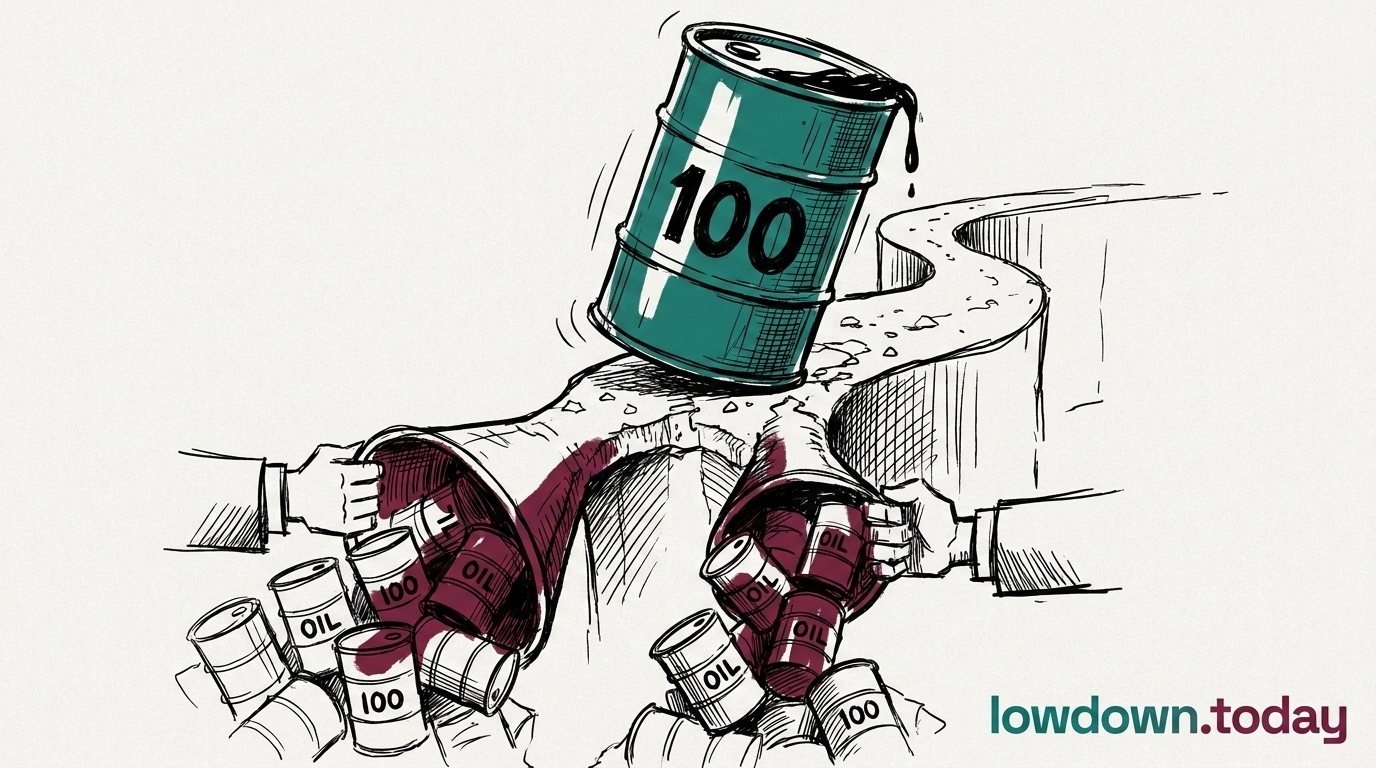
Carnegie put numbers on a paradox this week: Ukrainian strikes cut Russian crude exports by 33% between 25 March and 11 April, yet post-attack weekly revenues ran 62% above late February because the Iran conflict drove global prices higher.

ConflictAssessed
Key takeaway

Tehran's war is currently subsidising two thirds of Moscow's export revenue loss.

Analysts at the Carnegie Endowment for International Peace, a Washington-based non-partisan think tank, published a quantification in April showing that Ukrainian strikes cut Russian crude exports from 5.2 million to 3.5 million barrels per day between 25 March and 11 April, a 33% volume cut 1. Over the same period the Iran conflict drove global prices higher. Post-attack weekly revenues ran 17% below the preceding two weeks but 62% above late February. Carnegie's figures place the price offset above the volume loss on a common ledger for the first time.

Ukraine's oil strike campaign has been scaling since the Baltic terminal hits in late March, and Urals crude spiked through the Iran war's early-April phase . With Russian barrels displaced from the market and global demand elevated by Hormuz risk, the residual barrels Moscow sells clear at a premium that covers most of the shortfall. Tehran's war is functioning as Moscow's revenue insurance.

That subsidy is contingent. If the strait of Hormuz reopens and global prices fall, the fiscal squeeze Reshetnikov named in the same fortnight tightens directly. The UK-France planning conference at Northwood on 22 April is aimed at exactly that reopening, which means the same week's institutional calendar contains both the lever that keeps Russia's revenue high and the lever that would pull it down. Carnegie's quantification is the first analytical frame to price the link between the two theatres on a common ledger, and it positions Moscow's fiscal stability on an axis Moscow does not control at either end.

Deep Analysis

In plain English

Ukraine has been attacking Russia's oil export facilities: the ports, pipelines and tanks that Russia uses to sell oil abroad. That campaign cut Russia's oil exports by about a third between late March and mid-April. Normally that would hit Russia's income hard. But at the same time, a separate war between the US, Israel, and Iran drove global oil prices sharply higher, because Iran's threat to block the Strait of Hormuz: the narrow waterway through which 20% of global oil passes: made buyers nervous. Higher prices partially compensated Russia for selling less oil. It is an accidental subsidy from the Iran conflict to Russia's war chest.

What could happen next?
  • Risk

    A successful Hormuz reopening from the Northwood conference would depress Brent and Urals prices, removing the Iran-war price floor that currently offsets Ukraine's volume cut: tightening Russia's revenue position significantly without any new Ukrainian strike action required.

    Short term · 0.7
  • Opportunity

    Ukraine's energy strike campaign remains economically effective even when price offsets the volume impact: each destroyed refinery or dispatch station degrades domestic refined-product supply chains that cannot be offset by higher export prices, creating internal fuel shortages distinct from export revenue calculations.

    Medium term · 0.65
  • Risk

    Shadow fleet concentration on Russian National Reinsurance Company cover, driven by cumulative EU designations reaching 632 vessels, creates an unquantified tail risk: a single catastrophic tanker casualty could expose RNRC's capital inadequacy and trigger a fleet-wide insurance crisis.

    Medium term · 0.5
First Reported In

Update #14 · Kyiv's Druzhba gambit unlocks €90bn loan

Carnegie Endowment for International Peace· 24 Apr 2026
Read original
Different Perspectives
India
India
India buys more Saudi crude than any other country and has 2.5 million nationals working in the kingdom, so a $100 Brent and a live strike on Saudi tankers reach New Delhi through both fuel bills and remittance risk. Neither channel has an alternative route the way Saudi Arabia's own pipeline does.
Qatar
Qatar
Qatar co-authored the four-mediator ten-day ceasefire proposal alongside Egypt, Pakistan and Oman, centred on resuming Hormuz navigation, while separately pursuing its dated compensation claim against Iran at the UN Security Council filed on 21 July. Doha is mediating and litigating in the same week.
Israel
Israel
Israeli intelligence, reported by the Wall Street Journal, assesses Iran moved thousands of centrifuges and part of its roughly 440kg enriched-uranium stock into Pickaxe Mountain after the June 2025 strikes on its three main nuclear sites. Some of the US refuelling aircraft now deploying to the region are bound for Israeli bases and Ramon Airport.
Houthis
Houthis
Yahya Saree announced the missile and drone strikes on the Encelia and Layla on 22 July as enforcement of the embargo his forces had declared by radio warning alone two days earlier. Six vessels already turned back on the broadcast; the strike shows Houthi forces will use weapons once warnings stop working.
Saudi Arabia
Saudi Arabia
Saudi Arabia's state news agency confirmed only a fire on the Encelia's bow, with the crew safe; the Layla strike remains unconfirmed by Riyadh. The kingdom built its Petroline pipeline specifically to bypass Hormuz through the Red Sea, so the tanker fire lands on the route Riyadh had already spent billions escaping.
United States
United States
Washington is weighing both ten-day proposals but wants a longer truce than either offers, and moved F-16 and F-35 jets plus refuelling aircraft into the region while it decides. That deployment, not Trump's Pickaxe Mountain remarks, is the measurable US action, buying options for the day talks fail rather than betting on them.