Skip to content
You can now search across every topic, entity and event.What's new
Iran Conflict 2026
8JUL

Oman's waters become the only lane

4 min read
10:44UTC

A US-led naval advisory on 20 June flagged mines in Hormuz's standard lanes and cleared one route through Oman's territorial waters. All 55 ships that transited that day used it.

ConflictDeveloping
Key takeaway

The strait reopened through Oman's waters, not Iran's permission or Trump's order.

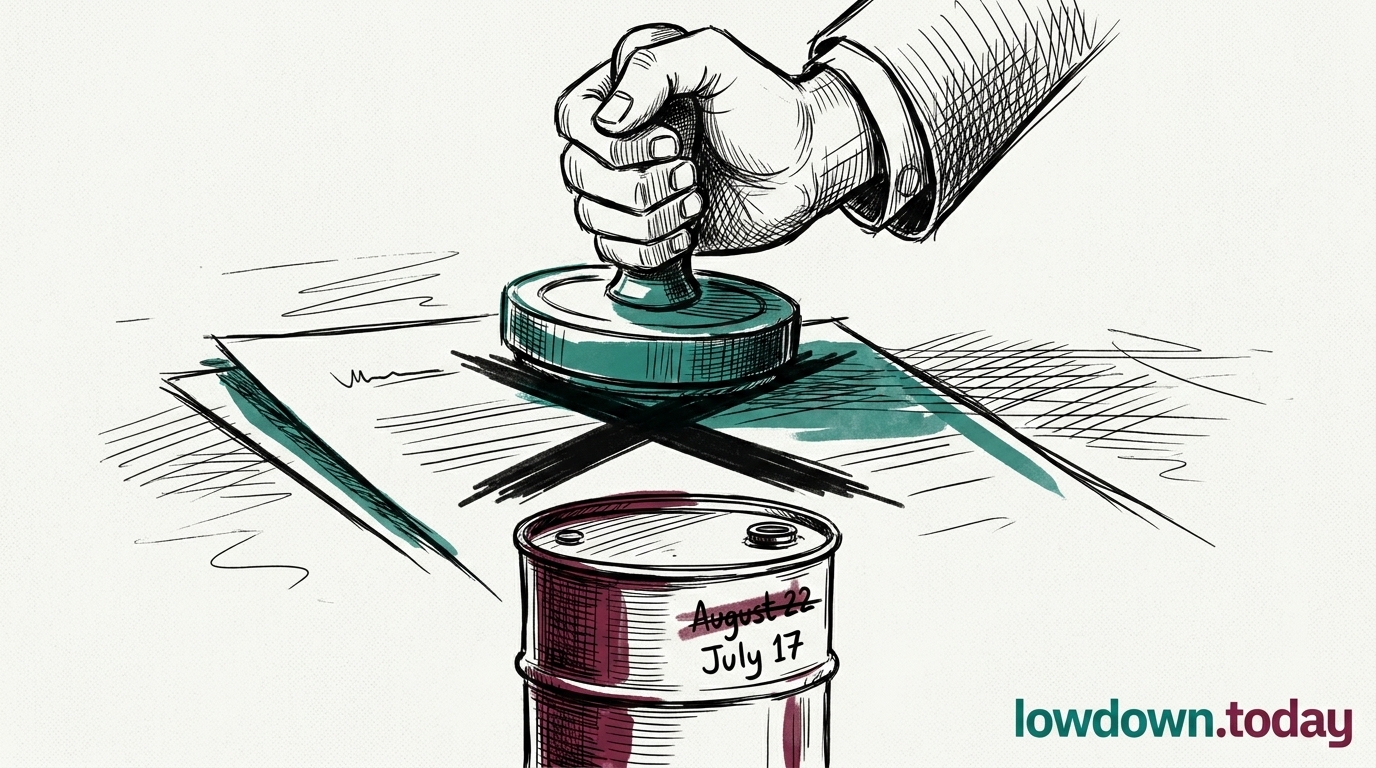
The Joint Maritime Information Center (JMIC), a US-led multinational naval reporting body, issued an advisory on Saturday 20 June warning of possible mines in the standard Traffic Separation Scheme (TSS) lanes and telling ships to avoid them 1. It cleared one alternative: the southern corridor through Oman's territorial waters, mine-free, transponders on, no coordination with the US Navy required. US Central Command (CENTCOM) reported that 55 merchant vessels carried more than 17 million barrels through the strait that day, all of them on the Omani route 2.

The corridor matters because it changes who governs the strait's traffic. The mined TSS lanes sit in the international channel, where Iran claims a transit-passage jurisdiction. The cleared lane runs through waters Oman controls as a coastal state. With every cargo pushed onto the southern route, practical authority over the strait shifts to Muscat, a long-neutral mediator that now holds a gatekeeper's seat nobody legislated for it. The barrels are moving on Oman's geography, not on Iran's permission and not on Trump's toll-free reopening order .

The mines did this by accident. The IRGC laid them to enforce its closure, and the unintended effect was to channel every ship into the one lane the corps does not police. Clearing the international TSS lanes takes a minimum of 40 to 50 days of sweeping, on the prior assessment that mines rather than insurance were keeping the strait shut . That timetable locks traffic onto the Omani route through the summer, deepening Muscat's hold the longer the standard lanes stay closed.

One piece remains unconfirmed. The Lloyd's and Chubb $400m war-risk consortium was launched for exactly this kind of crossing , but whether it has actually underwritten the 55 ships, or whether they are moving without war-risk cover, has not been established in public reporting.

Deep Analysis

In plain English

Normally, ships going through the Strait of Hormuz use a set of designated shipping lanes called the Traffic Separation Scheme (TSS). These lanes are like the marked lanes on a motorway. On 20 June, a US-led naval body called JMIC (the Joint Maritime Information Center) warned that these lanes may contain floating mines, explosive devices that can destroy a ship. Rather than clearing the mines (which takes weeks), JMIC told ships to use a different route: through the coastal waters of Oman, a neutral country on the southern side of the strait. This route is confirmed mine-free. On 20 June, 55 ships used it to move 17 million barrels of oil. The result is that the world's most important oil route now runs through Omani waters, not the international channel, control of the passage has moved from the international channel to Omani coastal waters.

Deep Analysis
Root Causes

The JMIC advisory exists because the TSS lanes, the internationally designated Hormuz shipping lanes separating inbound and outbound traffic, are contaminated with mines whose origin and density are unconfirmed. JMIC cannot clear the lanes (minesweeping requires dedicated vessels and 40-50 days minimum), so it has rerouted around them.

The underlying root cause is that Iran laid, or permitted the laying of, mines in waters both sides had treated as international commons, and the US response was to relocate traffic rather than contest the contamination.

Oman's accession to this arrangement is structural: Muscat has served as the US-Iran backchannel since at least 1981. Providing territorial waters as a transit corridor is consistent with Oman's historical role as the state both sides trust to hold space between them.

What could happen next?
  • Consequence

    Oman's territorial waters becoming the operative Hormuz lane elevates Muscat's strategic leverage in both the Iran-US talks and the broader Gulf political order.

    Short term · Assessed
  • Risk

    If Iran targets the Omani corridor, as distinct from the TSS lanes, it escalates directly against a neutral mediator state, a step the IRGC has not yet taken.

    Medium term · Suggested
  • Precedent

    Routing a fifth of global oil through Oman's 12-nautical-mile territorial sea sets a precedent for territorial-sea management of international chokepoints that UNCLOS did not anticipate.

    Long term · Reported
First Reported In

Update #134 · Hormuz shuts as Vance flies to Geneva

WLT Report· 21 Jun 2026
Read original
Different Perspectives
Oil market and P&I insurers
Brent cleared $87 intraday only once CENTCOM's blockade became physical rather than declared, even though P&I Clubs had already excluded Hormuz war risk a week earlier on 7 July: capital hedged ahead of enforcement, but prices moved only after it.
UAE reporting
UAE reporting
UAE reporting placed the Omani tanker deaths at one seafarer against the International Maritime Agency's count of two, the first time in this war that a Gulf state's casualty figures have diverged from an international monitor's.
Jordan
Jordan
Iranian strikes reached Jordan again on 14 July as part of the Gulf-wide retaliation for the Hormuz blockade, extending the conflict's geographic footprint to a state with no direct stake in the strait itself.
Bahrain
Bahrain
Bahrain sounded air-raid sirens on 14 July during Iran's Gulf-wide retaliation, the same day CENTCOM's blockade order and fourth night of strikes pushed the conflict's physical reach into the wider Gulf littoral.
Kuwait
Kuwait
Kuwait intercepted Iranian missiles and drones on 14 July as Tehran's blockade retaliation reached Gulf states beyond Iran's immediate shoreline, confirming Kuwaiti airspace now sits inside Iran's retaliatory envelope.
Oman
Oman
Oman absorbed the war's first tanker casualties in its own waters on 14 July, with two supertankers disabled and seafarers killed, putting the sultanate's shipping lanes directly in the path of the blockade fight for the first time.