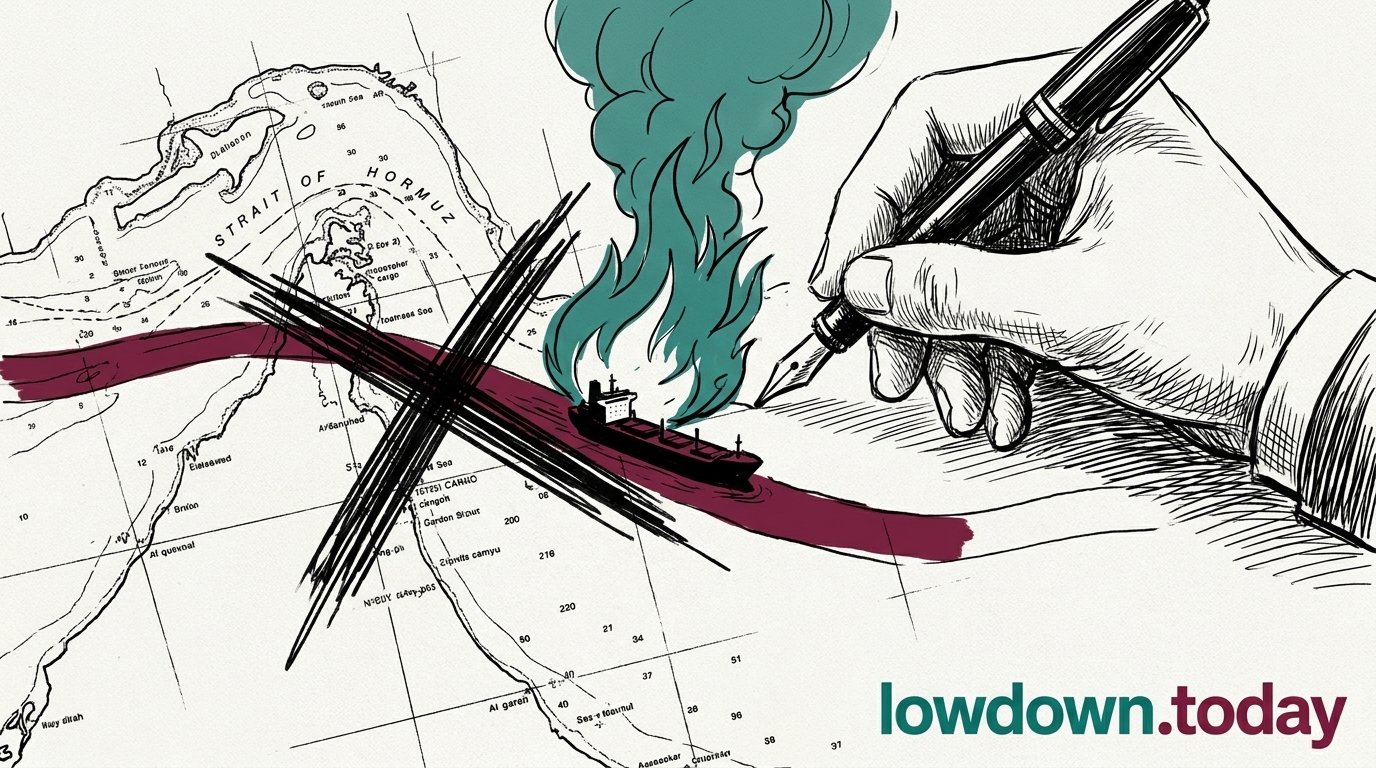
United Against Nuclear Iran (UANI) estimates that 31 tankers have carried about 41 million barrels of Iranian oil and petrochemicals since the deal was announced on 14 June1. UANI, a US advocacy group that tracks Iranian sanctions compliance, puts the revenue at roughly $3.5 billion, most of it from sales to China, and calls the total an estimate, not an audited figure. The cargoes moved under General License X (GL X), the 60-day US Treasury authorisation that runs to 21 August, when Iranian oil sales again face full sanctions.
On Wednesday 24 June the tanker IMPALAS carried two million barrels of Iranian crude through the Strait of Hormuz itself, not around it2. the strait of Hormuz is the 33km Gulf chokepoint through which a fifth of the world's oil moves. The IRGC (Islamic Revolutionary Guard Corps), Iran's ideological military, had called the Oman shoreline corridor off-limits earlier in the week and mandated radio coordination, yet it boarded none of the ships using it3. The Liberian-flagged Stoic Warrior ran the corridor on Thursday 25 June without incident4.
At the export rate UANI describes, Iran would earn the equivalent of the entire frozen-asset package it is negotiating in roughly 41 days, well before GL X expires. That projection rests on UANI's figures, not on any total either government has published. The Foundation for Defense of Democracies, a Washington think tank, found GL X carries no escrow, cap or reporting. That leaves Iran's real income, the oil, untouched, while only the contested cash stays locked behind Washington's account.


