Skip to content
You can now search across every topic, entity and event.What's new
Iran Conflict 2026
2JUL

Iran's heir skips the funeral for him

2 min read
11:15UTC

Mojtaba Khamenei, installed as Supreme Leader by a boycotted March vote, stayed away from the Tehran state funeral staged to cement his succession, which opened on 4 July. Iran offered no reason.

ConflictDeveloping
Key takeaway

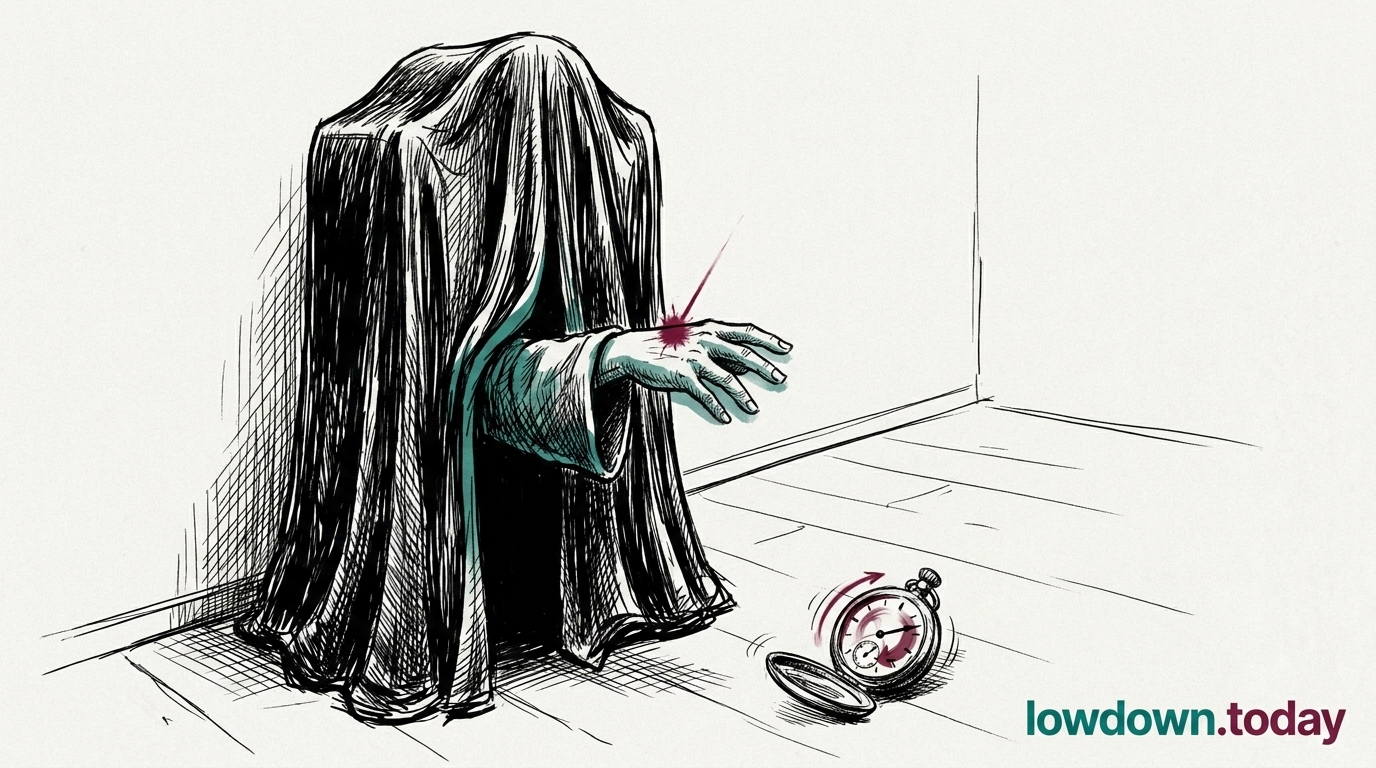
The heir Iran's funeral was built to legitimise stayed away from it.

Mojtaba Khamenei did not appear at his father's state funeral, which opened in Tehran on 4 July. Iranian officials gave no reason for the absence. Western reporting attributes it to the standing Israeli assassination threat, after Defence Minister Israel Katz called him "a dead man" on 1 July , and to unhealed injuries from the February strike that killed his father 1.

An emergency online Assembly of Experts vote installed Mojtaba as Supreme Leader in March, the first dynastic succession in the Islamic Republic's 47-year history; eight members boycotted it. The funeral was staged to wrap that contested vote in visible national grief for the man now holding the office. He was the one mourner it could not afford to lose, and it lost him.

Mojtaba Khamenei has not been seen in public since 8 March and governs through sealed handwritten notes carried with a three-to-five-day lag. A leader who cannot attend the largest state occasion of his tenure still rests his authority on the Islamic Revolutionary Guard Corps (IRGC), Iran's ideological military, rather than his own presence. Katz's threat is genuine, but a Supreme Leader who must hide from it pays a domestic price in a state whose legitimacy runs through public appearance.

Qatar confirmed the Doha negotiating channel pauses for the six-day funeral , and Washington signed nothing new on Iran through the mourning week. Trump called the last Doha round "a day of very good meetings", a verdict the empty Federal Register does not back . The last US instrument remains General License X (GL X), the 22 June oil-sanctions waiver authorising Iranian crude sales through 21 August.

Deep Analysis

In plain English

Iran's top religious and political leader, Ayatollah Ali Khamenei, was killed in an Israeli strike in February. His son, Mojtaba Khamenei, took over as Supreme Leader in March, the first time power has passed directly from father to son in Iran. On 4 July, Iran held a state funeral for the father in Tehran. Mojtaba did not show up, and officials never said why. For a leader whose own claim to the job is only four months old, skipping his own father's funeral without explanation raises an obvious question: is he staying away for safety, since Israel's defence minister had just called him a target, or is something else wrong at the top of Iran's government?

Deep Analysis
Root Causes

Israel's Defence Minister Israel Katz called Mojtaba Khamenei 'a dead man' on 1 July , a threat Iran's own foreign ministry took seriously enough to warn of an 'immediate and powerful response'. A Supreme Leader whose predecessor died in a targeted strike four months earlier has a concrete security reason to avoid a fixed six-day public itinerary that Israeli intelligence would have advance notice of.

Iran's own military posture reinforces that reading. The Army was already moving extra Ground Force units to the borders and putting Air Defence Force units on continuous watch ahead of the funeral , with a full airspace closure over Tehran from 6 July. A state treating its own capital as a live target during six days of mass gatherings is unlikely to expose the one man both Israel and its own succession process have made a distinct target.

First Reported In

Update #145 · Iran's heir skips the funeral built for him

The Week· 4 Jul 2026
Read original
Different Perspectives
Oil market and P&I insurers
Brent cleared $87 intraday only once CENTCOM's blockade became physical rather than declared, even though P&I Clubs had already excluded Hormuz war risk a week earlier on 7 July: capital hedged ahead of enforcement, but prices moved only after it.
UAE reporting
UAE reporting
UAE reporting placed the Omani tanker deaths at one seafarer against the International Maritime Agency's count of two, the first time in this war that a Gulf state's casualty figures have diverged from an international monitor's.
Jordan
Jordan
Iranian strikes reached Jordan again on 14 July as part of the Gulf-wide retaliation for the Hormuz blockade, extending the conflict's geographic footprint to a state with no direct stake in the strait itself.
Bahrain
Bahrain
Bahrain sounded air-raid sirens on 14 July during Iran's Gulf-wide retaliation, the same day CENTCOM's blockade order and fourth night of strikes pushed the conflict's physical reach into the wider Gulf littoral.
Kuwait
Kuwait
Kuwait intercepted Iranian missiles and drones on 14 July as Tehran's blockade retaliation reached Gulf states beyond Iran's immediate shoreline, confirming Kuwaiti airspace now sits inside Iran's retaliatory envelope.
Oman
Oman
Oman absorbed the war's first tanker casualties in its own waters on 14 July, with two supertankers disabled and seafarers killed, putting the sultanate's shipping lanes directly in the path of the blockade fight for the first time.