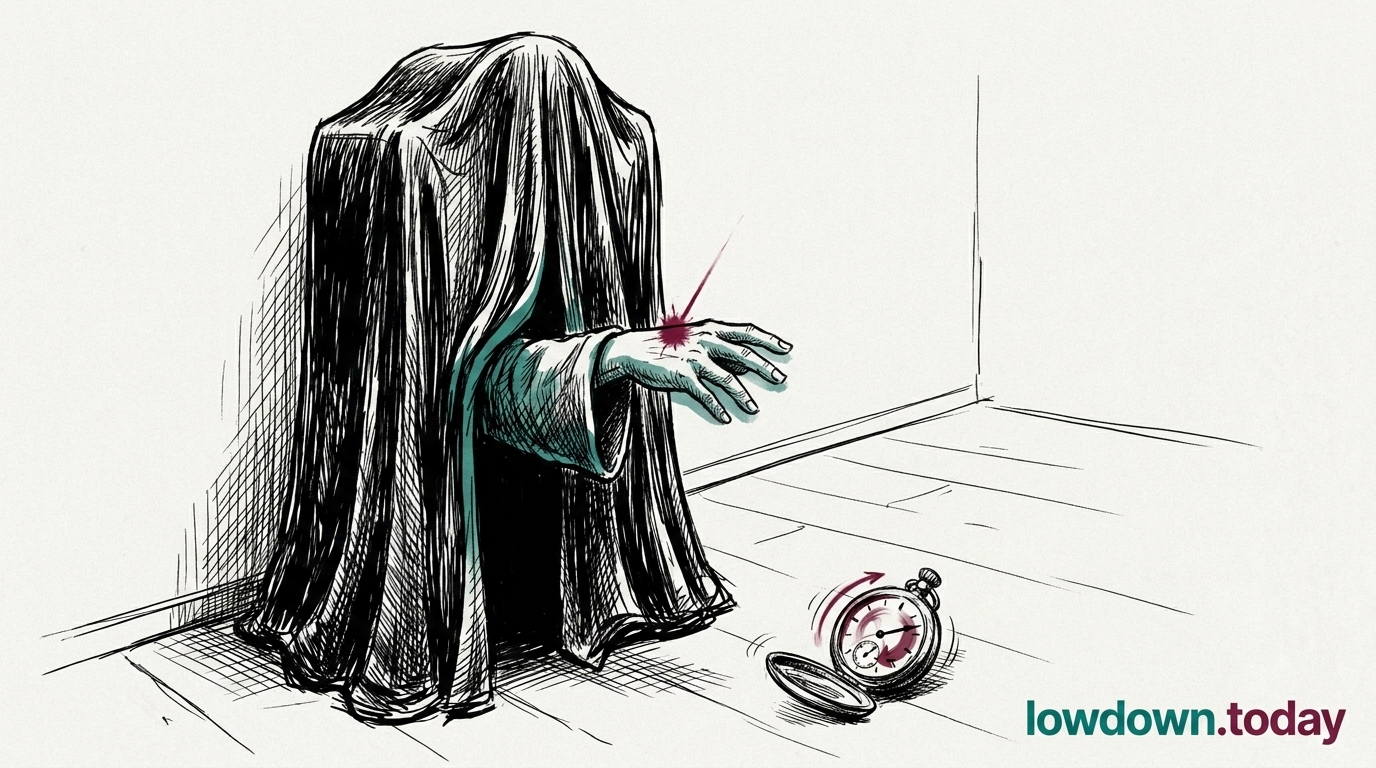
Mojtaba Khamenei was disfigured and suffered a serious injury to one or both legs in the 28 February airstrike that killed his father, sources close to his inner circle told Reuters1. No photograph or public sighting of Iran's Supreme Leader has been released in the four months since. On the second day of the state funeral in Tehran, three of his brothers, Mostafa, Meysam and Masoud, prayed beside the coffin while Mojtaba stayed away and clerics led the rites in his place. For four months that silence looked like a man choosing not to be seen; the account, unconfirmed and resting on anonymous sources, suggests he may be a man who cannot be.
The New York Times attributed his no-show to a fear that Israel would try to kill him at the ceremony, days after defence minister Israel Katz called him 'a dead man'. The Reuters account points at something harder to reverse than caution: a leader installed only on 7 March, who has governed through sealed handwritten notes and has not been seen since 8 March, may be physically unable to appear at all. Tehran offers only the assassination-risk reading; the medical reading stays unconfirmed.
If the man the Assembly of Experts named Supreme Leader cannot show his face, day-to-day authority sits with the Islamic Revolutionary Guard Corps (IRGC) and Major General Ahmad Vahidi, who folded the military and negotiating tracks into one command in April. Both readings can be true at once, and neither produces a Supreme Leader able to stand in public and govern. That turns a question of Mojtaba's security into a question of who actually runs Iran.


