Skip to content
You can now search across every topic, entity and event.What's new
Iran Conflict 2026
1JUL

CENTCOM ends Iran blockade a day early

2 min read
11:26UTC

US Central Command halted its naval blockade of Iran's ports on 18 June, a day ahead of its own wind-down, after 66 days of enforcement.

ConflictDeveloping
Key takeaway

Trump ended the one piece of pressure that cost the United States nothing to halt.

US Central Command ended its 66-day naval blockade of Iran's ports on Thursday 18 June, a day ahead of its own stated wind-down. "American forces are not impeding the transit of vessels to or from Iranian ports," the command said; "all blockade enforcement efforts have ceased" 1. CENTCOM is the US military command responsible for the Middle East; its blockade had redirected well over a hundred vessels since April and stood as the most concrete instrument of American pressure in the war.

The lift followed Trump's signing of the Islamabad Memorandum of Understanding and his order to end the blockade, which CENTCOM had kept running for two days afterwards . What changed on 18 June was the gap between order and execution closing, a day before the deadline the command had set itself.

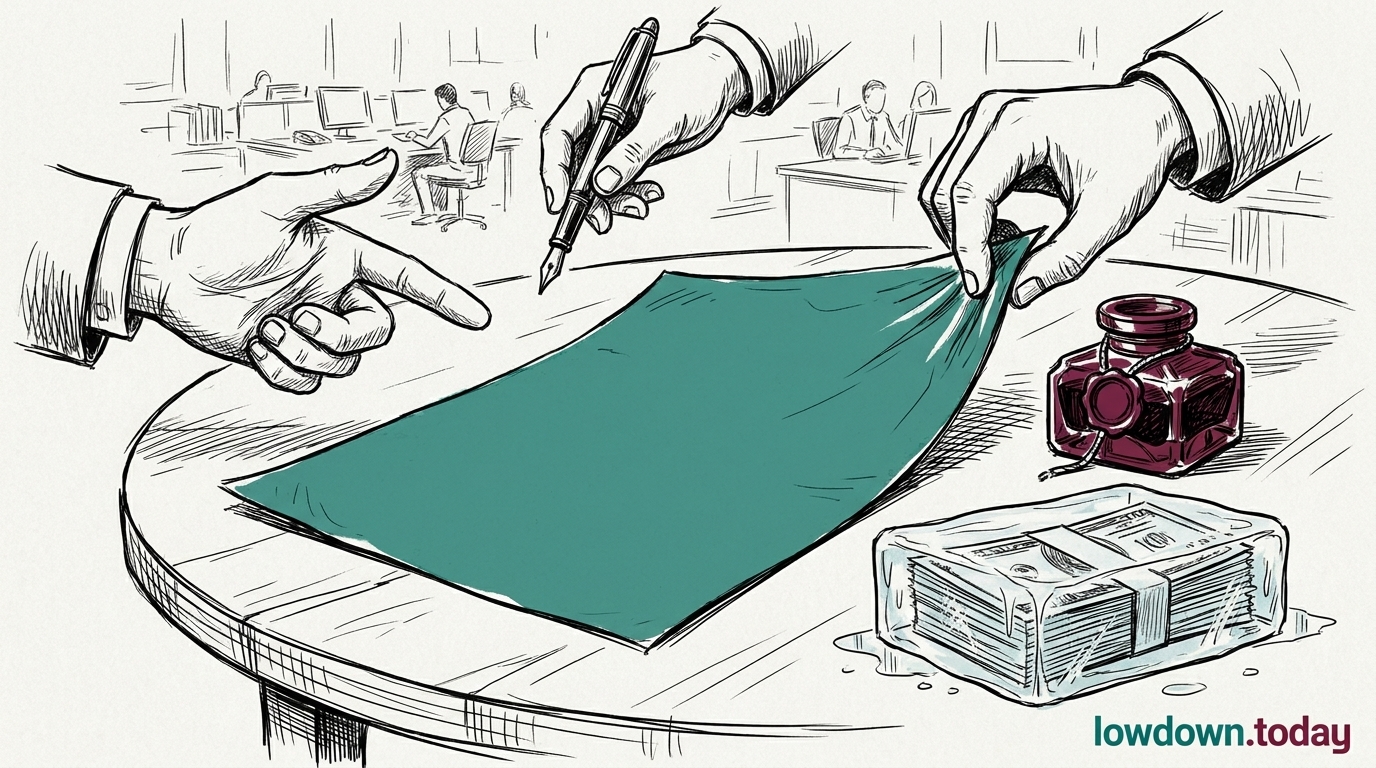
Until now Trump's de-escalatory signals had stayed on Truth Social. This is the first time an actual instrument moved: a fleet stood down rather than a post published. Halting enforcement also costs Washington nothing, commits it to nothing further, and can be reversed by a single order, which makes the blockade lift the cheapest concession on the table. The deal's other obligations, the frozen assets and the weapons checks, stay unsigned while the one lever that carried no price comes down first.

Deep Analysis

In plain English

Since mid-April, the US Navy had been stopping ships from reaching Iranian ports. On 18 June, it stopped doing that, one day sooner than planned, in line with a peace deal signed the day before. But stopping the ships yourself is not the same as the strait being open for normal trade. Mines laid by Iran's military are still in the water, and London insurers still will not cover ships that try to cross. So while the American military blockade ended, the real blockade from mines and missing insurance stayed in place. Two US aircraft carrier groups also remained in the Gulf, providing military pressure without any new enforcement action.

Deep Analysis
Root Causes

CENTCOM's enforcement was always the removable outer layer of a three-part closure system. The actuarial blockade (London P&I war-risk exclusions in force since 5 March 2026) and the physical blockade (IRGC mine fields with 40-50 day minimum clearance timeline) were the structural foundations. Lifting CENTCOM enforcement removed the layer that required the most daily operational resources while surrendering the least strategic leverage.

The one-day-early timing reflects a deliberate signal to Tehran that Washington can execute faster than promised without changing the underlying power equation. It costs nothing to comply early when the mines and insurers do the work.

Escalation

The early lift is de-escalatory in form but not in substance. Carrier holdover with no drawdown order is a signal that Washington considers the MOU's blockade clause fulfilled while retaining military pressure for Phase 2 nuclear talks. The risk of re-escalation lies in whether Tehran reads the carrier presence as a threat rather than a routine posture.

What could happen next?
  • Consequence

    The 66-day blockade formally ends, removing CENTCOM enforcement as a source of daily escalation, but the physical and actuarial barriers mean no new Iranian or Gulf oil reaches markets for at minimum 40-50 days.

    Immediate · Assessed
  • Risk

    Two US carriers remaining on station with no drawdown order creates a structural ambiguity Tehran could use to declare the MOU violated if Phase 2 negotiations deteriorate.

    Short term · Assessed
  • Precedent

    CENTCOM enforcing a blockade through executive posts with no signed instrument, then unwinding it via a statement, establishes a pattern for informal US military action without treaty or AUMF, with implications for future Gulf contingencies.

    Long term · Assessed
First Reported In

Update #132 · Trump lifted the blockade, not the strait

Wikipedia (aggregated CENTCOM statement)· 19 Jun 2026
Read original
Different Perspectives
Oil market and P&I insurers
Brent cleared $87 intraday only once CENTCOM's blockade became physical rather than declared, even though P&I Clubs had already excluded Hormuz war risk a week earlier on 7 July: capital hedged ahead of enforcement, but prices moved only after it.
UAE reporting
UAE reporting
UAE reporting placed the Omani tanker deaths at one seafarer against the International Maritime Agency's count of two, the first time in this war that a Gulf state's casualty figures have diverged from an international monitor's.
Jordan
Jordan
Iranian strikes reached Jordan again on 14 July as part of the Gulf-wide retaliation for the Hormuz blockade, extending the conflict's geographic footprint to a state with no direct stake in the strait itself.
Bahrain
Bahrain
Bahrain sounded air-raid sirens on 14 July during Iran's Gulf-wide retaliation, the same day CENTCOM's blockade order and fourth night of strikes pushed the conflict's physical reach into the wider Gulf littoral.
Kuwait
Kuwait
Kuwait intercepted Iranian missiles and drones on 14 July as Tehran's blockade retaliation reached Gulf states beyond Iran's immediate shoreline, confirming Kuwaiti airspace now sits inside Iran's retaliatory envelope.
Oman
Oman
Oman absorbed the war's first tanker casualties in its own waters on 14 July, with two supertankers disabled and seafarers killed, putting the sultanate's shipping lanes directly in the path of the blockade fight for the first time.