Skip to content
You can now search across every topic, entity and event.What's new
Iran Conflict 2026
23JUN

India buys Hormuz passage, ship by ship

4 min read
11:42UTC

Two Indian tankers crossed the strait after direct diplomacy with Tehran. Twenty-two remain stranded, and Iran wants three seized vessels returned as the price of continued access.

ConflictDeveloping
Key takeaway

Iran is converting vessel seizures into renewable diplomatic leverage, deployable country by country.

Two Indian-flagged LPG tankers transited the strait of Hormuz safely on Saturday after direct diplomatic engagement between New Delhi and Tehran. Iran's ambassador to India confirmed the passage 1. Tehran's price: return of three tankers seized by India's Coast Guard in February 2. India has 22 vessels still stranded west of the strait. No blanket arrangement exists — each crossing requires a separate negotiation.

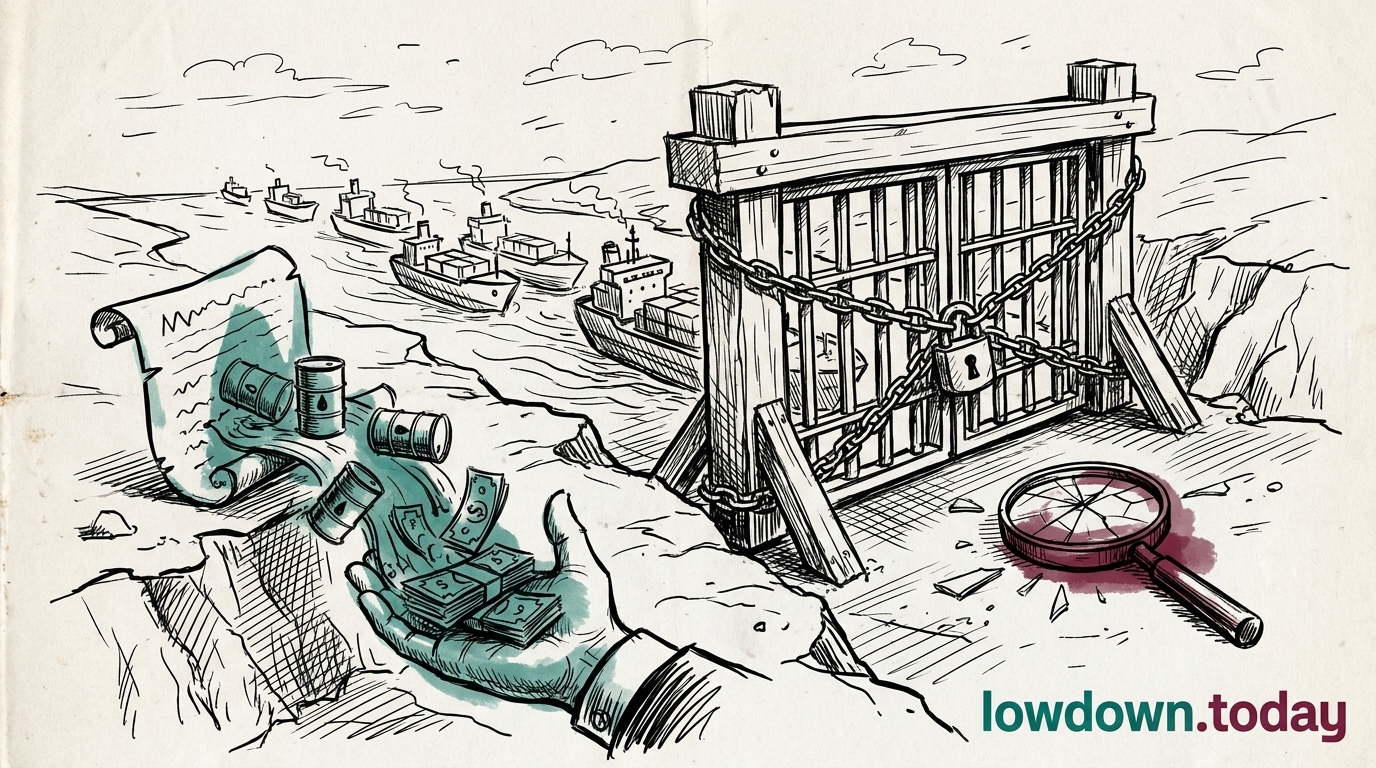
The mechanism matters more than the two ships. When the IRGC declared on 10 March that "not a litre of oil" would pass through Hormuz , the declaration was absolute. In practice, it is conditional. Chinese-operated vessels had already moved 11.7 million barrels through the strait by that date, broadcasting AIS messages emphasising Chinese ownership and crew composition . India has now secured its own bilateral channel. The blockade is not a wall — it is a gate, and Tehran holds the key.

The structure creates a two-tier strait. Countries that maintain direct diplomatic relationships with Iran negotiate passage. Countries aligned with the US military campaign do not transit. India and China now have a direct incentive to stay out of any escort Coalition: they get better terms bilaterally than they would inside a multinational force the US itself says is not ready to operate . Every country Trump called on to send warships — Australia, Japan, the UK, Germany, France — declined within 72 hours. India's bilateral deal shows one reason why: for import-dependent economies, diplomacy with Tehran delivers ships through the strait. Military alignment with Washington does not.

Iran can accelerate or delay each of India's 22 remaining transits as rolling diplomatic leverage — a slow-drip source of pressure on a country that depends on Gulf LPG for domestic cooking fuel and Gulf crude for the bulk of its refinery inputs. The question is whether other stranded-fleet nations — the Philippines, Bangladesh, South Korea — attempt their own bilateral channels, further fragmenting a blockade the US has proven unable to break militarily or diplomatically. If they do, the strait of Hormuz becomes less a chokepoint than a diplomatic marketplace, with Iran setting terms of access country by country.


Deep Analysis

In plain English

Iran has been blocking the Strait of Hormuz — the narrow waterway through which roughly 20% of the world's oil passes — to most commercial shipping. Iran quietly offered India a bilateral deal: return three ships that India's coast guard seized from Iran in February, and Iran will let your tankers through. India agreed, two ships passed safely, and India still has 22 more vessels stranded and waiting. This is not Iran backing down militarily. It is Iran using selective access to the strait as a renewable diplomatic bargaining chip — one it can deploy again whenever it needs something from a neutral country. Every state that needs its ships through the strait must now negotiate separately with Tehran, giving Iran significant leverage over which countries choose neutrality rather than alignment with the US.

Deep Analysis
Synthesis

India's deal reveals that Iran's Hormuz strategy is commercially sophisticated rather than purely military. By manufacturing leverage through vessel seizures, Tehran creates renewable negotiating assets deployable sequentially against neutral states. The pattern mirrors protection-racket economics: access is available, but only through individual bilateral transactions that each simultaneously deepen the neutral state's interest in Iran's continued goodwill and reduce its incentive to align with the US.

Root Causes

India's 22 stranded vessels represent an estimated $1.1–1.5 million in daily demurrage charges across the fleet, compounded by spot market premium costs for replacement crude. Indian refiners — Reliance Industries, Indian Oil Corporation, Hindustan Petroleum — faced mounting commercial pressure that made bilateral negotiation with Iran economically mandatory regardless of US diplomatic preferences. The three returned Iranian tankers were almost certainly seized under India's enforcement of prior US-era secondary sanctions, meaning their return carries a secondary cost: partial reversal of India's prior sanctions compliance posture toward Washington.

Escalation

Iran's seizure-return mechanism is a renewable leverage instrument: Tehran can seize additional vessels from other neutral states to generate fresh negotiating chips on demand. China, Japan, South Korea, and Turkey all have significant shipping exposure west of the strait and face the identical coercive calculus India just resolved through negotiation. Each bilateral deal Iran concludes simultaneously reduces the neutral state's incentive to join any US-aligned maritime coalition.

What could happen next?
  • Meaning

    Iran has established a bilateral access market for Hormuz transit that commoditises neutrality and prices each country's passage individually.

    Immediate · Assessed
  • Consequence

    Neutral states with significant shipping exposure face growing commercial pressure to negotiate bilaterally with Iran, shrinking the coalition available to the US.

    Short term · Assessed
  • Risk

    Iran's renewable seizure-leverage mechanism could be deployed against Turkish, South Korean, or Japanese shipping to generate the next round of bilateral negotiations.

    Short term · Suggested
  • Precedent

    India's deal establishes that bilateral transit arrangements are achievable, creating a replicable template that further fragments any multilateral Hormuz security architecture.

    Medium term · Assessed
First Reported In

Update #38 · Israel enters Lebanon; Hormuz pact fails

AJ Hormuz safe passage· 17 Mar 2026
Read original
Causes and effects
This Event
India buys Hormuz passage, ship by ship
India's bilateral transit deal demonstrates that Iran is constructing a selective blockade — open to countries maintaining direct diplomatic channels, closed to those aligned with US military operations. This fragments the blockade along political lines and removes the remaining incentive for major importers to join any multinational escort coalition.
Different Perspectives
Turkiye
Turkiye
Erdogan followed the Pakistani delegation to Jeddah for an instrument that has not been signed. Ankara's entry widens Saudi Arabia's defence architecture beyond the existing Pakistan pact, adding a second non-Gulf military partner mid-conflict.
Oman
Oman
Muscat is the corridor's broker but has published nothing about the arrangement Fars describes on its behalf. The account leaves Oman administering outbound traffic only, a narrower role than the shared route its mediation has rested on since 1979.
Pakistan
Pakistan
Islamabad sent Sharif, Munir and Dar to Jeddah to widen a defence commitment it has honoured in cheaper registers since March, when Dar invoked the Saudi mutual defence pact. Jeddah tests whether that hedge becomes a binding trilateral instrument with Turkiye.
United States
United States
Washington rejected the Majlis Hormuz bill outright while CENTCOM's own tally kept climbing to 49 vessels redirected since 14 July. Both instruments tightened in the same week Trump promised the strait would reopen soon.
Iran
Iran
Iran's foreign ministry is selling a phased Hormuz corridor through Oman and denying any percentage cargo tariff, while its own Majlis is legislating fines to 20% and a bar on Israeli-linked cargo. The two accounts, from the same government, do not agree with each other.
Saudi Arabia
Saudi Arabia
Riyadh published a target forecast, not an attribution, for the campaign it says the Najran strike previewed. That keeps an Article 51 case available while it formalises a trilateral defence architecture with Pakistan and Turkiye.



