Skip to content
You can now search across every topic, entity and event.What's new
Iran Conflict 2026
21JUN

Hormuz crossings fall by two thirds

4 min read
17:51UTC

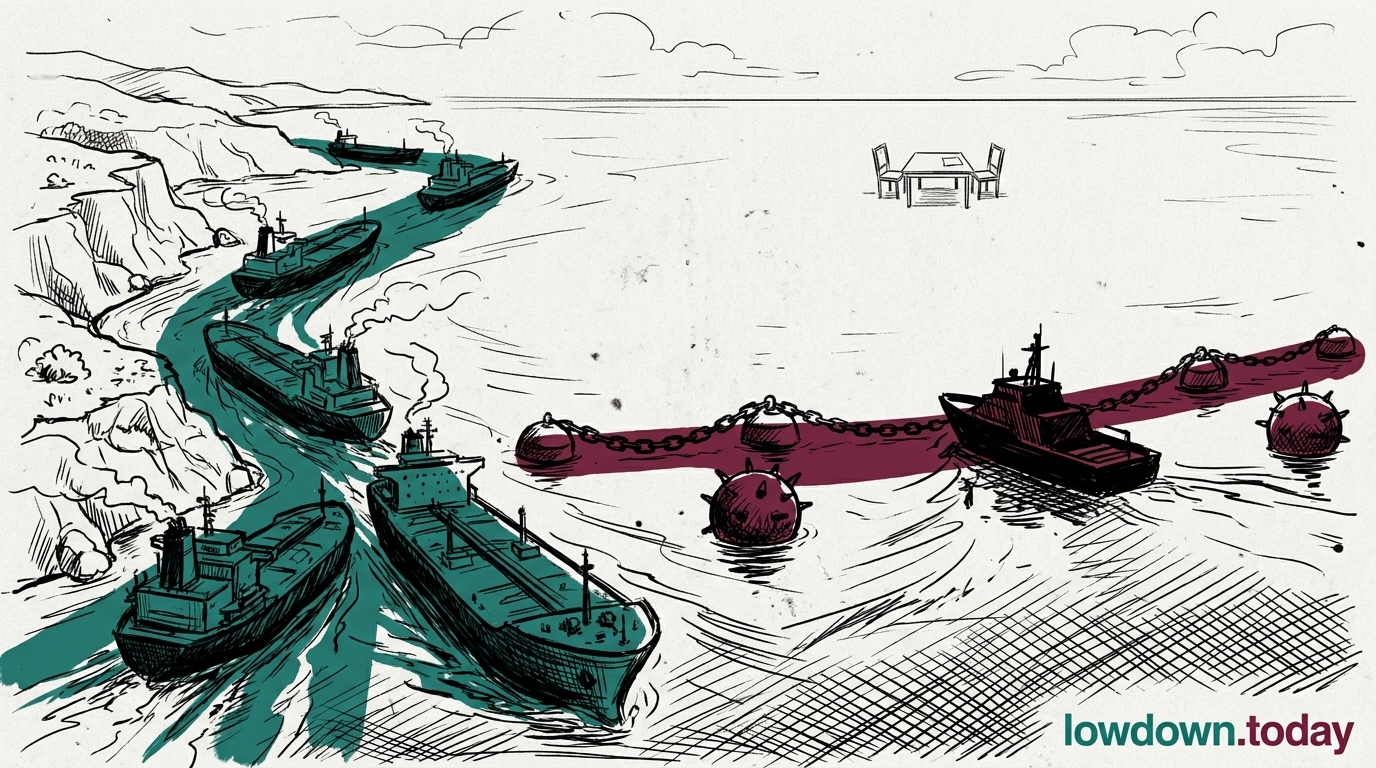
53 vessels crossed the Strait of Hormuz in the week to Monday, against 157 the week before. CNBC put the fall at 66 per cent, citing a named Lloyd's List Intelligence analyst.

ConflictDeveloping
Key takeaway

Thirty tanker and gas-carrier crossings in a week, and a rising share of the rest sailing invisible.

53 vessels crossed the Strait of Hormuz in the week to Monday 20 July, against 157 the week before, a fall of 66 per cent. Tanker and gas-carrier crossings specifically dropped to 30 from 90. CNBC reported the figures on Tuesday, citing Bridget Diakun, senior risk and compliance analyst at Lloyd's List Intelligence 1.

the strait is a 33-kilometre channel between Iran and Oman that carried roughly a fifth of the world's seaborne oil before the war. Diakun's count probably flatters what is left of the traffic, because a growing number of ships are sailing with their AIS (Automatic Identification System) transponders switched off. AIS is the beacon that continuously broadcasts a vessel's identity, course and position, and a ship that stops broadcasting stops appearing in the dataset the weekly count is built from.

Switching the beacon off buys a master a measure of protection from being aimed at, and costs him everything else. A dark ship forfeits the position reporting that underwriters price against and that naval escorts work from, so the traffic still crossing the strait is the traffic hardest to insure and hardest to shepherd. The silence also corrodes a signal that sanctions enforcement has leaned on for years. Going quiet used to be the signature of sanctioned Iranian and Russian cargoes, an evasion marker compliance desks screened for and reputable owners avoided at all costs: a sanctioned very large crude carrier loading at Kharg Island this month went to the trouble of faking an anchor swing rather than simply going dark, because going dark was itself incriminating . Once ordinary owners switch off for safety, the marker stops proving anything, and every screening model built on it degrades at the same moment.

Brent Crude reached $90.79 at 23:43 GMT on Monday, its highest since 11 June, and had eased back to $88.26 by Tuesday 2 3. Brent last appeared in this briefing on Friday 17 July, when war-risk premiums rather than any physical obstruction were doing the closing . A peak that retraces inside a day is the market pricing incident risk rather than scarcity, since no cargo has yet failed to arrive. The move still reaches a European forecourt about a fortnight later, which is where a shipping statistic stops being a shipping statistic.


Deep Analysis

In plain English

The Strait of Hormuz, the narrow waterway between Iran and Oman that roughly a fifth of the world's oil passes through, has seen shipping traffic collapse. Only 53 vessels crossed in the week to 20 July, down two-thirds from 157 the week before, according to data from Lloyd's List Intelligence, a shipping data firm. Fewer ships means less oil reaching buyers, which pushes the price up. Brent crude, the international oil benchmark, briefly topped $90 a barrel on Monday, its highest level in over a month, before easing back the next day. Insurance is a big part of why ships are staying away: with the route now dangerous, insurers charge shipowners far more to cover a vessel making the crossing, and many owners are deciding it is not worth the cost or the risk.

Deep Analysis
Root Causes

War-risk insurance pricing depends on continuous position data. When a ship goes dark, insurers lose the ability to distinguish a genuine transit from an evasive one, so cover gets priced at the ceiling for the whole dark-running population rather than case by case. That dynamic compounds the raw attack risk: even vessels that could plausibly cross safely now face the same premium as ones deliberately hiding sanctioned cargo, giving owners less reason to attempt the crossing openly at all.

The underlying attack pattern has not eased either: eight vessels crossed on 16 July against a pre-war range in the dozens, so the insurance mechanism is amplifying, not replacing, a genuine physical risk.

What could happen next?
  • Consequence

    A 66% weekly fall in Hormuz transits is a larger and more sustained drop than any single-week figure reported earlier in the war, suggesting shipowners are now treating the corridor as effectively closed for planning purposes rather than merely elevated-risk.

  • Risk

    If insurers cannot distinguish AIS-dark legitimate transits from evasive ones, war-risk premiums could remain elevated even after attacks ease, since the pricing signal (missing position data) would persist independent of the physical threat level.

First Reported In

Update #158 · Qatar bills Iran at the Security Council

The National· 21 Jul 2026
Read original
Different Perspectives
Hengaw
Hengaw
The Norway-based monitoring group reported the Urmia executions of Omid Behzad and Pouria Safvat, the only source to do so, consistent with its documented pattern of recording far more executions than the Iranian state acknowledges. Iran's government has not confirmed either execution.
Shipping and insurance underwriters
War-risk premiums price the Houthi campaign because the group announces its targets in advance, but a reopening Trump has promised without a published text gives underwriters no benchmark to reprice Hormuz cover against. Insurers want a text before they move rates, not a promise.
Houthi movement
Houthi movement
Spokesman Yahya Saree claimed strikes on two tankers in the Red Sea and Gulf of Aden on 5 August, only one of which UKMTO could confirm. The group's campaign against shipping continues on its own schedule, independent of any Hormuz arrangement further north.
Oman
Oman
Muscat has brokered the coordinates both Tehran and Washington's wire sources now describe differently, but has published no account of its own. Oman's position depends on treating Hormuz as a shared route, which is not what Iran is currently describing.
United States Central Command
CENTCOM raised its interdiction tally from 35 to 44 redirected vessels and disclosed its first boardings on 3 August, the day before Trump promised a reopening. The command's own enforcement record does not yet reflect the release the President has described.
Iran's Foreign Ministry
Spokesman Esmaeil Baghaei described the agreed Hormuz coordinates as a wholly new corridor under Iranian management, not a split of the existing route, days after his own deputy rejected Oman's lane proposal. Tehran wants the arrangement read as a change of ownership, not a compromise on access.



