Skip to content
Foundations rebuilt, and the first new thing is here: search across every topic, entity, and event.Try search
Iran Conflict 2026
11JUN

Hellfire disables a cargo ship's engine

3 min read
09:17UTC

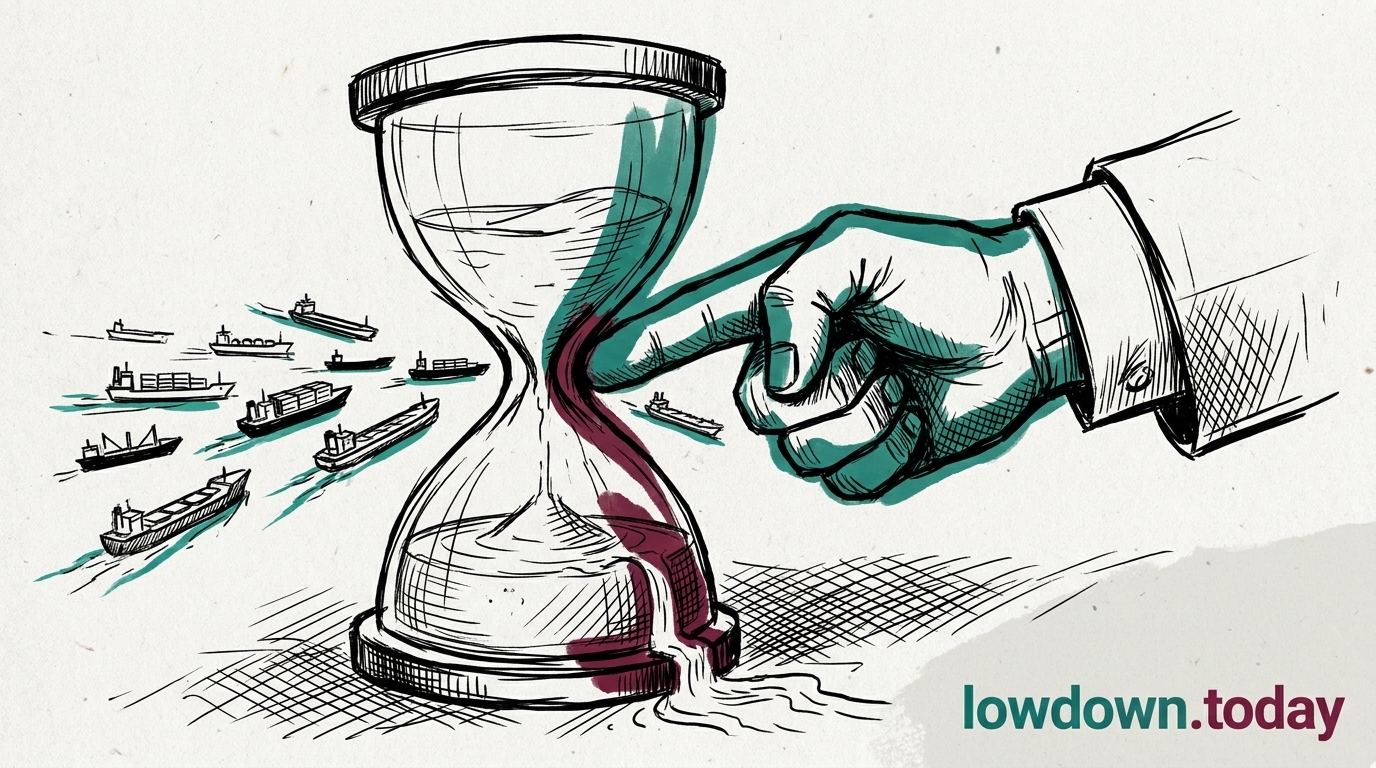
CENTCOM fired a Hellfire missile into the engine room of the Gambian-flagged M/V Lian Star in the Gulf of Oman around 30 May, the blockade's first disabling of a commercial hull by munition.

ConflictDeveloping
Key takeaway

The blockade crossed a threshold: from redirecting ships to destroying a civilian hull's ability to move.

CENTCOM (US Central Command) disabled the Gambian-flagged bulk carrier M/V Lian Star in the Gulf of Oman around Saturday 30 May, firing a Hellfire missile into its engine room after the crew ignored more than 20 blockade warnings 1. The Hellfire is a US precision air-to-ground missile. CENTCOM is the US combatant command that has run the Hormuz blockade since mid-April.

CENTCOM disabled the ship rather than seizing it, leaving its civilian crew aboard a powerless hull, and its cumulative redirection count reached 116 vessels. Every prior interdiction had turned ships away or boarded them.

This is the first time the 90-day blockade has crossed into disabling a commercial hull by munition. The rules of engagement have hardened beyond the Bandar Abbas strikes on Iranian naval targets , which hit military boats and a missile site rather than a merchant ship.

The shift changes the risk calculus for civilian shipping near the blockade zone. A disabled hull adrift with crew aboard also widens Washington's legal exposure under maritime law, where a powerless ship in a busy strait is itself a hazard to other traffic.

Deep Analysis

In plain English

US forces fired a Hellfire missile (a precision weapon normally used to destroy tanks or targeted vehicles) into the engine room of a cargo ship, leaving it unable to move. In 90 days of blockade operations, CENTCOM had previously boarded or redirected 115 vessels. This is the first time it destroyed a commercial vessel's propulsion using a missile. Lian Star's crew, stranded on a powerless hull, cannot leave under their own power. The ship is registered in Gambia, not Iran, meaning the US struck a third-country commercial vessel. Under international maritime law, firing on a non-combatant commercial vessel requires proportionality and exhaustion of lesser means; CENTCOM issued more than 20 warnings before firing.

Deep Analysis
Root Causes

The Lian Star disabling reflects a rules-of-engagement progression that began at redirection (week 1), moved to boarding (week 2), then to Iranian-hull disabling (week 3), and has now reached third-flag hull disabling (week 11). Each step was preceded by a specific compliance failure. The Lian Star's crew ignored more than 20 warnings, which CENTCOM treated as sufficient justification for escalation to munition.

The underlying structural driver is that the blockade's earlier deterrent credibility eroded: 116 cumulative redirections still produced vessels attempting to run the zone. CENTCOM needed a cost-imposing action that fell short of sinking to restore deterrence without triggering a humanitarian crisis.

What could happen next?
  • Precedent

    Third-flag commercial vessels are now subject to propulsion-kill rules of engagement if they attempt to run the blockade zone after 20 warnings, a doctrinal expansion CENTCOM has not formally published.

    Immediate · Assessed
  • Risk

    Gambia as flag state faces liability questions for its vessels in the blockade zone; smaller flag-state registries may accelerate flag-switching away from the Gulf.

    Short term · Assessed
  • Consequence

    Lloyd's of London's war-risk underwriting committee will need to price a new risk category: propulsion-destruction of insured hulls by US munition, not just mine or missile damage from hostile actors.

    Short term · Assessed
First Reported In

Update #113 · Trump signs nothing as a Hellfire hits a hull

CBS News· 31 May 2026
Read original
Different Perspectives
Oil markets / Lloyd's underwriters
Futures markets priced CENTCOM's strikes-complete statement as a de-escalation signal and pushed Brent down 1.7 per cent to $94.71, even as the IRGC declared Hormuz closed. Lloyd's war-risk premiums held elevated because institutional de-listing requires a UN Security Council resolution that Russia and China have just shown they will block.
Pakistan (mediator)
Pakistan (mediator)
Interior minister Mohsin Naqvi carried dual civilian and military letters to Mojtaba Khamenei in Tehran on 6-7 June with no public response. The IRGC's Hormuz closure on 11 June shows the corps is acting independently of the channel Pakistan is using, making the mediation structurally unable to produce a binding commitment without direct IRGC access.
Russia and China
Russia and China
Russia and China voted against GOV/2026/40 at the IAEA Board, following through on the blocking position coordinated with Grossi in Geneva on 5 June; both states continue to oppose Western institutional pressure on Iran at every multilateral venue.
E3 and IAEA (UK, France, Germany)
The E3 co-sponsored IAEA resolution GOV/2026/40, adopted 21-3-10 on 10 June, demanding Iran disclose 440.9 kg of unaccounted HEU and admit inspectors to four denied facilities. The 10 abstentions and Russia-China noes leave any Security Council referral without a viable enforcement path.
IRGC / Iran military command
The corps declared Hormuz closed to all traffic on 11 June and claimed two vessels struck, overriding the MoU its own civilian negotiators were pursuing through Pakistan. The closure order used the Persian Gulf Strait Authority apparatus to convert a toll mechanism into a military prohibition.
Trump administration / CENTCOM
CENTCOM completed a second day of strikes on Tehran, Sirik and Minab, rejected the IRGC Hormuz closure as inconsistent with observed transit, and said strikes were complete. Hegseth framed the bombing explicitly as the negotiation: the method is coercive deal-making with no stated pause threshold.