Skip to content
You can now search across every topic, entity and event.What's new
Iran Conflict 2026
11JUN

GL-U lapses Saturday with no renewal

4 min read
09:17UTC

OFAC General License U, the Treasury instrument authorising Iranian-origin crude already at sea, expires at 12:01am EDT on Saturday 19 April with no published renewal text.

ConflictDeveloping
Key takeaway

Treasury has had 27 days to publish a renewal and has not; 325 tankers lose cover Saturday.

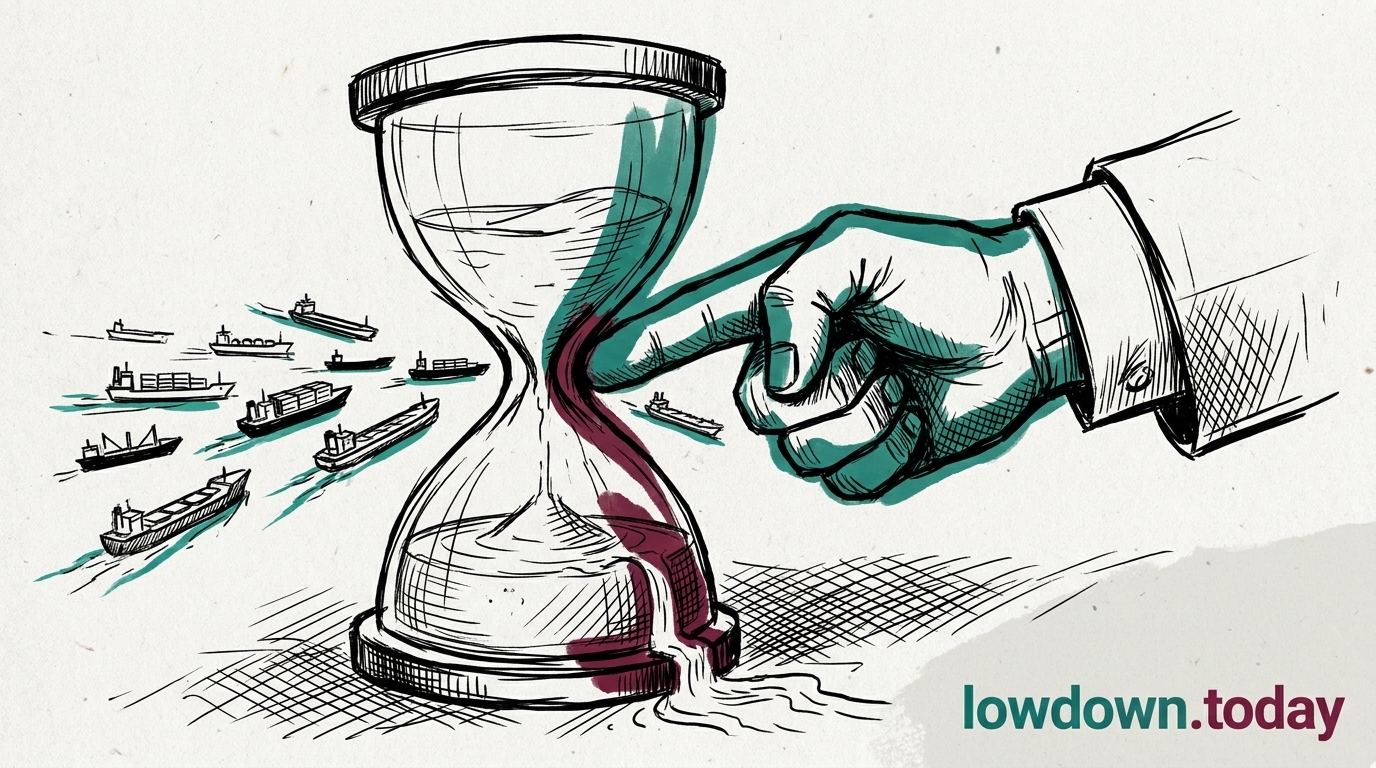
OFAC General License U expires at 12:01am EDT on Saturday 19 April with no published renewal, no replacement, no bridging text. Treasury Secretary Scott Bessent confirmed non-renewal on 15 April , and OFAC has now been silent on Iran for 27 days of calendar runway. The instrument authorises sale of Iranian-origin crude loaded on or before 20 March. Approximately 325 tankers carrying around $31.5 billion of cargo are mid-voyage into a window closing beneath them.

What happens next is not dramatic at the level of explosions; it is dramatic at the level of insurance. Protection and indemnity clubs price cargo on the basis of documented sanctions coverage. A lapsed general licence turns a compliant voyage into a sanctions exposure on arrival. Buyers in South Korea, India and Europe lose the paperwork trail that made them willing to unload the barrels in the first place. Chinese refiners operating on sanctions tolerance already price that exposure into their transactions; others do not.

The timing collision matters more than the underlying policy shift. GL-U lapses three days before the 22 April Iran ceasefire expiry, six days before the Lebanon truce ends and ten days before the WPR 60-day clock runs out. Each of those deadlines carries its own unsigned character, but GL-U is the one with mechanical finality. The clock does not negotiate.

Defenders of the non-renewal will argue it ratchets economic pressure on Tehran. Opponents will note that the pressure lands on third-country buyers and crews in international waters, not on the Iranian state, and that a non-renewal without a published replacement creates precisely the kind of compliance vacuum sanctions architects usually avoid. A sanctions regime produces leverage when counterparties can read it. A regime that runs out without paper produces something closer to a trade disruption with no declared author. Treasury has had 27 days to choose otherwise.

Deep Analysis

In plain English

Since March, a US Treasury licence called General Licence U had given legal cover to ships carrying Iranian oil that was already at sea. Without it, those ships and their buyers are exposed to US sanctions , financial penalties that can cut them off from the global banking system. On 19 April the licence expires with no extension. About 325 tankers carrying oil worth roughly $31 billion lose that cover simultaneously. That is an unusual legal situation: normally the US phases out these licences gradually to avoid market chaos. This time there is no phase-out.

Deep Analysis
Root Causes

GL-U's expiry without renewal is the direct financial instrument of what Bessent called 'the financial equivalent of the bombing campaign' , a deliberately coordinated economic pressure track running parallel to CENTCOM operations. The root mechanism is the first-ever OFAC authorisation of Iranian-origin crude transactions, which created a legal window that Bessent is now closing to maximise leverage before the 22 April ceasefire expiry.

The 325-tanker exposure traces to the gap between GL-U's issuance on 20 March , covering cargo loaded before that date , and the 16 April ceasefire announcement. Tankers loaded in the expectation of the licence remaining valid are now legally stranded without any transition mechanism. The simultaneous ceasefire announcement three days before the licence expiry compresses the negotiating timeline to a point where Iran cannot accept terms and operationally comply before the sanctions snap back.

What could happen next?
  • Consequence

    325 tankers carrying $31.5 billion of cargo become simultaneously exposed to US primary and secondary sanctions with no transition mechanism, a legally unprecedented cargo-stranding event.

    Immediate · High
  • Risk

    P&I insurers revoking cover for GL-U-expired cargo will force Iranian crude onto non-Western insurance, accelerating the bifurcation of global maritime insurance markets begun with Russia in 2022.

    Medium term · Medium
  • Opportunity

    Chinese teapot refiners and Indian state buyers may absorb stranded cargo at steep discount, partially offsetting the supply shock but locking in long-term Iranian crude dependency outside US financial system reach.

    Short term · Medium
First Reported In

Update #71 · Netanyahu learned from the media

US Department of the Treasury (OFAC)· 17 Apr 2026
Read original
Different Perspectives
Hormuz shipping and insurance market
Kpler, Lloyd's List and S&P Global each independently put Strait of Hormuz transits at a seventh to a sixth of pre-war levels, against CENTCOM's own position that the strait remains open for transit. War-risk premiums rose from 0.25% to 3-10% of hull value in mid-July and have held steady since.
Pakistan (with China)
Iran's interior minister met Pakistan's army chief in Islamabad on 25 July, his second visit in ten days, with China separately pushing the same track; Islamabad's stated precondition, a halt to Gulf attacks, broke within hours when the Houthis struck Yanbu and Jazan. The channel inherits Baghdad's opening without yet fixing what broke it.
Saudi Arabia
Saudi Arabia
Saudi Arabia absorbed Houthi strikes on Aramco-linked sites at Jazan and Yanbu on 25 July without confirming them, while holding a 30-year civil nuclear agreement Trump made conditional on joining the Abraham Accords two days after signing it. Riyadh is fighting on one front while being asked to concede on another.
Iran (state security leadership)
Iran's security chief said strikes continue until the enemy's "total surrender", and no IRNA, Tasnim or Fars report carries any stand-down language to match Washington's pause. Tehran reads the halt as "strategic decision-making fatigue", not a restraint it needs to reciprocate.
Washington (Pentagon and White House)
A Defense Department source called the bombing halt "on a hold", Pentagon spokesman Sean Parnell insisted the US "retains a deep arsenal of capabilities", and the White House credited "successful sanctions" and thirteen days of strikes for the same pause. Three explanations from one government suggest none of them is the whole one.
Oil traders
Oil traders
Sent Brent down 2.29 per cent to $98.38 a barrel on reports that mediation was reviving, moving the price on CENTCOM's quiet night rather than on Trump's same-day promise of a bigger operation with no deadline attached.