Skip to content
Briefings are running a touch slower this week while we rebuild the foundations.See roadmap
Iran Conflict 2026
8JUN

IRGC claims first US aircraft kill

4 min read
09:58UTC

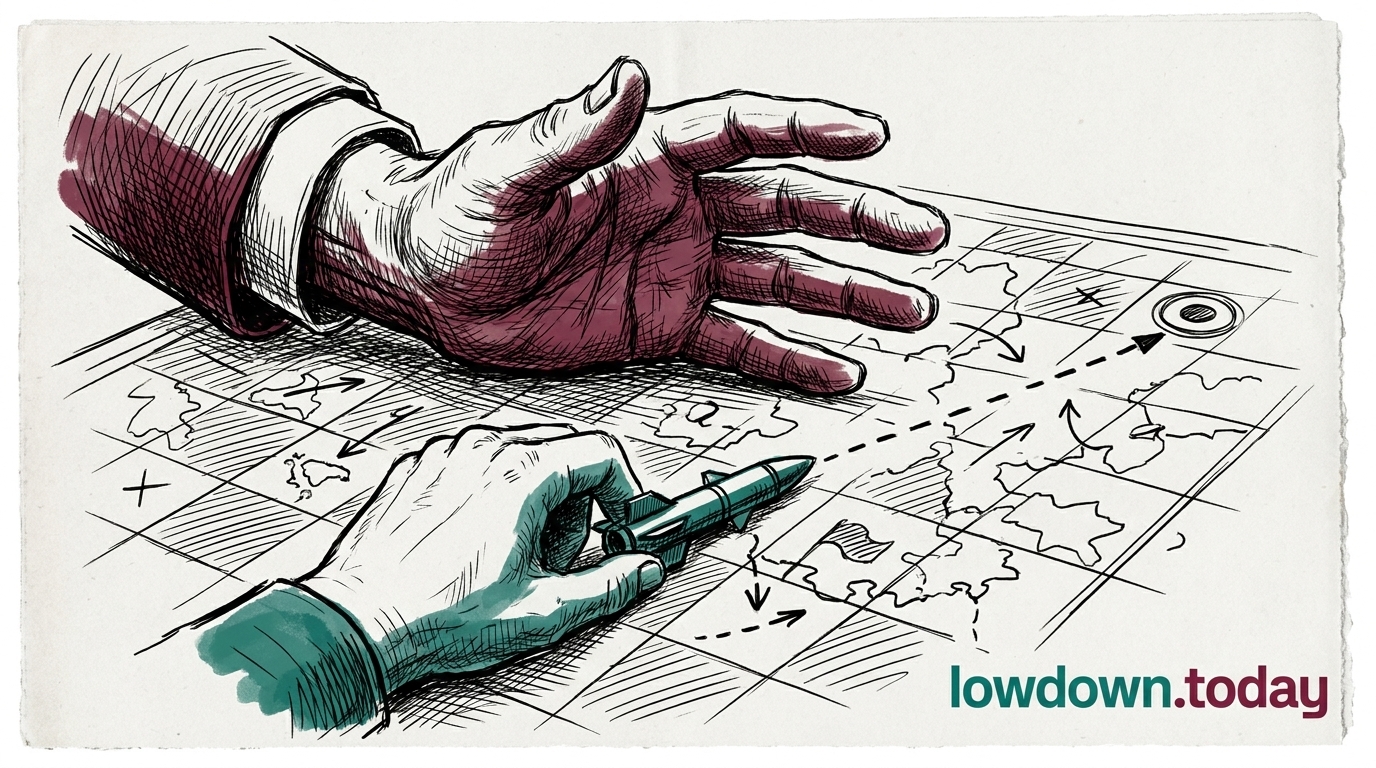
The IRGC says it downed a US MQ-9 Reaper over the Persian Gulf and fired on an F-35 and an RQ-4; CENTCOM has said nothing, and no photograph has surfaced.

ConflictDeveloping
Key takeaway

Iran turned rhetoric into a claimed kill, but with no evidence the 25th Reaper stays a contested figure.

The Islamic Revolutionary Guard Corps (IRGC), Iran's ideological military force, claimed on Tuesday 26 May that it shot down a US MQ-9 Reaper drone over the Persian Gulf and fired on an F-35 fighter and an RQ-4 surveillance aircraft, forcing both from Iranian airspace 1. Brigadier General Abolfazl Shekarchi, the IRGC spokesman, framed the action as retaliation for the 25 May strikes on the port of Bandar Abbas, where CENTCOM destroyed two IRGC mine-laying boats and a missile site . He warned that any future US or Israeli attack would draw a very devastating response.

CENTCOM, the US military command for the Middle East, has issued no statement on the reported loss. No photograph or wreckage has been produced, so the claim rests on Iranian state media alone. The MQ-9 is a General Atomics surveillance and strike drone, unmanned and roughly $30m a unit, which is why losing one is a propaganda event rather than a casualty event.

The Congressional Research Service (CRS), the non-partisan research arm of the US Congress, logged 24 Reapers among 42 US aircraft lost or damaged through 20 May, an independent count rather than a CENTCOM figure 2. A confirmed 25th Reaper would push drone losses past half of the named total. The numbers describe a campaign bleeding hardware, not crews: the cost lands on procurement budgets and on the question of how long uncontested surveillance over The Gulf can be assumed.

What the IRGC claim does, confirmed or not, is convert a defiant statement into a defiant act on the same day Tehran's negotiators returned from Doha with no signed deal. A real strike answered a real strike while the instrument that would stop both stayed unsigned.

Deep Analysis

In plain English

The IRGC (Iran's Islamic Revolutionary Guard Corps, roughly Iran's elite ideological military) claimed on 26 May that it shot down a US MQ-9 Reaper drone, a large, remotely piloted aircraft that General Atomics builds for the US Air Force for surveillance and strike missions. Iran also said it fired at a US F-35 jet and another surveillance drone, forcing them out of Iranian airspace. The US military has not confirmed or denied the loss. Iran has made similar claims before and rarely produces physical proof, such as wreckage or photographs. An independent US congressional body, the Congressional Research Service, had already counted 24 Reapers lost in this conflict before the 26 May claim. Iran may be telling the truth, or it may be amplifying a loss caused by something else. Until one side produces evidence, what actually happened over the Persian Gulf that day stays contested.

Deep Analysis
Root Causes

The IRGC's incentive to claim aircraft kills without evidence flows from two structural conditions. First, the Decentralised Mosaic Defence doctrine (activated 28 February 2026) devolved launch authority to 31 autonomous provincial units. Those units report up through the IRGC chain, but verification of a shootdown requires centralised physical recovery, which the doctrine disperses. A unit-level commander claiming a kill has no bureaucratic check before the claim reaches public affairs.

Second, CENTCOM's non-acknowledgement policy on unconfirmed losses creates an information asymmetry the IRGC exploits deliberately. The CRS figure of 42 aircraft lost through 20 May means the US government has already accepted public accountability for a large attrition number; adding a 25th Reaper to a confirmed base of 24 costs CENTCOM relatively little in the loss column but gives the IRGC a domestic narrative win that costs nothing to produce.

Escalation

The IRGC's claim raises the escalation temperature without yet constituting a confirmed escalation. If CENTCOM acknowledges the loss, the 25th Reaper kill becomes a documented capability data point that alters drone-overflight risk calculus for coalition partners.

If CENTCOM stays silent, the IRGC has demonstrated that non-denial works as well as proof. The F-35 and RQ-4 firing claims, if true, mark the first time a fifth-generation US aircraft was directly engaged, which carries a separate category of escalatory weight.

What could happen next?
  • Risk

    A confirmed 25th Reaper loss would push MQ-9 attrition past 50% of the CRS-documented total aircraft losses, triggering a congressional procurement debate about whether drone operations over the Persian Gulf remain cost-effective.

  • Precedent

    CENTCOM's silence policy on unconfirmed losses systematically hands Iran a free escalation narrative: claim without proof, wait for non-denial, announce a victory.

First Reported In

Update #109 · War Powers clock outlasts Congress by a day

GlobalSecurity· 27 May 2026
Read original
Different Perspectives
Bahrain / Gulf partners
Bahrain's PAC-3 interceptor magazine sits at 87% depletion after absorbing IRGC salvos aimed at US bases; no resupply is scheduled before 2027, concentrating the intercept burden on US assets and Israeli Iron Dome and Arrow-3.
IAEA / Vienna process
IAEA officials cited proliferation concerns over 440.9 kg of HEU unaccounted for after 97 days without inspector access; the Board session that opened 8 June cannot retroactively close the evidentiary gap its own resolution documents.
China
China
China absorbed the Shanghai Qianye designation by OFAC and opposes censure at the IAEA Board, arguing the verification gap was created by strikes rather than Iranian non-compliance, a framing it shares with Russia to protect the non-Western bloc's Board votes.
Russia
Russia
Putin reaffirmed at SPIEF on 6 June his offer to hold Iran's uranium stockpile as custodian, a proposal the IAEA's 97-day verification gap now renders undeliverable: no one can transfer or confirm a stockpile that has not been inspected.
United States / Trump administration
Trump publicly asked Netanyahu not to retaliate and described a deal as 95% done; Rubio then acknowledged enrichment terms could take months. The 24-hour gap between the request and the Mahshahr strike removes the credible-restraint argument from US diplomatic leverage with Tehran.
Israel / Netanyahu government
Netanyahu struck the Mahshahr complex and missile sites inside Iran within 24 hours of Trump's public no-retaliation request, a second kinetic override of US counsel that confirms Israel will not allow Tehran to dictate the terms of the exchange.