Skip to content
Briefings are running a touch slower this week while we rebuild the foundations.See roadmap
Iran Conflict 2026
6JUN

Half of Iran's missiles survive, WSJ reports

2 min read
12:17UTC

The Wall Street Journal, citing US intelligence officials, reported on 10 April that Iran has preserved roughly half its ballistic missile and attack-drone stockpile. Defence Secretary Pete Hegseth called the programme 'functionally destroyed' a fortnight earlier.

ConflictDeveloping
Key takeaway

Washington's spies believe Iran can still hurt things; Washington's ministers do not say so.

The Wall Street Journal, citing US intelligence officials, reported on 10 April that Tehran has preserved roughly half its ballistic missile and attack-drone stockpile and retains "thousands of ballistic missiles" 1. Defence Secretary Pete Hegseth had told reporters in late March that Iran's missile and drone programmes were "functionally destroyed", and Benjamin Netanyahu said last month that Iran had "no ability" to rebuild.

More than half of Iran's missile launchers have been destroyed, damaged, or buried by US and Israeli strikes, the same officials say, but Tehran can still repair them or dig the buried ones out. US intelligence believes Iran can reconstitute significant strike capability on a timeline measured in months, not years. This is single-provenance US-intelligence reporting relayed through one American paper.

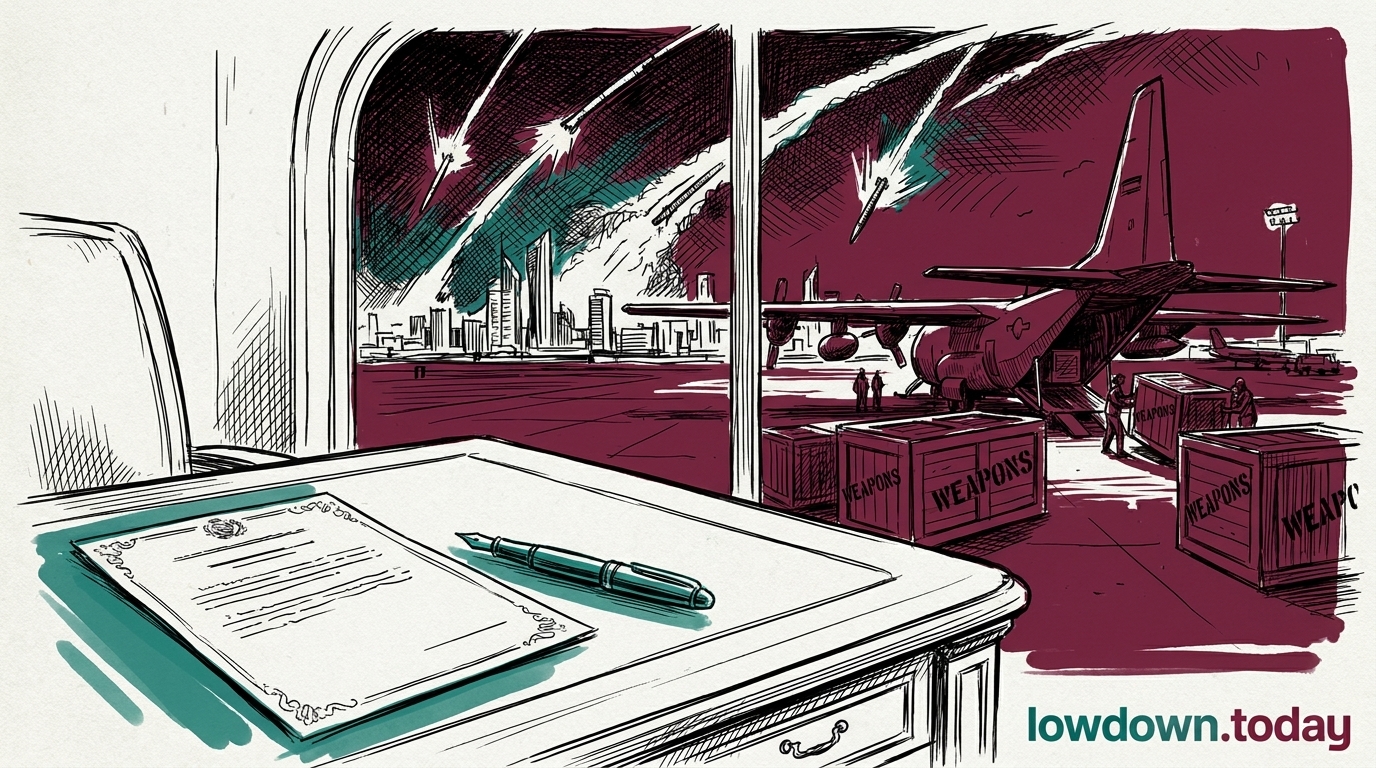
The assessment arrives in the same week Washington has issued zero formal Iran presidential instruments across the full war and during the diplomatic window opened at Islamabad . Every declaration of completion in this war has been followed within days by an intelligence assessment that quietly contradicts it: Trump's "nuclear objective attained", Hegseth's "functionally destroyed", Netanyahu's "no ability". The public claim shrinks; the private estimate catches up.


Deep Analysis

In plain English

Defence Secretary Hegseth said Iran's missiles were 'functionally destroyed'. Israel's Netanyahu said Iran had 'no ability to rebuild'. The US intelligence community — the same officials whose analysis underlies both those claims — now says Iran has kept roughly half its missiles. This does not mean the strikes failed entirely: more than half of Iran's launch platforms (the vehicles and fixed sites from which missiles are fired) have been damaged or destroyed. But the missiles themselves, buried in dispersed underground sites, survived in much larger numbers than the public statements suggested.

Deep Analysis
Root Causes

Iran's missile survivability reflects two design choices made over 15 years of sanctions pressure. The IRGC Aerospace Force built geographically-dispersed underground storage — the buried launchers US officials acknowledge can be excavated — specifically anticipating an air campaign that could not sustain ground-level destruction of hardened sites.

The second factor is the Decentralised Mosaic Defence doctrine itself: by devolving launch authority to autonomous provincial units, Iran reduced the command-and-control concentration that would make a decapitation strike operationally effective. A 50% launcher loss with dispersed warhead survival is a designed outcome, not a failure.

First Reported In

Update #65 · Iran lost its own minefield

Haaretz· 11 Apr 2026
Read original
Causes and effects
This Event
Half of Iran's missiles survive, WSJ reports
The rhetoric-versus-reality gap is becoming the war's most consistent pattern, and every future strike calculus must assume Iranian retaliation capability rather than a degraded one.
Different Perspectives
IAEA (Board of Governors, Vienna)
Grossi's 4 June Board report invoked 'loss of continuity of knowledge' on Iran's 440.9 kg stockpile after 97 days without access, the IAEA's formal finding that the evidentiary break cannot be retroactively closed. A Board censure resolution before 12 June would harden Iran's refusal to restore access.
Russia (Kremlin / SPIEF)
Putin reaffirmed Russia's offer to hold Iran's uranium at the St Petersburg Economic Forum on 6 June, positioning Moscow as the preferred custodian even after Trump vetoed the arrangement on 27 May. The offer allows Russia to present itself as a constructive actor while the IAEA verification gap renders any custodian arrangement unworkable.
Bahrain (Government and US Fifth Fleet host)
Bahrain's PAC-3 magazine reached 87% depletion after the 5 June IRGC salvo, with its resupply last in a Camden queue behind Qatar and Saudi Arabia. Manama hosts the US Fifth Fleet with terminal air defences that the supply chain cannot replenish before 2027.
China (Ministry of Commerce)
Washington designated Shanghai Qianye Energy on 5 June, the first mainland Chinese firm under Iran energy sanctions this war, the same week Beijing was pitched as a uranium custodian. China has not yet invoked its Blocking Statute; whether it absorbs the designation as a calibrated cost or retaliates is unresolved.
Iran (IRGC and Expediency Council)
The IRGC fired seven ballistic missiles at US bases in Kuwait and Bahrain on 5 June and Rezaei doubled the asset precondition to $24bn on 6 June, blocking both military and diplomatic de-escalation simultaneously. Tehran's hardliners are setting terms the civilian Foreign Ministry cannot override.
Trump administration (White House)
Trump claimed the uranium was 'entombed' and the deal '95% done' on 4 June, while signing no Iran executive instrument across Days 99-100. The gap between presidential assertion and signed executive action is now 100 days wide and structurally unchanged.



