Skip to content
Briefings are running a touch slower this week while we rebuild the foundations.See roadmap
Iran Conflict 2026
6JUN

Pentagon briefs strikes up, missiles down

2 min read
12:17UTC

Defence Secretary Pete Hegseth told reporters today's air operations would be the largest since Day 1, while calling Iran's outbound missile rate the lowest of the war.

ConflictDeveloping
Key takeaway

Strike volume up and Iranian missile rate down, but Hegseth offered no target detail to anchor either claim.

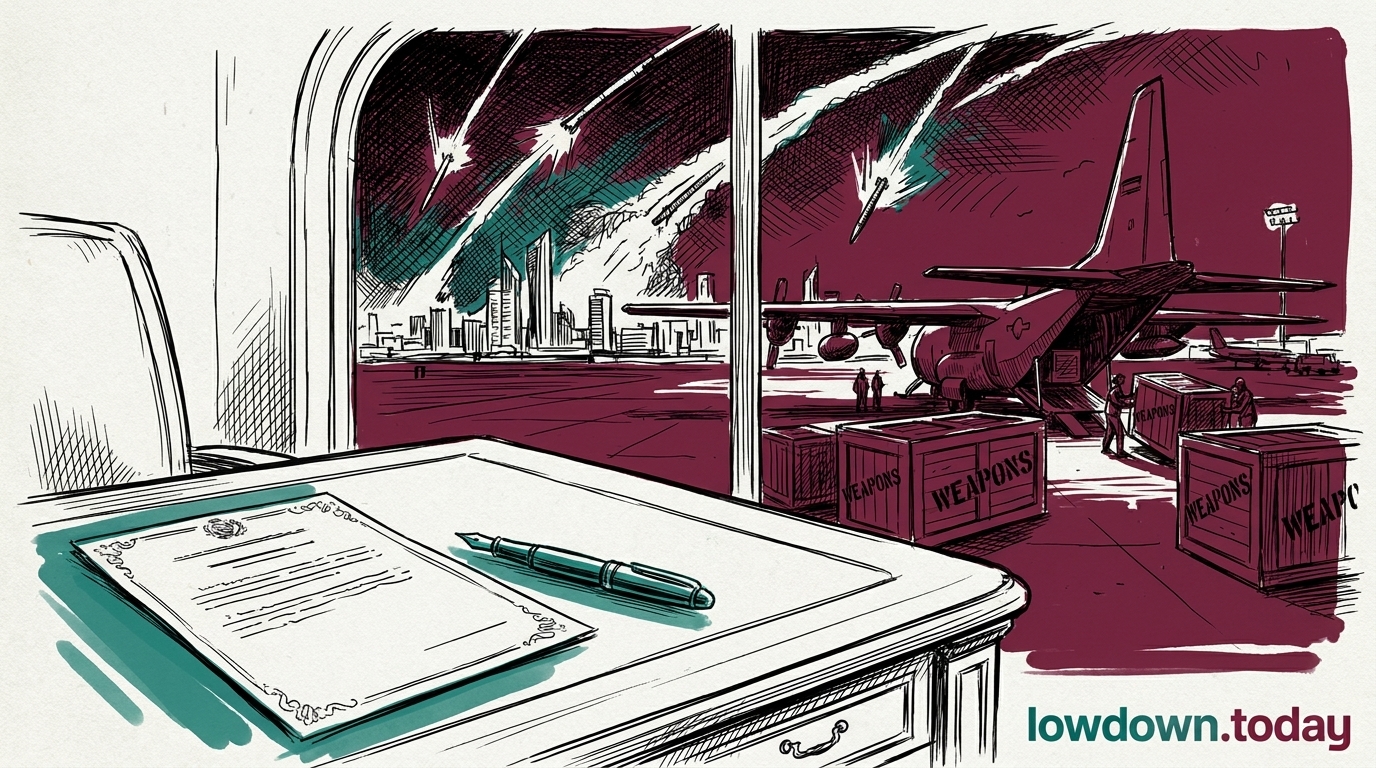
Defence Secretary Pete Hegseth told reporters at the Pentagon that today's air operations would constitute "the largest volume of strikes since Day 1", and in the same briefing characterised Iran's outbound missile fire over the prior daily as the lowest of the war 1.

Both statements may be true. Neither tells the reader where the strikes are landing. Hegseth declined to specify target categories, and the civilian-infrastructure thresholds rhetorically crossed at every prior deadline were conspicuously not announced. Tonight's largest-volume claim therefore describes more sorties against the same target list, not a shift up the escalation ladder.

Iran's lowest-of-war missile rate is the more analytically ambiguous half. It could reflect deliberate conservation, SEAD-driven degradation of Iran's launchers, or pre-deadline withholding for a single high-volume strike. The interceptor depletion picture makes either reading consequential. Hegseth's framing leans towards the second reading, but the briefing offered no underlying data to support it. The direction resolves only over the coming days.


Deep Analysis

In plain English

At today's Pentagon press briefing, Defence Secretary Pete Hegseth said US air operations on 7 April would be the largest by volume since the war began , and in the same breath said Iran's missile fire over the past day was the lowest of the war. Both can be true. What Hegseth did not say is where the strikes are landing or what they are hitting. 'More strikes' without a new target category means more of the same, not a step up the escalation ladder. Iran's low missile rate is harder to read: it could mean Iran's launch capability is being degraded, or it could mean Tehran is holding back for a single large strike. The briefing describes the surface; it does not explain the shape underneath.

Deep Analysis
Escalation

The combination of highest-ever US strike volume and Iran's lowest-of-war missile rate is ambiguous on escalation direction. If the low missile rate reflects SEAD success, the US is degrading Iran's retaliatory capacity ahead of any enforcement action , a pre-escalation indicator. If it reflects Iranian deliberate withholding, Tehran may be conserving for a single high-volume strike on or after the deadline, a different escalation indicator. Both readings are consistent with the briefing data.

What could happen next?
  • Risk

    If Iran's lowest-of-war missile rate reflects deliberate withholding rather than SEAD degradation, Tehran may be conserving capacity for a concentrated post-deadline strike , a possibility the Pentagon briefing framing actively obscures.

  • Meaning

    The absence of any new target category announcement in the 'largest strikes' briefing confirms the operational ceiling has not moved despite the rhetoric peak, consistent with the pattern across all five prior deadline cycles.

First Reported In

Update #61 · Carriers retreat; Iran codifies Hormuz

Press TV· 7 Apr 2026
Read original
Different Perspectives
IAEA (Board of Governors, Vienna)
Grossi's 4 June Board report invoked 'loss of continuity of knowledge' on Iran's 440.9 kg stockpile after 97 days without access, the IAEA's formal finding that the evidentiary break cannot be retroactively closed. A Board censure resolution before 12 June would harden Iran's refusal to restore access.
Russia (Kremlin / SPIEF)
Putin reaffirmed Russia's offer to hold Iran's uranium at the St Petersburg Economic Forum on 6 June, positioning Moscow as the preferred custodian even after Trump vetoed the arrangement on 27 May. The offer allows Russia to present itself as a constructive actor while the IAEA verification gap renders any custodian arrangement unworkable.
Bahrain (Government and US Fifth Fleet host)
Bahrain's PAC-3 magazine reached 87% depletion after the 5 June IRGC salvo, with its resupply last in a Camden queue behind Qatar and Saudi Arabia. Manama hosts the US Fifth Fleet with terminal air defences that the supply chain cannot replenish before 2027.
China (Ministry of Commerce)
Washington designated Shanghai Qianye Energy on 5 June, the first mainland Chinese firm under Iran energy sanctions this war, the same week Beijing was pitched as a uranium custodian. China has not yet invoked its Blocking Statute; whether it absorbs the designation as a calibrated cost or retaliates is unresolved.
Iran (IRGC and Expediency Council)
The IRGC fired seven ballistic missiles at US bases in Kuwait and Bahrain on 5 June and Rezaei doubled the asset precondition to $24bn on 6 June, blocking both military and diplomatic de-escalation simultaneously. Tehran's hardliners are setting terms the civilian Foreign Ministry cannot override.
Trump administration (White House)
Trump claimed the uranium was 'entombed' and the deal '95% done' on 4 June, while signing no Iran executive instrument across Days 99-100. The gap between presidential assertion and signed executive action is now 100 days wide and structurally unchanged.



