Skip to content
Briefings are running a touch slower this week while we rebuild the foundations.See roadmap
Iran Conflict 2026
5JUN

Treasury signs Russia waiver, lets Iran's lapse

4 min read
08:43UTC

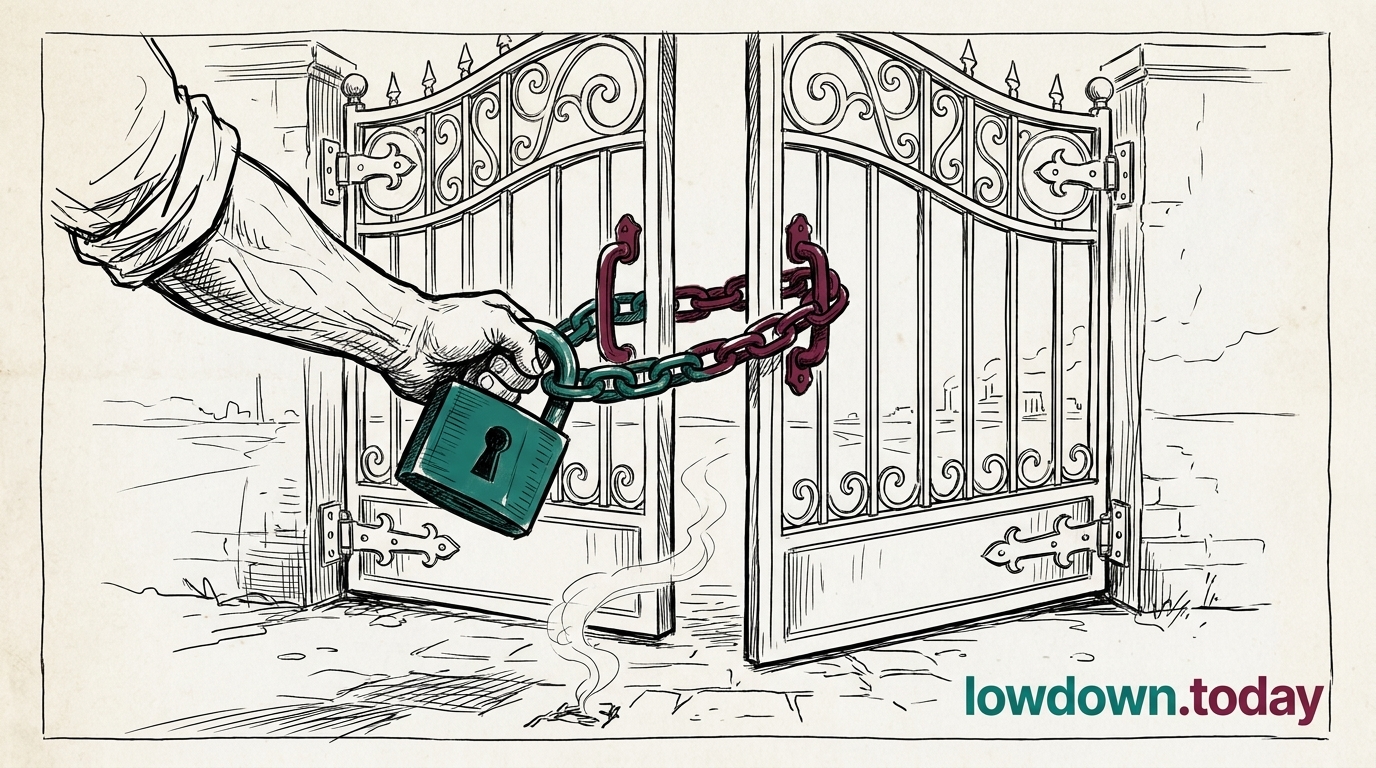
OFAC let Iran's crude-export waiver expire at one minute past midnight, then on the same day signed the Russia equivalent through to 16 May.

ConflictDeveloping
Key takeaway

Treasury signed Russia's oil waiver on the same day it let Iran's expire at one minute past midnight.

On 19 April Treasury Secretary Scott Bessent's Office of Foreign Assets Control (OFAC) allowed General License U, OFAC's Iran-crude waiver, to lapse at 00:01 EDT with no Federal Register notice and no replacement instrument . The same Treasury Department, on the same day, signed General License 134B, the Russia seaborne-oil equivalent, extending Moscow's waiver to 16 May . OFAC does not sign General Licenses by accident, and the Federal Register carries both instruments from the same 19 April working day.

The White House presidential-actions index on 19 April recorded 51 days of Iran war with zero signed Iran executive instruments . Two non-Iran orders were signed the same week, a college-sports executive order and a mental-illness treatment order, so the signing pen was available. Iran simply did not get it. Put differently, Treasury signed Russia's waiver the same day it let Iran's lapse. One country's oil flows with written permission; the other's is being stopped at gunpoint without any.

For European refiners the practical question is whose US-sanctions paper their bankers can now present to a letter-of-credit counterparty. GL-U had been the cover for residual Iran-linked crude in Chinese and Turkish flows; GL-134B continues to cover Russian barrels the G7 price cap was designed to constrain. Shipping underwriters will read the same asymmetry into war-risk premiums: a hull carrying Russian crude operates under extant US paper, a hull carrying Iranian crude operates against US paper that expired at one minute past midnight and was not renewed.

A counter-view from Treasury's defenders is that GL-U's expiry is a technical consequence of the blockade, not a signed policy, and that allowing it to lapse is itself a policy decision Congress has not contested. That reading still leaves the asymmetry on the page. The Trump administration's Russia posture has been argued on diplomatic grounds for months; the Iran posture is now operating without the paper a foreign court would expect to see.

Deep Analysis

In plain English

On 19 April the US Treasury department let a special permit called General Licence U expire. That permit had been allowing about 325 tankers carrying Iranian oil worth roughly $31 billion to complete their deliveries legally. It expired quietly, with no announcement, no replacement, and no warning. On the same day, the same department signed a different permit called General Licence 134B, which allowed Russian oil tankers to keep operating until 16 May. Russia got a signed renewal with a date on it. Iran got nothing, with no notice. This is the first time that gap between Iran and Russia has appeared in actual signed paperwork rather than in speeches. Meanwhile, in 52 days of conflict, President Trump signed zero executive documents specifically about Iran, but did sign executive orders about college sports and mental illness treatment in the same week.

Deep Analysis
Root Causes

The GL-U / GL-134B asymmetry has two structural causes running in parallel. First, Russia receives a signed waiver because US energy markets depend on continuity: an abrupt GL-134B lapse would disrupt European LNG re-export chains and Asian crude buyers, creating domestic economic blowback the administration cannot absorb.

Iran receives no signed instrument because verbal enforcement preserves maximum flexibility, avoids triggering WPR 60-day deadlines that attach to signed hostility declarations, and sidesteps Senate Foreign Relations Committee review.

Second, the GL-U lapse produces its tightening effect without a visible White House action: no signing ceremony, no Federal Register notice, no congressional notification. The administration gets the economic impact of a signed Iran order with none of the institutional accountability a signed order would create.

What could happen next?
  • Consequence

    Every foreign admiralty court reviewing a Touska-type custody claim will read the White House presidential-actions index and find 52 days of Iran-specific silence; the legal exposure compounds with each passing day.

    Short term · 0.74
  • Risk

    Senator Hawley's AUMF push, timed to the WPR 60-day clock around 1 May, may produce the first signed Iran instrument of the war under the most adversarial congressional conditions available.

    Short term · 0.65
  • Precedent

    The GL-U lapse-without-notice model demonstrates that waiver expiry can function as a de facto sanctions tightening action with no executive accountability signature attached.

    Long term · 0.7
First Reported In

Update #74 · Two unsigned rulebooks collide at Hormuz

Al Jazeera· 20 Apr 2026
Read original
Different Perspectives
Israel
Israel
IDF Chief Eyal Zamir declared on 3 June there was no ceasefire for his forces, and strikes killed at least 10 civilians and one Israeli soldier on 4 June. The IDF killed Hezbollah's chief engineer and warned three south Lebanon villages to evacuate on 5 June, advancing into ground the unsigned Washington framework has not caught.
Hezbollah / Lebanon
Hezbollah / Lebanon
Naim Qassem rejected the Washington Lebanon framework on 4 June as "absurd, humiliating and insulting", blocking a ceasefire instrument that required Hezbollah to withdraw north of the Litani before any Israeli withdrawal. Over one million Lebanese remain displaced; the framework's collapse prolongs that toll.
Iran
Iran
Foreign Minister Araghchi publicly coupled the Lebanon ceasefire to the Iran-US nuclear track on 4 June, carrying IRGC authority rather than his own civilian mandate. The IRGC delegation has sent no HEU counter-proposal since Araghchi confirmed no progress that same day; Mojtaba Khamenei's 21 May order to keep the 440.9 kg stockpile inside Iran remains operative.
United States
United States
Rubio placed the Iran-US deal at 95 per cent complete on 4 June while the administration signed no Iran instrument and OFAC designated only Cuban targets. Trump separately disclosed and rejected an airlift plan to collect Iran's HEU stockpile, claiming the material is "entombed", a claim the IAEA cannot verify.
China
China
Beijing's MOFCOM Blocking Rules constrain OFAC enforcement on the mainland; China has not corroborated Trump's verbal account of any bilateral summit, and the rial's failure to hold its Rubio bounce, combined with the IRGC's stablecoin rail closure, increases Chinese yuan-denominated oil-payment exposure through Hormuz.
Bahrain
Bahrain
The IRGC struck Bahrain on 3 June as its sirens sounded and its PAC-3 magazine neared exhaustion; excluded from Rubio's 2 May emergency resupply, Bahrain received a 50-round Federal Register notice on 1 June on an 18-month delivery timeline, meaning it is defending the US Fifth Fleet headquarters on the last rounds it has.