Skip to content
Briefings are running a touch slower this week while we rebuild the foundations.See roadmap
Iran Conflict 2026
4JUN

Britain will not join offensive on Iran

2 min read
11:25UTC

Starmer told Parliament that Britain will not fight, invoking Iraq — capping a 72-hour arc from authorising base access to absorbing a drone strike on sovereign territory to public refusal.

ConflictDeveloping
Key takeaway

Starmer's refusal is as much a product of domestic constitutional convention and Labour's electoral coalition as it is a principled transatlantic break.

Keir Starmer told Parliament that Britain "will not join offensive action" against Iran, invoking the Iraq war directly: "We all remember the mistakes of Iraq, and we have learned those lessons." The statement is the sharpest public break between London and Washington on military action since 18 March 2003, when 139 Labour MPs voted against Tony Blair's motion to authorise the invasion of Iraq.

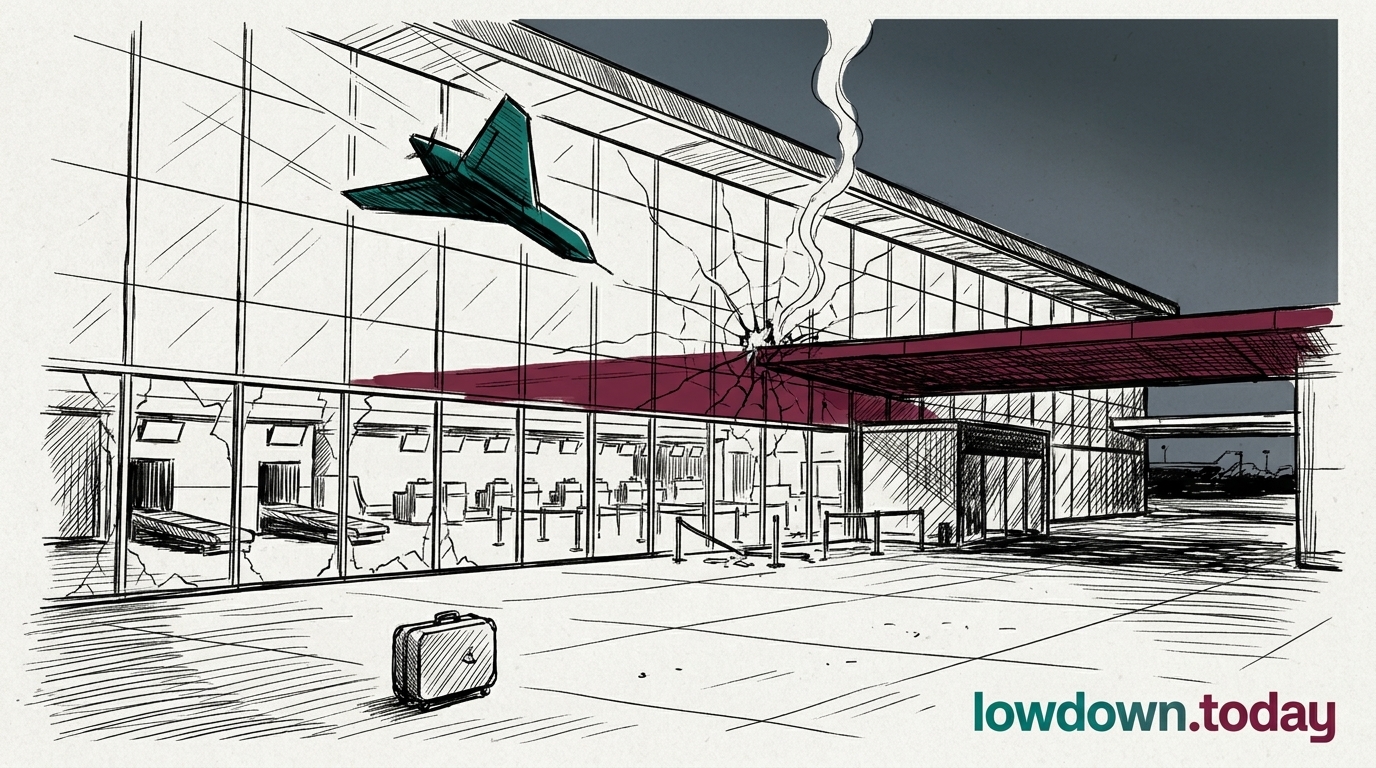
The refusal arrived after a 72-hour sequence that compressed years of alliance management into three days. On 1 March, Starmer authorised US use of Diego Garcia and RAF Fairford for strikes on Iranian missiles and launch sites , which Downing Street described as defensive. Within an hour, a drone struck RAF Akrotiri in Cyprus — a direct hit on British sovereign territory. By Sunday, the prime minister had moved from facilitation to casualty to public disavowal.

The Iraq parallel is more precise than rhetoric. In 2003, Blair committed Britain on intelligence the Chilcot Inquiry later found presented with "a certainty that was not justified." In 2026, Senator Mark Warner told NPR he had "seen no intelligence" supporting the imminent threat claim, and the Pentagon's 90-minute briefing reportedly produced none . The 2003 dispute concerned intelligence quality. The 2026 dispute concerns its reported absence.

Britain's refusal leaves the United States without its closest military partner. No European ally has joined the offensive — France called for an emergency Security Council session; Spain described the operation as contributing to "a more uncertain and hostile international order." Downing Street's distinction between "defensive" base access and "offensive" operations may satisfy parliamentary language, but the drone on Akrotiri demonstrated that whoever fired it did not parse the difference.


Deep Analysis

In plain English

After Parliament blocked David Cameron from bombing Syria in 2013 — the first time MPs had overruled a Prime Minister on war since 1782 — an unwritten rule took hold: the Prime Minister must explain himself to Parliament before joining a conflict. Starmer is following that rule. It also gives him political cover: refusing looks like democratic accountability rather than weakness. The harder pressure comes from Labour's electoral base, which includes constituencies with large Muslim populations still raw from Iraq — Starmer cannot afford to be seen as Blair's heir on a Middle East war.

Deep Analysis
Synthesis

The gap between Events 8 and 9 reveals the real policy: the UK is providing material military support through base access while maintaining political distance through parliamentary language. Under the UK MOD's own Manual of the Law of Armed Conflict (JSP 383), a state providing territory for offensive operations may itself become a party to the conflict — Starmer's statement does not resolve this legal exposure, it papers over it.

Root Causes

Three structural forces converge: the post-2013 parliamentary convention constraining executive war powers; the asymmetric logic of the special relationship, in which the UK provides legitimacy and the US provides capability; and Labour's electoral coalition, which cannot absorb an Iraq repetition without lasting damage to the party's urban majority seats.

Escalation

The 'defensive only' position is politically sustainable only for as long as British bases are not visibly used for strikes that cause significant civilian casualties; the Akrotiri drone hit has already shortened that window by demonstrating that Iran or its proxies will treat base access as a casus belli regardless of Westminster's framing.

What could happen next?
  • Risk

    If UK bases are used for strikes that cause mass civilian casualties, parliamentary and legal pressure to withdraw base access entirely could collapse the UK's operational contribution faster than a formal refusal to participate.

    Short term · Suggested
  • Precedent

    A successful public refusal by a major US ally without apparent penalty would encourage other alliance partners to similarly decouple political endorsement from operational support.

    Medium term · Suggested
  • Consequence

    UK exclusion from post-conflict governance discussions on Iran is likely if Washington perceives London's refusal as undermining operational legitimacy.

    Medium term · Suggested
First Reported In

Update #9 · IRGC HQ destroyed; Britain quits coalition

Gov.uk· 2 Mar 2026
Read original
Causes and effects
This Event
Britain will not join offensive on Iran
Britain's refusal leaves the United States without any European military partner and raises the Iraq-era question of intelligence justification — with the difference that in 2003 the dispute concerned intelligence quality, while in 2026 it concerns its reported absence.
Different Perspectives
Israel
Israel
IDF Chief Eyal Zamir declared on 3 June there was no ceasefire for his forces, and strikes killed at least 10 civilians and one Israeli soldier on 4 June. The IDF killed Hezbollah's chief engineer and warned three south Lebanon villages to evacuate on 5 June, advancing into ground the unsigned Washington framework has not caught.
Hezbollah / Lebanon
Hezbollah / Lebanon
Naim Qassem rejected the Washington Lebanon framework on 4 June as "absurd, humiliating and insulting", blocking a ceasefire instrument that required Hezbollah to withdraw north of the Litani before any Israeli withdrawal. Over one million Lebanese remain displaced; the framework's collapse prolongs that toll.
Iran
Iran
Foreign Minister Araghchi publicly coupled the Lebanon ceasefire to the Iran-US nuclear track on 4 June, carrying IRGC authority rather than his own civilian mandate. The IRGC delegation has sent no HEU counter-proposal since Araghchi confirmed no progress that same day; Mojtaba Khamenei's 21 May order to keep the 440.9 kg stockpile inside Iran remains operative.
United States
United States
Rubio placed the Iran-US deal at 95 per cent complete on 4 June while the administration signed no Iran instrument and OFAC designated only Cuban targets. Trump separately disclosed and rejected an airlift plan to collect Iran's HEU stockpile, claiming the material is "entombed", a claim the IAEA cannot verify.
China
China
Beijing's MOFCOM Blocking Rules constrain OFAC enforcement on the mainland; China has not corroborated Trump's verbal account of any bilateral summit, and the rial's failure to hold its Rubio bounce, combined with the IRGC's stablecoin rail closure, increases Chinese yuan-denominated oil-payment exposure through Hormuz.
Bahrain
Bahrain
The IRGC struck Bahrain on 3 June as its sirens sounded and its PAC-3 magazine neared exhaustion; excluded from Rubio's 2 May emergency resupply, Bahrain received a 50-round Federal Register notice on 1 June on an 18-month delivery timeline, meaning it is defending the US Fifth Fleet headquarters on the last rounds it has.



