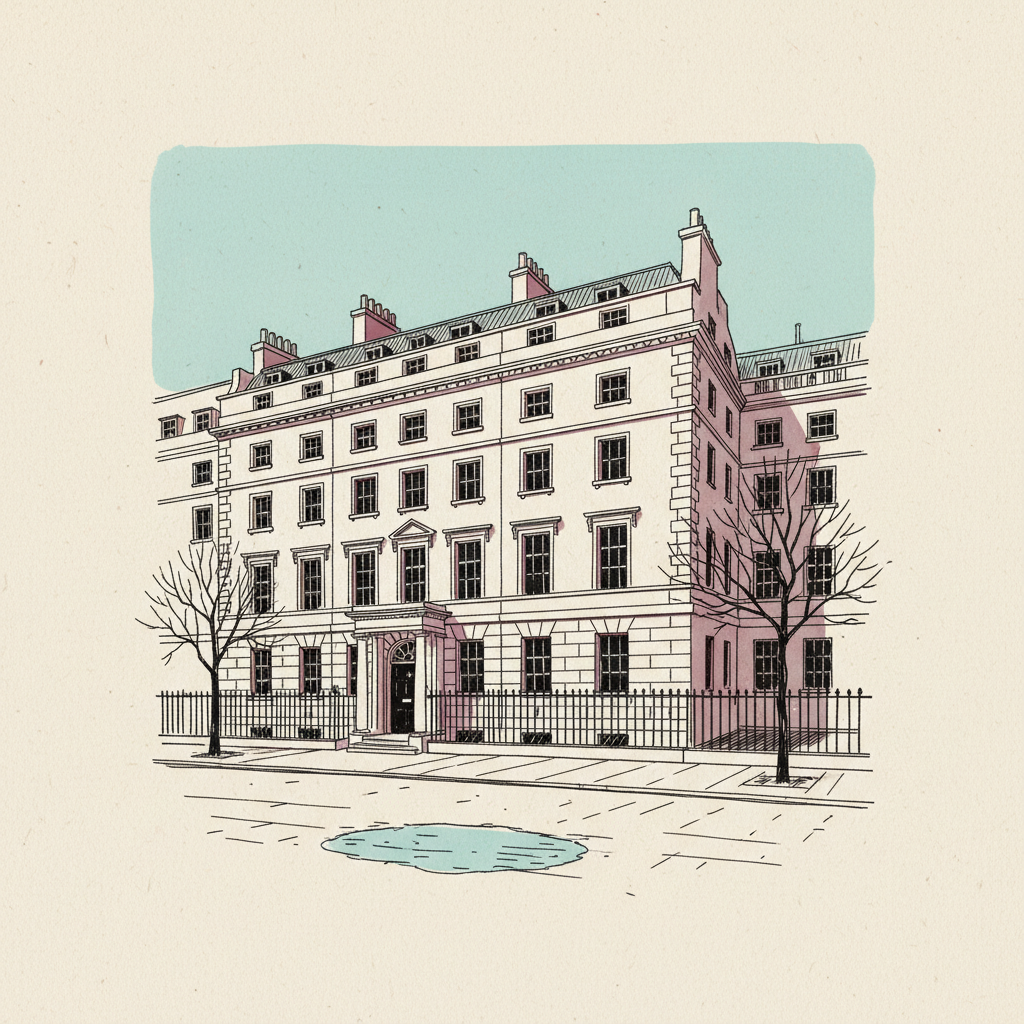
Downing Street
Official London residence and office of the British Prime Minister at 10 Downing Street, Westminster.
Andy Burnham became prime minister on 20 July 2026, the latest tenant after Keir Starmer resigned in the wake of Wes Streeting's Cabinet walkout on 14 May, the first minister to break ranks since that month's elections.
Last refreshed: 3 August 2026 · Appears in 2 active topics
Can Andy Burnham's new government turn a disputed poll bounce into lasting support?
Timeline for Downing Street
Mentioned in: Craig wins Manchester in its first second round
UK Local Elections 2026Mentioned in: Whitehall's AI brief has no named owner
European Tech SovereigntyMentioned in: Pollsters split on the Burnham bounce
UK Local Elections 2026Mentioned in: Britain abolishes DSIT, splits its remit three ways
European Tech SovereigntyMentioned in: England loses 96 councils by 2028
UK Local Elections 2026Background
Downing Street is the official London residence and office of the British Prime Minister, based at Number 10 in Whitehall, Westminster, with Number 11 next door serving as the Chancellor's official residence. The Prime Minister's office has occupied the Building since 1735 and today runs on a staff of roughly 200 across policy, press and political functions.
As the seat of executive power, the Building's own Conduct is often part of the story it reports on. Its press office has produced conflicting official readouts of a single phone call with Scotland's devolved government, a pattern of disputed messaging that recurs whenever relations between London and Edinburgh sour.
The office's occupant has changed repeatedly in recent years, and a wave of Cabinet resignations again destabilised an incumbency in 2026, underlining how much shorter a prime ministerial tenure can run than a full parliamentary term.
Resignations forced a change of tenant
Health Secretary Wes Streeting resigned on 14 May 2026, the first Cabinet minister to break ranks since the 7 May elections, declaring in his resignation letter that Keir Starmer would not lead Labour into the next general election. The episode Fed directly into the Building's own turnover.
Within six weeks Starmer had resigned as prime minister, and by 20 July a new occupant, Andy Burnham, had taken up residence and reshaped the senior TEAM inside Number 10 within days of arriving. the Building's first electoral test under him came on 30 July, when Labour's Bev Craig won Greater Manchester's mayoralty, though on a record-low 25.1% turnout that leaves how much of a mandate that hands the new government an open question.
Burnham rules out a referendum
Downing Street rejected Holyrood's 26 May vote demanding a Section 30 order for a second independence referendum the same day, not through a formal letter to Edinburgh but via a spokesperson's lobby line insisting its focus was "delivery, not division".
the Building held that line under its new occupant: on 7 July Andy Burnham told Scottish Labour MPs he would refuse any Section 30 order, offering enhanced devolution instead and closing the route to a legally binding vote regardless of Holyrood's majority.
It reasserts self-determination rights
A spokesperson said on 16 July 2026 that Falkland Islanders are British with the right to self-determination, a statement issued hours after Business Secretary Peter Kyle branded an Argentine World Cup banner referencing the Malvinas an "egregious violation" of FIFA rules.
The intervention kept the diplomatic response squarely governmental: England's Football Association lodged no complaint of its own, leaving this single lobby-line statement as the only formal UK pushback on the revived sovereignty dispute.