Skip to content
Briefings are running a touch slower this week while we rebuild the foundations.See roadmap
Iran Conflict 2026
1JUN

Seven allies pledge words, not warships

5 min read
08:32UTC

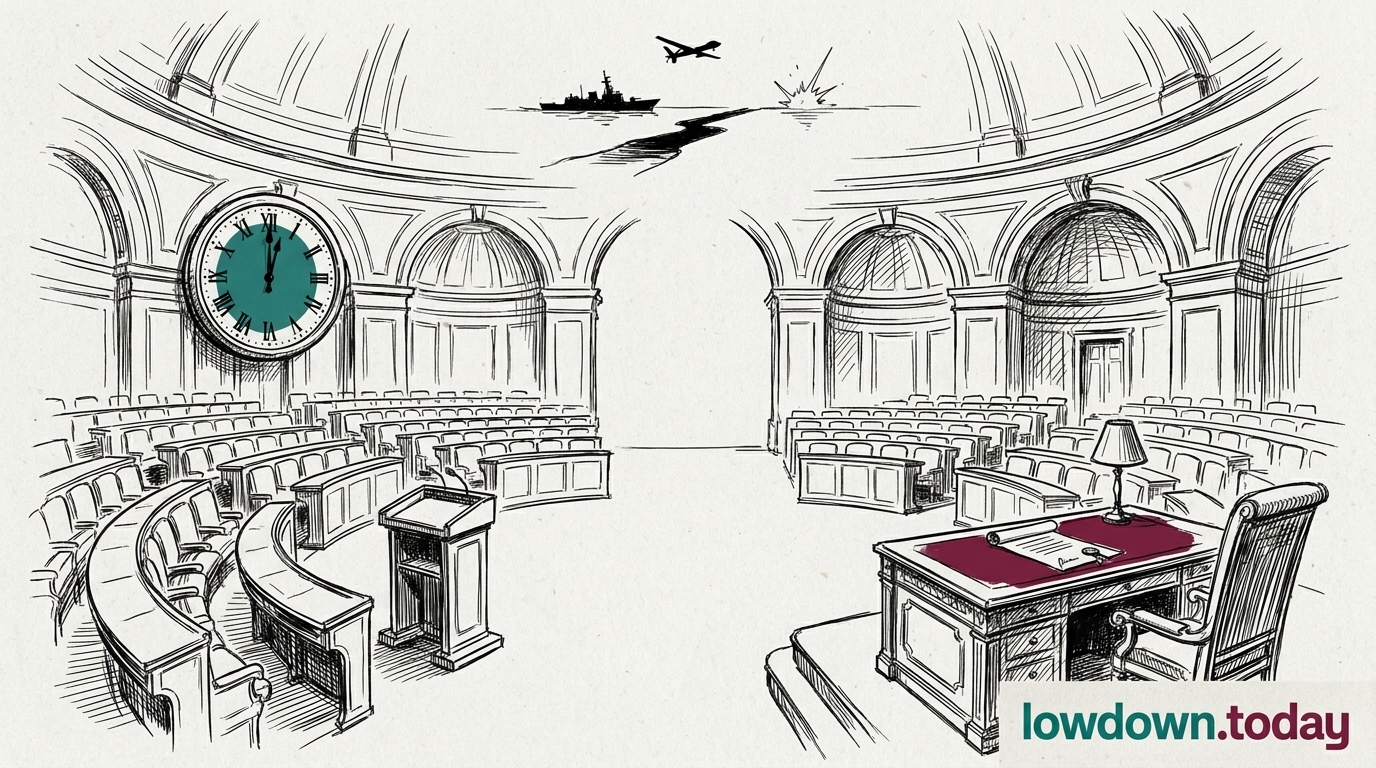
A joint statement from seven allied nations expressed 'readiness' to help secure the Strait of Hormuz. It committed no forces, set no timeline, and named no specific contribution.

ConflictDeveloping
Key takeaway

Seven nations endorsed the principle of Hormuz access but committed nothing operational.

The United Kingdom, France, Germany, Italy, the Netherlands, Japan, and Canada issued a joint statement on 19 March expressing "readiness to contribute to appropriate efforts to ensure safe passage through the strait" of Hormuz 1. The statement condemned Iran's mine-laying and called for an "immediate comprehensive moratorium on attacks on civilian infrastructure." It committed no forces, set no timeline, and named no specific contribution 2.

This is the third iteration of the Hormuz Coalition effort, and each round has produced less than the one before. On 14 March, Trump called on five countries to send warships . Within 72 hours, all five — Australia, Japan, the United Kingdom, Germany, and France — formally declined . Trump responded by questioning NATO's future . Now seven countries, two more than originally asked, have produced a statement whose operative verb is "readiness" — not deployment, not commitment, not planning. The language repays close reading. "Appropriate efforts" is unspecified. "Ensure safe passage" does not describe a military mission. France, Germany, Italy, and Japan had all previously declined to send warships; their signatures here change nothing operationally. Canada and the Netherlands are additions to the diplomatic roster but not to any order of battle.

The US Navy has described the strait as an Iranian "Kill box" with more than 300 commercial ships stranded and daily transits in single digits against a historical average of 138 . Defence officials have said escorts cannot begin until the threat of Iranian fire is substantially reduced. The United States is bearing this burden alone — at a cost the Pentagon now prices at $200 billion and rising — while the seven signatories contribute a joint communiqué. During the 1987–88 Tanker War, the last sustained threat to Gulf shipping, Operation Earnest Will required actual US warships to reflag and escort Kuwaiti tankers through the strait. That operation took months to assemble even with Cold War alliance discipline and direct Iraqi threats to allied shipping interests. The current diplomatic trajectory has not reached step one.

Defence Secretary Hegseth called European allies "ungrateful" hours before the statement's publication and said the world "should be saying one thing to President Trump: 'Thank you'" 3. The sequencing is instructive: the broadside landed first, the diplomatic response followed, and the two exist in different registers entirely. Hegseth's rhetoric presupposes a Coalition; the seven-nation statement confirms its absence in the politest terms available. For The Gulf states absorbing daily Iranian fire, and for the 300-plus ships waiting to transit, the distance between "readiness to contribute" and a destroyer on station is the distance that matters.

Deep Analysis

In plain English

Seven major democracies — the UK, France, Germany, Italy, the Netherlands, Japan, and Canada — said they are ready to help keep the Strait of Hormuz open. They named no ships, no timelines, and no commands. The Strait carries roughly 20% of global oil trade. If these nations actually deployed naval forces to sweep Iranian mines and escort tankers, oil prices could fall significantly within weeks. This statement does not bring that any closer. It was issued hours after the US Defence Secretary publicly called these same allies 'ungrateful' — meaning it was written in response to a political attack, not in preparation for a deployment. The gap between what was said and what could actually happen remains total.

Deep Analysis
Synthesis

Read alongside Hegseth's 'ungrateful' remarks (Event 13), this statement marks a formal, public fracture in the post-Cold War Atlantic security consensus: the US is conducting a major war whilst shaming non-participants, and those partners are issuing solidarity statements whilst withholding forces. This is not temporary friction. It establishes a structural precedent — US unilateral war initiation does not trigger allied force commitment — that will define post-war alliance renegotiation. The seven signatories are simultaneously preserving the relationship with Washington and distancing themselves from the campaign's legal, humanitarian, and strategic exposure.

Root Causes

The structural constraint is constitutional, not merely political. Germany's Grundgesetz Article 87a restricts out-of-area deployments to collective defence scenarios requiring a Bundestag vote. Japan's reinterpreted Article 9 permits collective self-defence only under specifically enumerated conditions that have not been formally invoked. France and Italy require parliamentary authorisation for sustained combat-zone deployments. The joint statement represents the legal maximum these governments can issue without triggering domestic legislative debates they are not prepared to have — it is a constitutional ceiling, not a diplomatic choice.

Escalation

The statement was issued hours after Hegseth publicly called these same allies 'ungrateful' — the sequencing marks it as reactive political communication rather than coordinated strategic signalling. Governments issuing a statement to defend themselves from a US criticism, whilst committing no forces, are managing domestic audiences rather than preparing deployments. The commitment gap is not narrowing; it is being actively managed rhetorically to avoid both deployment and explicit refusal.

What could happen next?
  • Consequence

    Lloyd's war-risk premiums remain at peak levels, adding an estimated $3–7 per barrel to effective oil costs above spot price for every Hormuz-transit cargo.

    Immediate · Assessed
  • Risk

    If no signatory deploys forces, Iran will have demonstrated that minelaying alone can deter a seven-nation coalition without kinetic engagement — a significant deterrence precedent with global replication risk.

    Medium term · Suggested
  • Precedent

    Establishes that US unilateral war initiation without NATO consultation does not trigger allied force commitment, structurally redefining the post-Cold War security compact.

    Long term · Assessed
  • Opportunity

    Any signatory that operationalises its commitment — even a single vessel — gains disproportionate influence in post-war Hormuz governance and regional security architecture negotiations.

    Medium term · Suggested
First Reported In

Update #42 · Iran hits four countries; Brent at $119

GOV.UK· 20 Mar 2026
Read original
Causes and effects
This Event
Seven allies pledge words, not warships
The statement is the third attempt to assemble an international Hormuz coalition and the third failure to produce actual naval commitments. The gap between diplomatic language and military deployment continues to widen as the United States absorbs nearly the entire operational burden of a strait the US Navy has described as an Iranian 'kill box.'
Different Perspectives
Human rights monitors (Hengaw, Amnesty International, Iran HRM)
Monitors documented a second death sentence for Zahra Tabari, 68, reported cemetery record deletions at Behesht-e Zahra, and a poll showing 81.5% of medical residents want to emigrate, against a background of 200+ confirmed executions since February. Iran's security courts operate at uninterrupted wartime tempo regardless of the diplomatic track.
Pakistan (mediator)
Pakistan (mediator)
Islamabad carried Trump's revised MOU demanding HEU destruction to Iranian negotiators, formally inheriting the role of sole active mediator after Oman's forced withdrawal. Pakistan lacks Oman's banking infrastructure for frozen-asset routing and carries its own regional stakes, making it a less structurally neutral broker.
Kuwait
Kuwait
Kuwait intercepted Iranian missiles and drones for a second time in days on 1 June, with air-raid sirens sounding nationwide, after invoking Article 51 self-defence on 28 May following the Ali Al Salem ballistic-missile strike. The repeated interceptions test whether Kuwait's domestic politics can sustain hosting US forces as a de facto co-belligerent.
China (PRC)
China (PRC)
Beijing sent scholars to Shangri-La rather than its defence minister and addressed Taiwan without mentioning Iran, maintaining bilateral energy corridor protection with Tehran while refusing diplomatic exposure at multilateral forums. Trump barred China as an HEU custodian on 27 May, removing Beijing from the deal architecture while China continues supplying DPI hardware that caps Iran's internet.
Lloyd's of London / war-risk underwriters
Lloyd's held its Hormuz war-risk designation at $10-14 million per voyage while Brent recovered to $93.91, maintaining the structural divergence from futures pricing that has persisted since late May. Underwriters require a UN Security Council resolution or government certification letter, not diplomatic optimism.
Gulf Cooperation Council states (Saudi Arabia, UAE, Bahrain, Qatar)
Five Gulf states wrote to the IMO on 21 May rejecting Iran's PGSA transit authority over international waters; Saudi Arabia and the UAE have not confirmed participation in the European Hormuz mission. The GCC is navigating between US security guarantees and exposure to Iranian fire, with no Gulf state formally co-belligerent except Kuwait.