Skip to content
Briefings are running a touch slower this week while we rebuild the foundations.See roadmap
Iran Conflict 2026
30MAY

India faces three Iran tracks, speaks on one

3 min read
10:17UTC

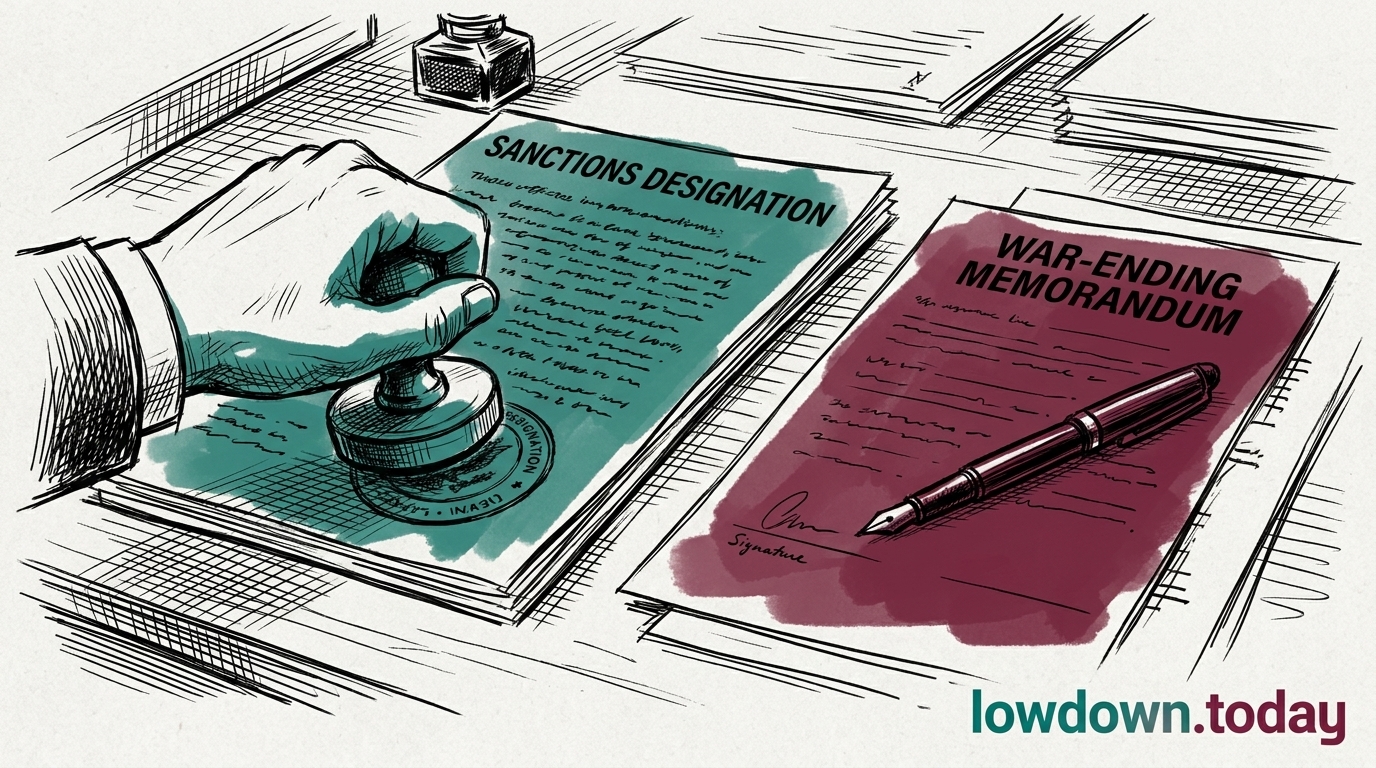
India's Ministry of External Affairs engaged Tehran at high level on 23 April after the Epaminondas was seized carrying cargo bound for Mundra port in Gujarat. The MEA has held public silence for eight days on the 15 April OFAC designations naming Indian nationals and India-registered firms in the Shamkhani network.

ConflictDeveloping
Key takeaway

Delhi is handling three Iran tracks but has chosen to speak on only the one with Indian crews at sea.

India's Ministry of External Affairs engaged Tehran at high level on 23 April after the Epaminondas was seized carrying cargo bound for Mundra port in Gujarat 1. The engagement routed through the same ministry that has now held public silence for eight days on the 15 April OFAC designations of the Shamkhani network , which named Chetan Prakash Balhotra, Navi Mumbai-registered Fleet Tanqo Private Limited and other Indian firms .

Foreign Secretary Vikram Misri demarched Iran's ambassador Fathali on 18 April after the IRGC fired on the Indian tankers Sanmar Herald and Jag Arnav . Three Iran tracks now converge on Misri's office inside a week: tanker firings producing a demarche, OFAC sanctions producing silence and the Epaminondas producing quiet diplomacy.

Delhi cannot publicly demand the corps stop firing on Indian-bound vessels while staying silent on Treasury sanctions targeting Indian firms that help Iran evade the same sanctions those vessels operate inside. India is the largest non-Chinese user of Iranian-routed crude, so every week the MEA holds the line leaves Mumbai and Chennai operators unable to price their next cargo. Misri's office has chosen the shipping file over the sanctions file because Indian crews are at sea and Indian firms are on paper.

Deep Analysis

In plain English

India faces three separate problems from the Iran conflict, all landing at once on 23 April. First, an Indian-bound cargo ship was seized by Iran's military in the Strait of Hormuz. Second, the US Treasury named Indian companies and individuals as part of an Iranian oil-smuggling network called the Shamkhani network. Third, the US government's waiver that allowed Indian refineries to legally buy Iranian oil expired with no renewal. India is one of the world's largest oil importers and has historically bought cheap Iranian crude despite US sanctions. It has also been developing a major port at Chabahar in Iran, which India views as its gateway to Central Asia and Afghanistan. New Delhi has been trying to stay on good terms with both the US and Iran, but these three simultaneous developments make that balancing act harder. It is now publicly engaged on the first problem (the ship seizure) while publicly silent on the other two, which carry greater long-term legal and economic risk.

What could happen next?
  • Risk

    Indian banks processing transactions for OFAC-designated Indian firms in the Shamkhani network face US correspondent banking sanctions after a 60-day wind-down period, creating systemic risk for India's banking sector connectivity to the dollar system.

First Reported In

Update #77 · Pentagon: six months to clear Hormuz mines

UK Foreign, Commonwealth and Development Office· 23 Apr 2026
Read original
Different Perspectives
Qatar
Qatar
Qatar holds approximately $12 billion in frozen Iranian assets that Tehran named as the precondition for any Hormuz reopening sequence; with Oman sidelined and no agreed HEU custodian, the asset-routing architecture that any deal requires has no operational channel and no neutral financial intermediary to run it through.
Hengaw and Iranian civilian population
Iranians face an internet capped at 40 per cent by hardware their president cannot dismantle, field killings that leave no court record, and judicial executions running in parallel; Hengaw, based in Norway, is the primary remaining monitor of a repression system the IRGC is deliberately moving beyond auditable records. The real toll is higher than any single monitor's count.
China
China
China supplied deep-packet-inspection hardware that caps Iran's internet at 40 per cent and enables an instant on-demand blackout, and was barred by Trump as a potential HEU custodian on 27 May. Beijing gains from Iran's continued non-alignment with the West while the DPI sale extends Chinese surveillance-technology exports as a geopolitical instrument.
Pakistan
Pakistan
Foreign Minister Ishaq Dar met Rubio in Washington on 29 May, formally inheriting the role of sole active mediator after Oman's forced withdrawal. Pakistan lacks Oman's banking infrastructure for frozen-asset routing and carries its own regional stakes, making it a less structurally neutral broker for the Qatar-held $12 billion sequencing.
Kuwait
Kuwait
Kuwait invoked Article 51 of the UN Charter after absorbing an Iranian ballistic-missile strike on Ali Al Salem Air Base on 28 May, becoming the first Gulf state to make a formal individual self-defence claim in the war. The invocation creates a legal record enabling a future bilateral defence-pact activation without yet triggering it.
Oman
Oman
Oman denied any Hormuz toll plan within hours of Bessent's 28 May threat, absorbing a sanctions warning from the country it has brokered for since 1981. The rapid capitulation preserved the channel formally, but Tehran now knows Washington will threaten its own mediator, which changes Muscat's calculus on how far it can lean into any joint-management architecture.