Skip to content
Briefings are running a touch slower this week while we rebuild the foundations.See roadmap
Iran Conflict 2026
19MAY

Iran's fourth ceasefire text on 1 May

3 min read
17:44UTC

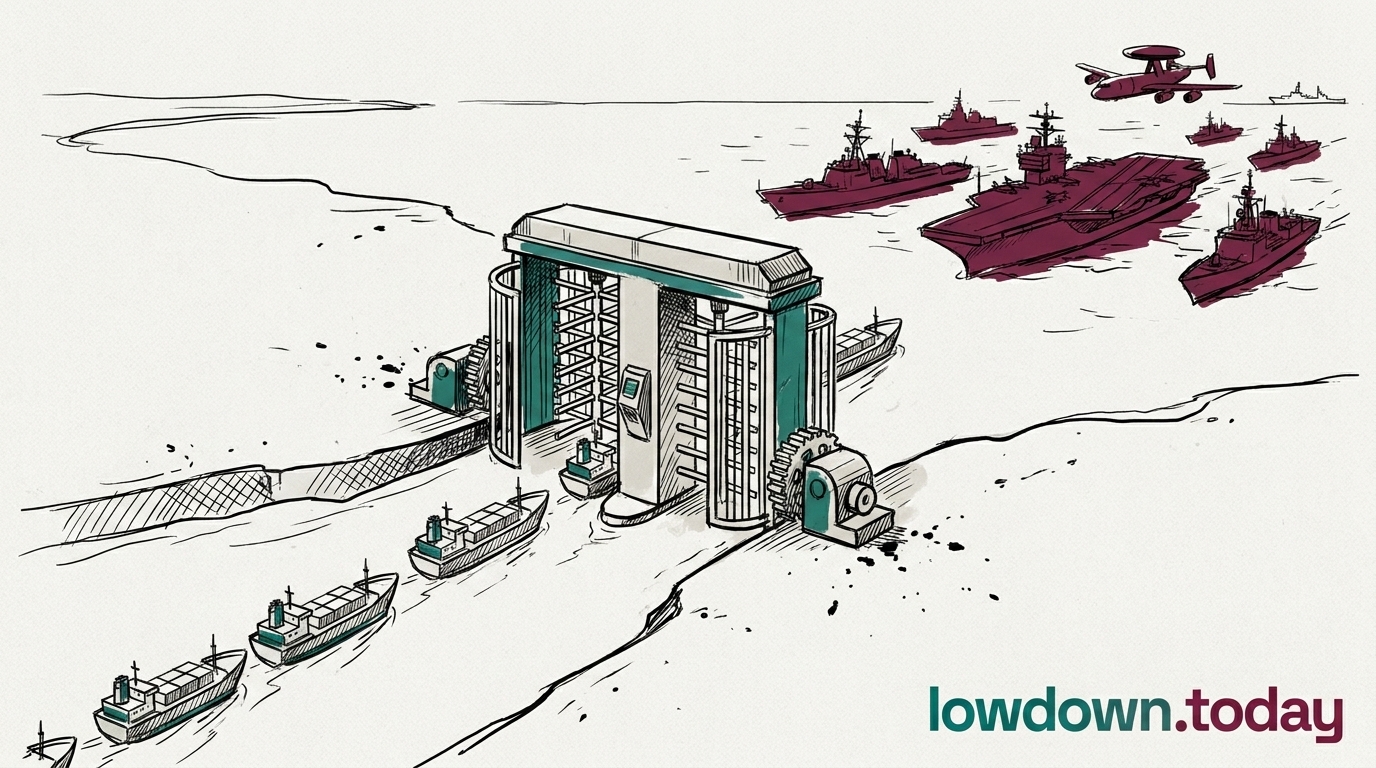
Tehran handed Pakistani mediators a fourth ceasefire text on 1 May offering Hormuz reopening for an end to the US blockade, with nuclear talks deferred to a post-war phase.

ConflictDeveloping
Key takeaway

A fourth proposal restating Hormuz-first, nuclear-last sequencing reaches Washington via Islamabad.

Iran delivered a fourth ceasefire text to Pakistan on Friday 1 May; Pakistani officials confirmed forwarding it to Washington the same afternoon 1. The proposal reportedly mirrors the two-phase structure Tehran put forward on 28 April , offering Hormuz reopening and a halt to attacks on shipping in exchange for the United States lifting the Hormuz blockade and ending the war, with nuclear talks deferred to a phase that would only begin once the war is formally over.

Pakistan has been the operational back-channel for every Iranian proposal of the war, which makes its role here mechanical rather than diplomatic: Islamabad receives Tehran's text and walks it across to Washington, without amending the terms. Sequencing remains the substantive sticking point. Iran wants the blockade lifted and the war declared ended before the nuclear file is reopened; Trump's public position requires the nuclear file resolved first. The two demands cannot both be the precondition for the same conversation.

Foreign Minister Abbas Araghchi asked Washington to drop its 'threatening rhetoric' and 'expansionist approach' after delivery. Mojtaba Khamenei, who succeeded his father as Supreme Leader in March, restated that foreign forces have no place in the Persian Gulf 'except the depths of its waters' . Both statements are maximalist openings rather than negotiating signals; the structural concession is the offer to reopen the strait at all, given the toll regime Tehran codified into domestic law in March.

The text has not been published. Whether the 1 May iteration moves on enrichment duration, monitoring architecture or sequencing, in any way the prior three did not, will not be establishable from open sources until Tehran or Washington chooses to release it. The market read of the proposal, captured in Brent's same-session move, is the next event.

Deep Analysis

In plain English

Pakistan has been acting as a go-between in this conflict, carrying messages between Iran and the United States because the two countries have no direct diplomatic channel. On 1 May, Iran sent its fourth proposed ceasefire deal through Pakistan, offering to reopen the Strait of Hormuz in exchange for the US ending its military blockade, with nuclear talks saved for a later phase. Both sides disagreed on the order of steps. Iran wants the Hormuz situation resolved first, then nuclear talks. The US wants nuclear commitments first, then Hormuz. Both sides are using the other issue as leverage, which is why the fourth proposal (like the first three) did not lead to a deal.

Deep Analysis
Root Causes

Pakistan's mediating role rests on a structural constraint: it is the only channel with civilian and IRGC buy-in on the Iranian side. Araghchi speaks for Pezeshkian's civilian government; Mojtaba Khamenei speaks for the IRGC-backed Supreme Leader office.

When both restate maximum positions after delivery of the fourth text, it signals that the document's submission does not represent a unified Iranian position, and that Pakistan is forwarding a proposal whose internal contradictions have not been resolved.

The Hormuz-last demand from Washington traces to Rubio's public framing in late April: the US will not allow Hormuz reopening to remove Iran's primary negotiating leverage before the nuclear question is resolved.

Iran's sequential demand inverts this: Tehran will not allow the nuclear programme (described by Mojtaba as a national asset that '90 million Iranians will protect') to be addressed while the country is under active military blockade. Each side's sequencing demand is a leverage-preservation mechanism, not a genuine procedural preference.

What could happen next?
  • Consequence

    With four consecutive ceasefire failures following the same sequencing structure, the probability of a breakthrough before the 11 May Murkowski AUMF deadline is low absent a new mediating framework or changed battlefield conditions.

  • Risk

    Pakistan's continued forwarding of proposals both sides reject publicly risks reducing Islamabad's credibility as a neutral channel, making subsequent rounds harder to construct on the same framework.

First Reported In

Update #86 · Trump signs paper. The paper ends the war.

Al Jazeera· 2 May 2026
Read original
Different Perspectives
Markets
Markets
Brent crude rose 2.2 per cent to $96.34 on 10 June, reversing a 7 per cent weekly decline built on deal optimism, as the overnight exchange repriced the Strait of Hormuz risk premium in a single session. The move reflects transit-risk repricing rather than supply shock: Iran's exports had already collapsed to below 300,000 barrels per day.
Pakistan
Pakistan
Pakistan's Naqvi channel, the only mediation track carrying both civilian and military buy-in, was stress-tested by live ordnance within 48 hours of the 6-7 June Tehran visit. Whether Washington informed Islamabad of the imminent strike plan while Naqvi was in Tehran remains undisclosed, putting the channel's neutrality under scrutiny.
Kuwait
Kuwait
Kuwait hosted the third Iranian strike on its soil since the 3 June airport drone attack, with Ali Al Salem airbase targeted in the three-country salvo. Its recent $1.98 billion Anduril Anvil counter-drone purchase signals it is rearming rather than reconsidering its hosting posture.
Bahrain
Bahrain
Bahrain absorbed the IRGC barrage via PAC-3 intercepts with its magazine already at 87 per cent depletion and no resupply before 2027. Sounding air-raid sirens over Manama, it faced the intercept burden with the thinnest defensive stack in the Gulf coalition.
Jordan
Jordan
Jordan reported all five incoming missiles intercepted with no injuries and no damage, a clean defensive performance that strengthens Amman's case for staying in the Western coalition without escalating its own posture. It now sits on Iran's target list for the first time despite not being a party to the Abraham Accords confrontation.
Iran / IRGC
Iran / IRGC
Foreign Minister Araghchi posted on X that US forces should 'leave our region if you want to be safe' and framed the exchange as a US defeat, while the IRGC claimed 21 targets hit and an F-35 hangar destroyed. The claims serve a domestic and Arab-audience framing rather than a verified battle-damage assessment.