Skip to content
Briefings are running a touch slower this week while we rebuild the foundations.See roadmap
Iran Conflict 2026
17MAY

General License U Sets a Hidden Deadline

2 min read
10:45UTC

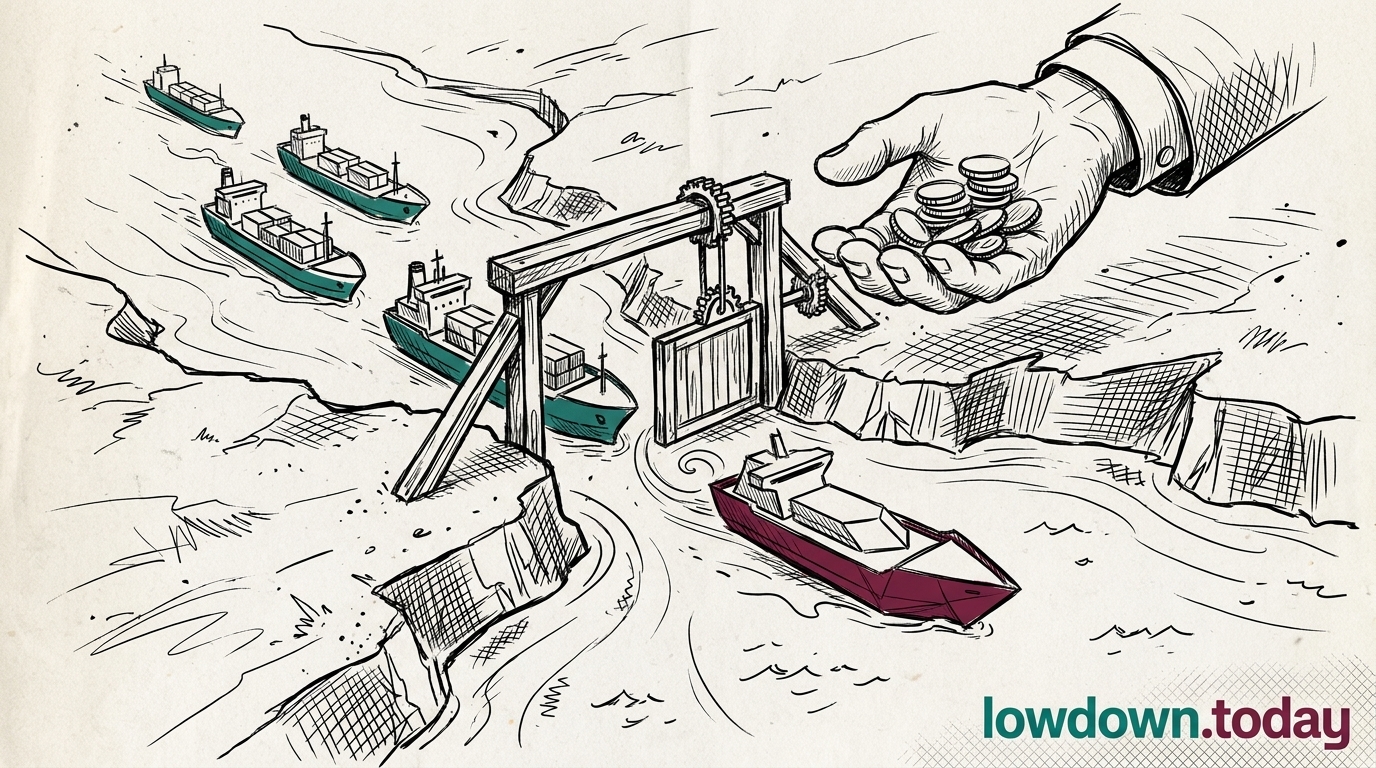
A US Treasury licence allowing the sale of stranded Iranian crude expires on 19 April. No renewal signal has come. It may matter more than the power grid.

ConflictAssessed
Key takeaway

The 19 April GL-U expiry may reshape oil markets more than the 6 April deadline.

The US Treasury issued General License U on 20 March, authorising sale of Iranian crude oil loaded on vessels on or before that date 1. It expires on 19 April, seventeen days from now. No renewal signal has come from Treasury.

The licence covers approximately 128 million barrels of Iranian crude stranded in transit or floating storage. It does not restore banking access or create a formal payment channel, limiting uptake to buyers with existing settlement mechanisms. India is the only swing buyer. The sanctioned Aframax PING SHUN made the first delivery of Iranian crude to India since May 2019: 600,000 barrels from Kharg to Vadinar, purchased by Reliance Industries 2.

If GL-U lapses and 128 million barrels lose their legal market, April becomes the month oil markets re-price for protracted conflict. US petrol already broke $4 per gallon . Renewal would tacitly acknowledge that Iranian oil is needed to cap price spikes. Either outcome carries political cost.

Deep Analysis

In plain English

GL-U is a US government permit that let some Iranian oil already loaded onto ships be sold legally, even though Iran is under sanctions. It covers about 128 million barrels sitting on tankers or in floating storage. The permit expires 19 April. If it is not renewed, those 128 million barrels have no legal buyer, which pushes oil prices higher. If it is renewed, that sends a signal the US does not expect the war to end soon enough to solve the oil shortage through military means.

Deep Analysis
Root Causes

GL-U was issued because the sanctions architecture succeeded too completely: blocking all Iranian crude removed 3.2 million barrels per day of supply from a market with no immediate substitute, producing the domestic price pressure the administration is simultaneously trying to suppress.

The structural cause is the tension between the war's military objective (coerce Iran by cutting its revenue) and its economic collateral (cut global supply and raise prices everywhere else). GL-U attempts to resolve this by allowing Iranian crude to move without restoring Iranian revenue; in practice it primarily benefits Reliance Industries' shareholders rather than solving the supply deficit.

The deeper root is that the US has no energy policy instrument capable of replacing Hormuz supply at scale. The IEA's 400 million barrel emergency release bought weeks, not months. GL-U is the second improvisation in three weeks.

What could happen next?
  • Risk

    GL-U non-renewal on 19 April removes the legal market for 128 million barrels, driving Brent toward $120 and adding roughly 20p per litre at UK pumps.

  • Consequence

    GL-U renewal signals Treasury has no near-term resolution expectation and effectively acknowledges Iranian oil is needed to prevent domestic political damage.

First Reported In

Update #55 · The Last Door Closes

Windward AI· 2 Apr 2026
Read original
Different Perspectives
Markets
Markets
Brent crude rose 2.2 per cent to $96.34 on 10 June, reversing a 7 per cent weekly decline built on deal optimism, as the overnight exchange repriced the Strait of Hormuz risk premium in a single session. The move reflects transit-risk repricing rather than supply shock: Iran's exports had already collapsed to below 300,000 barrels per day.
Pakistan
Pakistan
Pakistan's Naqvi channel, the only mediation track carrying both civilian and military buy-in, was stress-tested by live ordnance within 48 hours of the 6-7 June Tehran visit. Whether Washington informed Islamabad of the imminent strike plan while Naqvi was in Tehran remains undisclosed, putting the channel's neutrality under scrutiny.
Kuwait
Kuwait
Kuwait hosted the third Iranian strike on its soil since the 3 June airport drone attack, with Ali Al Salem airbase targeted in the three-country salvo. Its recent $1.98 billion Anduril Anvil counter-drone purchase signals it is rearming rather than reconsidering its hosting posture.
Bahrain
Bahrain
Bahrain absorbed the IRGC barrage via PAC-3 intercepts with its magazine already at 87 per cent depletion and no resupply before 2027. Sounding air-raid sirens over Manama, it faced the intercept burden with the thinnest defensive stack in the Gulf coalition.
Jordan
Jordan
Jordan reported all five incoming missiles intercepted with no injuries and no damage, a clean defensive performance that strengthens Amman's case for staying in the Western coalition without escalating its own posture. It now sits on Iran's target list for the first time despite not being a party to the Abraham Accords confrontation.
Iran / IRGC
Iran / IRGC
Foreign Minister Araghchi posted on X that US forces should 'leave our region if you want to be safe' and framed the exchange as a US defeat, while the IRGC claimed 21 targets hit and an F-35 hangar destroyed. The claims serve a domestic and Arab-audience framing rather than a verified battle-damage assessment.