Skip to content
You can now search across every topic, entity and event.What's new
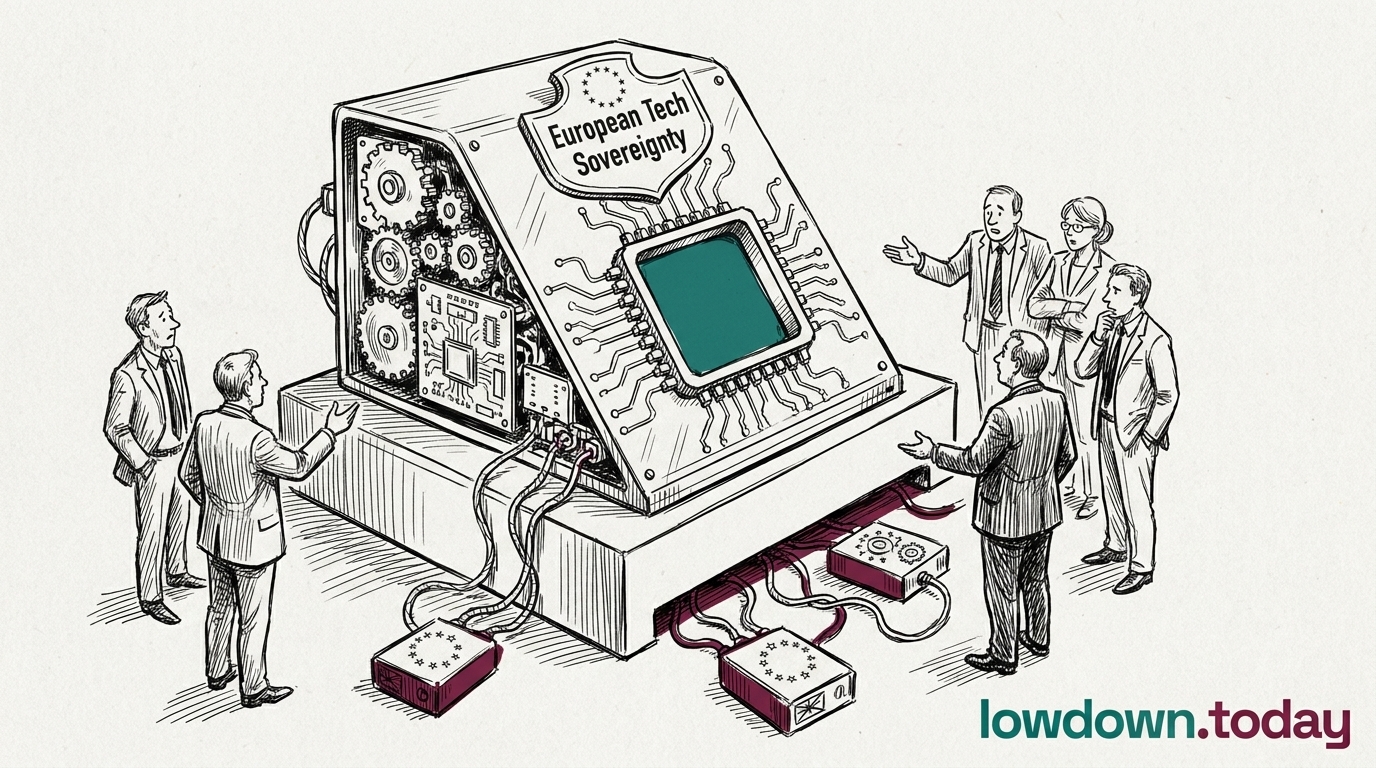
European Tech Sovereignty
23APR

Iran's oil outpaces the frozen deal

4 min read
09:21UTC

Iran has shipped an estimated $3.5 billion of oil since the deal was announced, more than the frozen assets Tehran is still haggling over, according to United Against Nuclear Iran.

TechnologyDeveloping
Key takeaway

Iran earns more from oil each month than the frozen-asset package it is still negotiating.

United Against Nuclear Iran (UANI) estimates that 31 tankers have carried about 41 million barrels of Iranian oil and petrochemicals since the deal was announced on 14 June 1. UANI, a US advocacy group that tracks Iranian sanctions compliance, puts the revenue at roughly $3.5 billion, most of it from sales to China, and calls the total an estimate, not an audited figure. The cargoes moved under General License X (GL X), the 60-day US Treasury authorisation that runs to 21 August, when Iranian oil sales again face full sanctions .

On Wednesday 24 June the tanker IMPALAS carried two million barrels of Iranian crude through the Strait of Hormuz itself, not around it 2. the strait of Hormuz is the 33km Gulf chokepoint through which a fifth of the world's oil moves. The IRGC (Islamic Revolutionary Guard Corps), Iran's ideological military, had called the Oman shoreline corridor off-limits earlier in the week and mandated radio coordination , yet it boarded none of the ships using it 3. The Liberian-flagged Stoic Warrior ran the corridor on Thursday 25 June without incident 4.

At the export rate UANI describes, Iran would earn the equivalent of the entire frozen-asset package it is negotiating in roughly 41 days, well before GL X expires. That projection rests on UANI's figures, not on any total either government has published. The Foundation for Defense of Democracies, a Washington think tank, found GL X carries no escrow, cap or reporting . That leaves Iran's real income, the oil, untouched, while only the contested cash stays locked behind Washington's account.

Deep Analysis

In plain English

General License X is a temporary permission slip issued by the US Treasury that allows Iranian oil to be sold and paid for in dollars, without the usual sanctions applying. It runs for 60 days from 22 June until 21 August. A US advocacy group called United Against Nuclear Iran tracked tankers loading Iranian oil since the ceasefire deal was signed on 14 June. They counted 31 tankers carrying 41 million barrels, worth roughly $3.5 billion, most heading to China. The figure matters because Iran and the US are separately fighting over a different pot of money: $12 billion in Iranian funds frozen in overseas accounts. At the current oil-sales rate, Iran earns the equivalent of that entire frozen amount in about six weeks, without any of the conditions Washington is trying to attach to the frozen cash.

Deep Analysis
Root Causes

GL X's design contains three specific gaps that produced this outcome. OFAC's instrument carries no volume cap on barrels shipped, no escrow requirement on proceeds, and no reporting obligation on either buyer or seller. The Foundation for Defense of Democracies (FDD) identified all three absences on 23 June .

The IRGC's behaviour at Hormuz compounds the gap. The PGSA issued written warnings against the Oman-IMO corridor and mandated Channel 16 coordination without interdicting any vessel. Written threats without enforcement create a signals environment where tanker operators treat warnings as procedural, not operational.

Chinese independent refineries, which absorbed roughly 84.9 per cent of Iranian crude on water during the conflict's first months, remain the only end-market of comparable size able to receive this volume without triggering US secondary-sanction risk. IMPALAS loaded 2 million barrels at Kharg Island on 20 June and transited Hormuz direct, illustrating that the Kharg-to-China pipeline runs end-to-end without any non-Chinese intermediary who would face OFAC exposure.

What could happen next?
  • Consequence

    Iran earns the equivalent of the disputed $12 billion frozen-asset package in approximately 41 days of GL X-enabled exports, materially reducing Tehran's financial incentive to accept Bessent's escrow conditions.

    Short term · Assessed
  • Risk

    IRGC's written-but-unenforced Hormuz warnings create a credibility gap: if Iran eventually enforces the Channel 16 mandate, the precedent of vessels ignoring it will make enforcement operationally chaotic.

    Medium term · Suggested
  • Opportunity

    The uncapped GL X revenue flow gives Washington a bargaining chip: threatening to add a cap or escrow to any GL X extension could force Iran back to the frozen-assets negotiating table on US terms.

    Short term · Suggested
First Reported In

Update #139 · A commander dies, the deal binds no one

AP· 26 Jun 2026
Read original
Different Perspectives
United States (Google/Alphabet)
Alphabet lost its final Android appeal on 2 July with no further court to hear it, a result its Computer and Communications Industry Association allies frame as precedent, not deterrence, since the €4.1bn fine changed nothing about Google's Play Store terms across eight years of litigation.
UK Department for Science, Innovation and Technology
DSIT opened its £96m second Sovereign AI wave on 3 July, switching from April's equity stakes to fixed-price contracts because Britain has no domestic hyperscaler or Bpifrance-style lender to fund capacity another way. It is betting on buying outcomes it controls alone rather than joining an EU-wide framework.
German federal government
Berlin backed both German deliverables this week, Infineon's fab and Aleph Alpha's merger, but is finding one far harder to close than the other. It wants enforceable protective rights inside Cohere's cap table before the merger closes, a legal instrument the Bundeskartellamt has no filing to review yet.
European Commission
European Commission
The Commission banked a clean CJEU win on the eight-year Android case on 2 July, removing Google's last comparator argument before President von der Leyen rules on the far larger DMA self-preferencing fine due 27 July. Brussels treats Infineon's early Dresden delivery as proof the Chips Act mechanism works, at the node Europe already led.
Bruegel (EU industry sceptics)
Bruegel economist Mario Mariniello argued the EU sovereignty package mimics US and Chinese strategy while EU cloud providers hold roughly 15% of their home market; using nationality as a proxy for security without fixing the underlying capital and energy gaps that drive the dependency creates €86bn of migration cost without the security benefit it is sold as delivering.
France
France
France published a joint sovereignty definition with Germany at VivaTech and mobilised €13bn under Tibi Phase 3, placing SAP's partnership with Mistral as the working proof that a German enterprise-software giant running a French sovereign model inside public administration is what digital sovereignty looks like in practice.
