Skip to content
You can now search across every topic, entity and event.What's new
European Oil Markets
4JUN

Pakistan Brokers First Ceasefire Framework of the War

3 min read
10:20UTC

The Islamabad Accord offers specific terms for the first time in six weeks of conflict, but Iran's military council holds the veto.

EconomicAssessed
Key takeaway

Pakistan produced the terms; Iran's military council holds the veto.

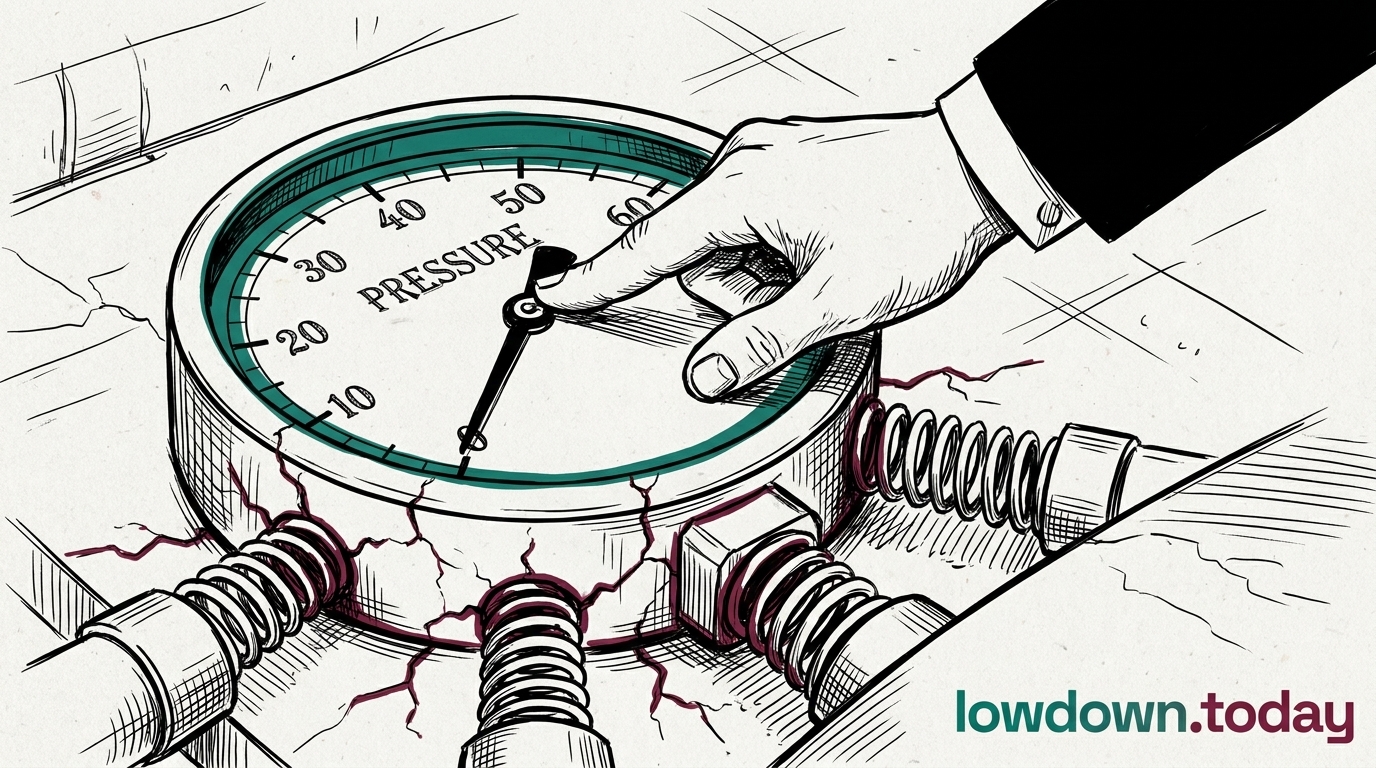
Pakistan has produced the first concrete ceasefire framework of the war . The two-tier plan, negotiated overnight by Field Marshal Asim Munir, calls for an immediate ceasefire followed by a 15-to-20-day comprehensive settlement period. Iran would commit to abandoning nuclear weapons pursuit. In return: sanctions relief, frozen asset releases, and immediate Strait of Hormuz reopening. The memorandum of understanding would be finalised electronically, with Pakistan as the sole channel.

The key players in the room: Vice President JD Vance, Special Envoy Steve Witkoff, and Foreign Minister Abbas Araghchi. Ynet News reported the ceasefire could take effect as early as Monday 7 April, though this is a single-source claim that should be treated with caution.

Iran's civilian government, which might accept terms, cannot reach the Supreme Leader . The IRGC military council that controls access to Mojtaba Khamenei benefits from continued conflict. The Islamabad Accord asks the IRGC to negotiate away its own wartime authority. No ceasefire framework in history has succeeded when the veto holders profit from the war it would end.

China pledged strategic coordination with Pakistan on the mediation effort. Beijing's backing gives the accord geopolitical weight that previous mediation attempts lacked. But weight is not leverage. The accord exists because five empty deadlines created a vacuum. Whether it can fill that vacuum depends on actors in Tehran who have spent six weeks proving they answer to no one.


Deep Analysis

In plain English

Pakistan put forward a peace plan with specific terms for the first time in six weeks of war. The plan says: stop fighting immediately, then negotiate a full deal over the next two to three weeks. Iran would give up its nuclear weapons programme and get sanctions lifted in return. The problem is that the people who would need to agree to it in Tehran are the same people whose power depends on the war continuing.

Deep Analysis
Root Causes

The ceasefire vacuum exists because US coercive diplomacy required credible escalation, which five deadline extensions destroyed.

Pakistan's mediation opportunity is a direct consequence of Washington's inability to enforce its own threats. The IRGC's wartime power consolidation means the actors who could accept peace are not the actors who hold the veto.

Escalation

De-escalatory in intent, but the framework's existence does not change structural barriers. Iran's non-response is itself an escalation indicator: silence preserves optionality for the IRGC while the civilian government lacks authority to commit. If the accord collapses, the diplomatic space it briefly opened closes harder than before.

What could happen next?
  • Pakistan-China axis becomes the primary mediation channel, displacing US bilateral leverage

    days · Assessed
  • Immediate Hormuz reopening, if achieved, could cut oil prices by $20 or more per barrel within a week

    weeks · Suggested
  • IRGC faces first external framework that offers Iran's civilian government a concrete alternative to war

    days · Assessed
First Reported In

Update #60 · Pakistan's Ceasefire Plan Fills the Vacuum

Al-Monitor / Reuters· 6 Apr 2026
Read original
Different Perspectives
Kuwait
Kuwait
Kuwait absorbed the Iranian strike that knocked generating units offline at a combined power-and-desalination plant on 17 July, the event that finally moved freight and insurance in lockstep with Brent. The strike hit essential civilian infrastructure, not a trading desk's benchmark.
Asian buyers (Singapore)
Singapore's middle distillates rose 12% month-to-date to 8.91m barrels and fuel oil passed 19m barrels on a 105% net-import surge, buyers retaining barrels as the East-West arbitrage window narrows. Cargoes are being stockpiled ahead of further Hormuz-driven freight repricing rather than released west.
Austria (Coreper holdout)
Vienna is blocking the same package over roughly EUR 2bn of frozen Russian assets earmarked for Raiffeisen, a domestic banking dispute with no connection to the oil cap racing toward its 23 July expiry. The linkage forces the whole package to wait on a bilateral compensation fight.
Greece (Coreper holdout)
Athens is holding the 21st sanctions package at the 22 July Coreper vote over Russian LNG re-export rights, a condition unrelated to the oil price cap itself, leaving the $44.10 freeze one day from expiry without a deal. Greece's own tanker registry gives it a direct stake in how any shadow-fleet measures are drafted.
Marine underwriters (Gulf war-risk)
Hull war-risk cover for Hormuz transits widened to a 3-10% band on 17 July with 5% the emerging norm, up from a 3-4% baseline set in late June, the first repricing in six weeks to track a flat-price move rather than lag it. Cover resets on actuarial evidence of loss, not on diplomatic or price signals.
Money managers (CFTC-tracked)
The CFTC's week-to-14-July snapshot, released 17 July, showed WTI managed-money net long collapsing 69% to 19,783 contracts and a standalone 60,141-contract net short on Brent Last Day (NYMEX). Both readings predate the Kuwait strike and the 20 July escalation, so any covering since is not yet visible in public data.