Skip to content
You can now search across every topic, entity and event.What's new
European Oil Markets
31JUL

Iran's Majlis ratifies 12-article Hormuz sovereignty law

3 min read
09:33UTC

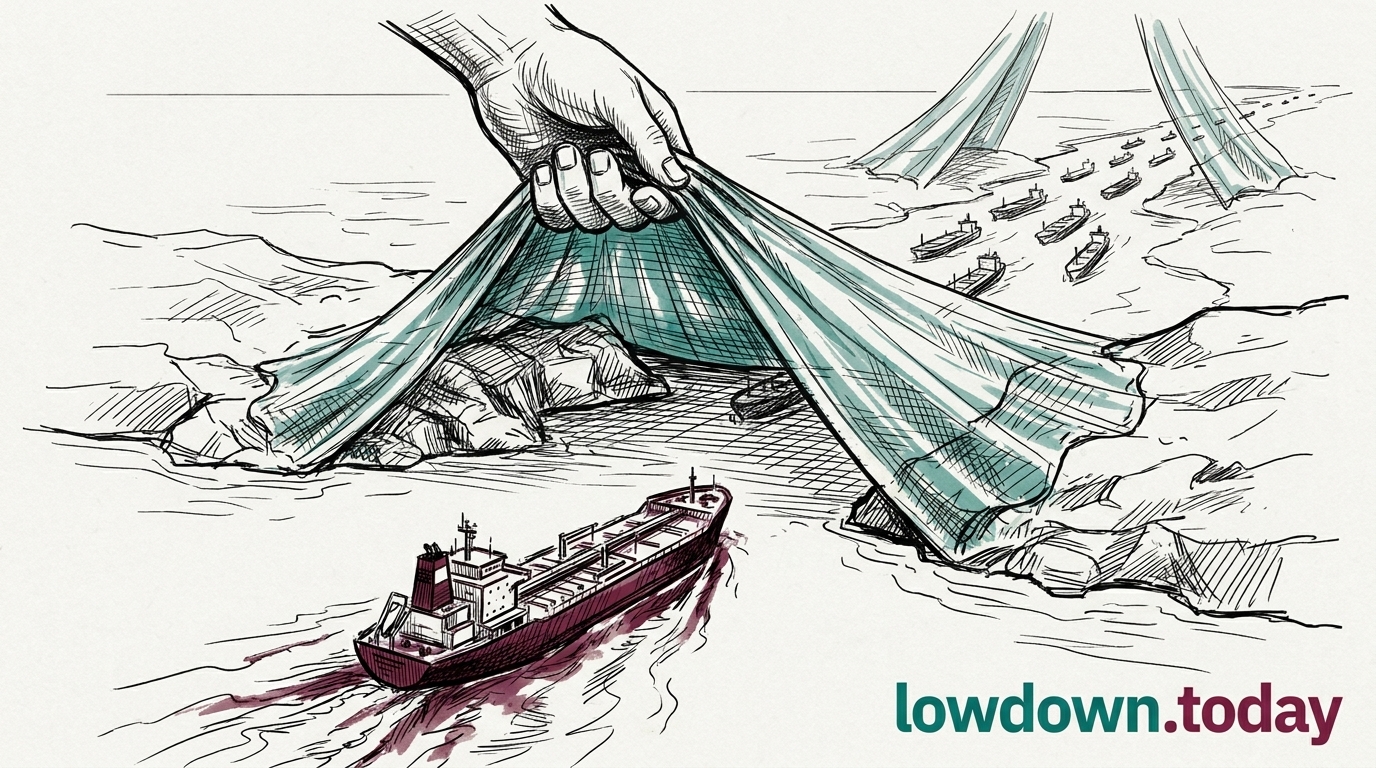
The National Security Committee of Iran's parliament cleared a 12-article statute on 2 May that permanently bars Israeli vessels and demands war reparations from 'hostile' states before transit; a full chamber vote is pending.

EconomicDeveloping
Key takeaway

Tehran has converted a wartime posture into peacetime statute; any ceasefire now has more architecture to unwind.

The National Security Committee of Iran's Majlis ratified a 12-article 'Law on Establishing Iran's Sovereignty over the strait of Hormuz' on Saturday 2 May; the full 290-seat chamber vote is pending and expected within days 1. Article 1 permanently bars Israeli vessels. Ships from countries Tehran designates as 'hostile' must pay 'war reparations' before receiving a transit permit. Non-hostile vessels would pay tolls labelled as 'environmental and security services'. The Majlis is Iran's elected legislature; the National Security Committee is the body that moves defence and foreign-policy bills before the floor takes them.

Supreme Leader Mojtaba Khamenei issued a written statement on 30 April announcing 'new management' of the strait ; the bill is the legislative half of that framing, closing the gap between operational practice and legal claim. Where the IRGC has been collecting transit demands informally for weeks, the new law arms the Guard with domestic legal cover for whatever escalation comes next. Iranian state-wire reporting does not pin a date for the chamber vote, but committee passage in this configuration typically clears the floor without amendment.

Washington's parallel posture sits in sharp contrast. The State Department launched the Maritime Freedom Construct with CENTCOM on 30 April; on Day 65, it still has no named member countries . The UK-France Northwood coalition, run from the Permanent Joint Headquarters in northwest London, has 50-plus nations in operational planning. Tehran has just legislated against an American posture that has yet to find members and a European posture that has yet to draft engagement rules. UNCLOS, the United Nations Convention on the Law of the Sea, prohibits transit-passage tolls in principle, and the European Union cited that doctrine in rejecting Trump's earlier toll joint venture. In practice, enforcement happens at the gun, not at The Hague. The Majlis vote gives the IRGC a domestic statute to point to when the next vessel is stopped.


Deep Analysis

In plain English

Iran's parliament passed a law on 2 May declaring that Iran controls the Strait of Hormuz and can charge ships for passing through it. The law permanently bans Israeli ships from the strait and says that ships from countries Iran considers hostile must pay war compensation before they can pass. International maritime law says Iran cannot do this, but Iran never signed that international law. The full 290-member parliament still has to vote to make the law final. In practice, whether the law works depends on whether Iranian naval forces choose to enforce it, not on what lawyers say about it.

Deep Analysis
Root Causes

Iran never ratified UNCLOS, the 1982 UN Convention on the Law of the Sea, precisely because Article 38 codifies transit-passage rights through international straits that would prevent exactly the toll mechanism the 2 May law attempts. Tehran's 2024 updates to domestic maritime law created the 'hostile-linked vessel' category the Hormuz law builds on.

The Israeli-vessel permanent bar in Article 1 reflects a different structural driver: Mojtaba Khamenei's political legitimacy rests partly on opposing normalisation with Israel. Codifying the Israeli ban in statute anchors it against any future Iranian government that might negotiate a different posture, making it constitutionally durable rather than policy-reversible.

What could happen next?
  • Precedent

    A 290-seat Majlis vote passing the Hormuz sovereignty law would give it constitutional standing in Iran's domestic legal order, making it harder for any post-war Iranian government to abandon the toll framework without appearing to repudiate parliamentary authority.

    Medium term · 0.75
  • Risk

    The Israeli vessel ban in Article 1 creates a permanent legal obstacle to any normalisation between Israel and Iran that includes Hormuz transit, linking the law's lifetime to the broader Israel-Iran conflict resolution rather than to this war alone.

    Long term · 0.8
  • Consequence

    The Maritime Freedom Construct (ID:2948), with still no named member countries on Day 65, gains a specific legal adversary it can point to: a named statute rather than an informal toll mechanism, which may accelerate coalition-building around a named counter-framework.

    Short term · 0.6
First Reported In

Update #87 · China blocks OFAC; Iran writes; Trump tweets

Iran International· 3 May 2026
Read original
Different Perspectives
Sanctions compliance officer reviewing a Lukoil International GmbH bid
OFAC's amended FAQ 1224 gives a compliance desk its first published standard: full severance from Lukoil and a US-jurisdiction blocked account for sale proceeds. The conditions name neither ISAB nor Italy, so a Priolo Gargallo-linked bid answers a different question than a Neftochim Burgas or Petrotel Ploiesti one.
Managed-money funds on Brent Last Day
CFTC data for the week to 21 July showed managed money flipping 74,400 contracts to a net long of 15,665 against 1,410 short on the Brent Last Day contract, code 06765T. A fund that held that short through July has now covered it, and the spent short base raises the bar for the next leg higher.
Saudi crude exporters
Saudi-linked tanker transits through Bab el-Mandeb fell to about 7.5 a day after the 24 July underwriting withdrawal, pushing more barrels onto the longer route round the Cape or through the Yanbu terminal. Every diverted barrel ties up a ship for longer, and a fleet that turns slower charges more.
Tanker owners on the Bab el-Mandeb route
Lloyd's-market syndicates withdrew war-risk cover from Saudi-linked hulls on 24 July, leaving owners of that class of vessel to sail Bab el-Mandeb uninsured or not at all. Tanker transits on the route fell to roughly 7.5 a day, and cover, once withdrawn, does not return on a shipowner's timetable.
Eni
Eni
Eni's board approved second-quarter results on 29 July, swinging refining EBIT to a EUR0.08bn profit from a year-earlier loss even as group profit doubled, and named Red Sea freight cost as a cap on that improvement. A refiner absorbing higher shipping costs on Saudi-linked crude while its numbers improve treats the freight line as a drag, not a crisis.
Asian buyers (India, Japan, China, South Korea)
Asian refiners are absorbing 62% of Yanbu's 3.75m b/d flow, the bulk of Saudi Arabia's rerouted crude now clearing east rather than into the Atlantic basin. That destination split leaves Asian buyers more exposed to any single Yanbu-specific disruption than under the kingdom's normal multi-terminal export pattern.



