Skip to content
You can now search across every topic, entity and event.What's new
European Oil Markets
31JUL

Bessent locks Iran's funds in Qatar

3 min read
09:33UTC

Scott Bessent said the disputed $12 billion in frozen Iranian funds would sit in a US-controlled escrow in Qatar, spendable only on American food and medicine. Iran rejected the terms.

EconomicDeveloping
Key takeaway

Washington can lock the frozen cash, but Iran's oil income answers to no escrow.

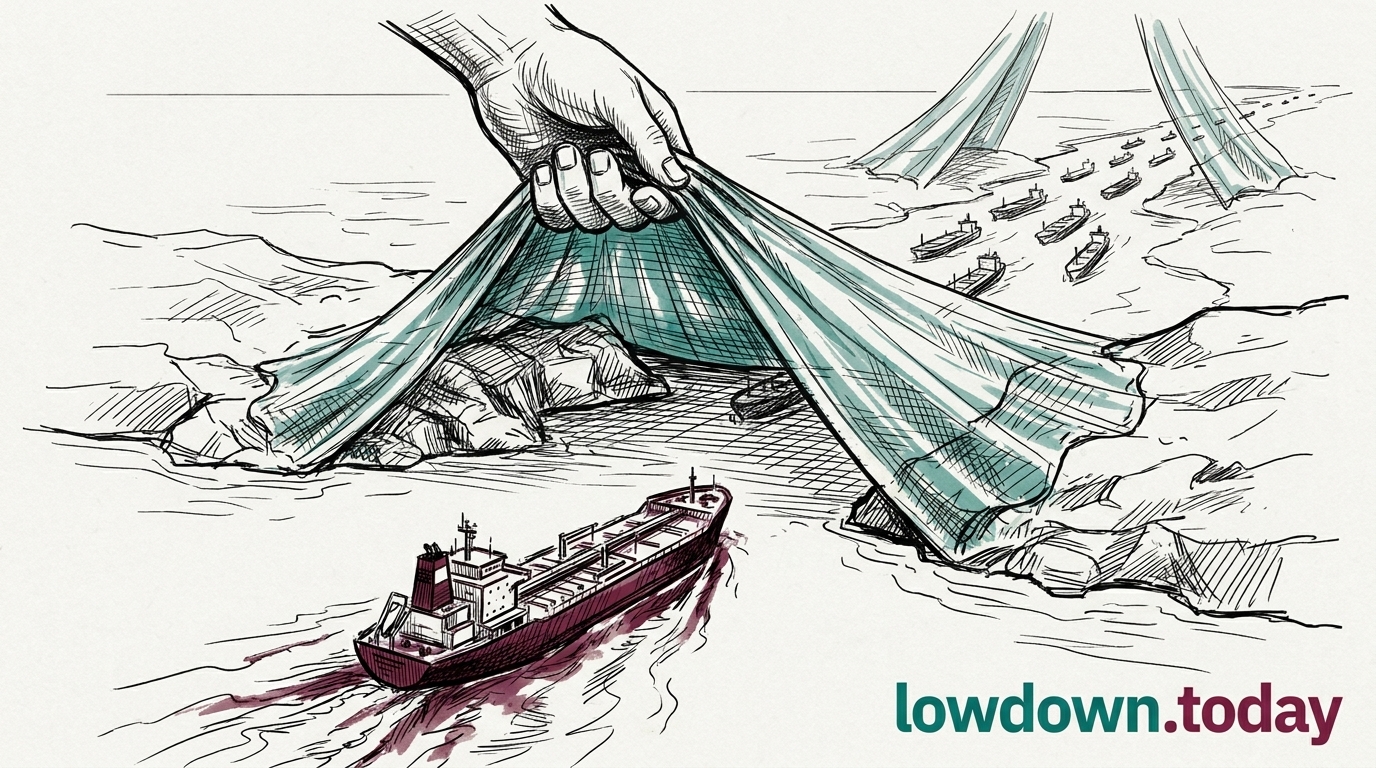
Treasury Secretary Scott Bessent said on Wednesday 24 June that the disputed $12 billion in frozen Iranian funds would be held in a US-controlled escrow account in Qatar 1. Bessent runs the US Treasury, the department that administers American sanctions. The money could be spent only on American food and medical exports such as corn, wheat and soybeans. Iran rejected the United States dictating how it spends its own money, and its officials said any food purchases would turn on price and quality, not Washington's direction .

Iran has framed the same package as a two-tranche release with no strings attached, while the US has insisted the figure was agreed with conditions all along . The same oil licence that earns Iran billions each month carries none of the escrow's conditions, so Washington can lock the contested cash while the crude keeps sailing to China.


Deep Analysis

In plain English

Iran has money frozen in accounts overseas that it cannot access because of US sanctions. Most of it sits in Qatar. The US Treasury Secretary said on 24 June that this money, around $12 billion, could be released into a special account in Qatar, but Iran could only use it to buy American food and medical supplies like corn, wheat, and soybeans. Iran said no. Iranian officials argued they should be able to spend their own money however they choose, and that buying specifically from the United States at prices and terms Washington sets is not freedom. Meanwhile, Iran is already earning billions selling oil freely under a separate US permission that has no such conditions attached.

Deep Analysis
Root Causes

Two distinct pools of money are in play simultaneously, and Washington has imposed tight conditions on only one of them. GL X, the 60-day oil export licence, carries no escrow and no cap; Iranian crude revenue flows freely to China. The frozen $12 billion in Qatar is subject to strict US end-use conditions. This asymmetry is the core structural tension: Iran earns freely under GL X while its frozen cash sits under Washington's control.

Iran's legal position rests on the distinction between asset ownership and asset access. Iranian officials and their legal advisers in international forums consistently argue that the frozen funds belong to Iran under applicable law, and that imposing conditions on their use is a unilateral violation of the Algiers Accords and later UN General Assembly resolutions on economic coercion. Several non-Western jurisdictions have endorsed this position in international legal proceedings.

The domestic political constraint in Tehran reinforces the rejection. Hardline Majlis members who are already threatening sit-ins over the MOU would use any acceptance of US-directed spending conditions as evidence of capitulation. Pezeshkian's government cannot accept a structure that allows US officials to veto how Iran spends Iranian money without triggering a domestic political crisis.

What could happen next?
  • Risk

    Iran's ongoing rejection of escrow conditions, combined with GL X oil income running parallel and uncapped, removes any financial urgency for Tehran to accept Washington's frozen-assets framework before GL X lapses.

    Short term · Assessed
  • Consequence

    The escrow dispute hardens the gap between US and Iranian framings of what the MOU agreed, making the 60-day talks window increasingly unlikely to produce a final deal before August deadlines converge.

    Medium term · Assessed
  • Precedent

    If the US succeeds in imposing agricultural end-use conditions on frozen Iranian assets, it establishes that Washington can direct how any sanctioned state spends its sovereign funds, a precedent several non-Western governments are watching closely.

    Long term · Suggested
First Reported In

Update #139 · A commander dies, the deal binds no one

CNBC· 26 Jun 2026
Read original
Different Perspectives
Sanctions compliance officer reviewing a Lukoil International GmbH bid
OFAC's amended FAQ 1224 gives a compliance desk its first published standard: full severance from Lukoil and a US-jurisdiction blocked account for sale proceeds. The conditions name neither ISAB nor Italy, so a Priolo Gargallo-linked bid answers a different question than a Neftochim Burgas or Petrotel Ploiesti one.
Managed-money funds on Brent Last Day
CFTC data for the week to 21 July showed managed money flipping 74,400 contracts to a net long of 15,665 against 1,410 short on the Brent Last Day contract, code 06765T. A fund that held that short through July has now covered it, and the spent short base raises the bar for the next leg higher.
Saudi crude exporters
Saudi-linked tanker transits through Bab el-Mandeb fell to about 7.5 a day after the 24 July underwriting withdrawal, pushing more barrels onto the longer route round the Cape or through the Yanbu terminal. Every diverted barrel ties up a ship for longer, and a fleet that turns slower charges more.
Tanker owners on the Bab el-Mandeb route
Lloyd's-market syndicates withdrew war-risk cover from Saudi-linked hulls on 24 July, leaving owners of that class of vessel to sail Bab el-Mandeb uninsured or not at all. Tanker transits on the route fell to roughly 7.5 a day, and cover, once withdrawn, does not return on a shipowner's timetable.
Eni
Eni
Eni's board approved second-quarter results on 29 July, swinging refining EBIT to a EUR0.08bn profit from a year-earlier loss even as group profit doubled, and named Red Sea freight cost as a cap on that improvement. A refiner absorbing higher shipping costs on Saudi-linked crude while its numbers improve treats the freight line as a drag, not a crisis.
Asian buyers (India, Japan, China, South Korea)
Asian refiners are absorbing 62% of Yanbu's 3.75m b/d flow, the bulk of Saudi Arabia's rerouted crude now clearing east rather than into the Atlantic basin. That destination split leaves Asian buyers more exposed to any single Yanbu-specific disruption than under the kingdom's normal multi-terminal export pattern.



