Skip to content
You can now search across every topic, entity and event.What's new
European Oil Markets
23JUL

Iran's drones, the US shield over Hormuz

3 min read
19:27UTC

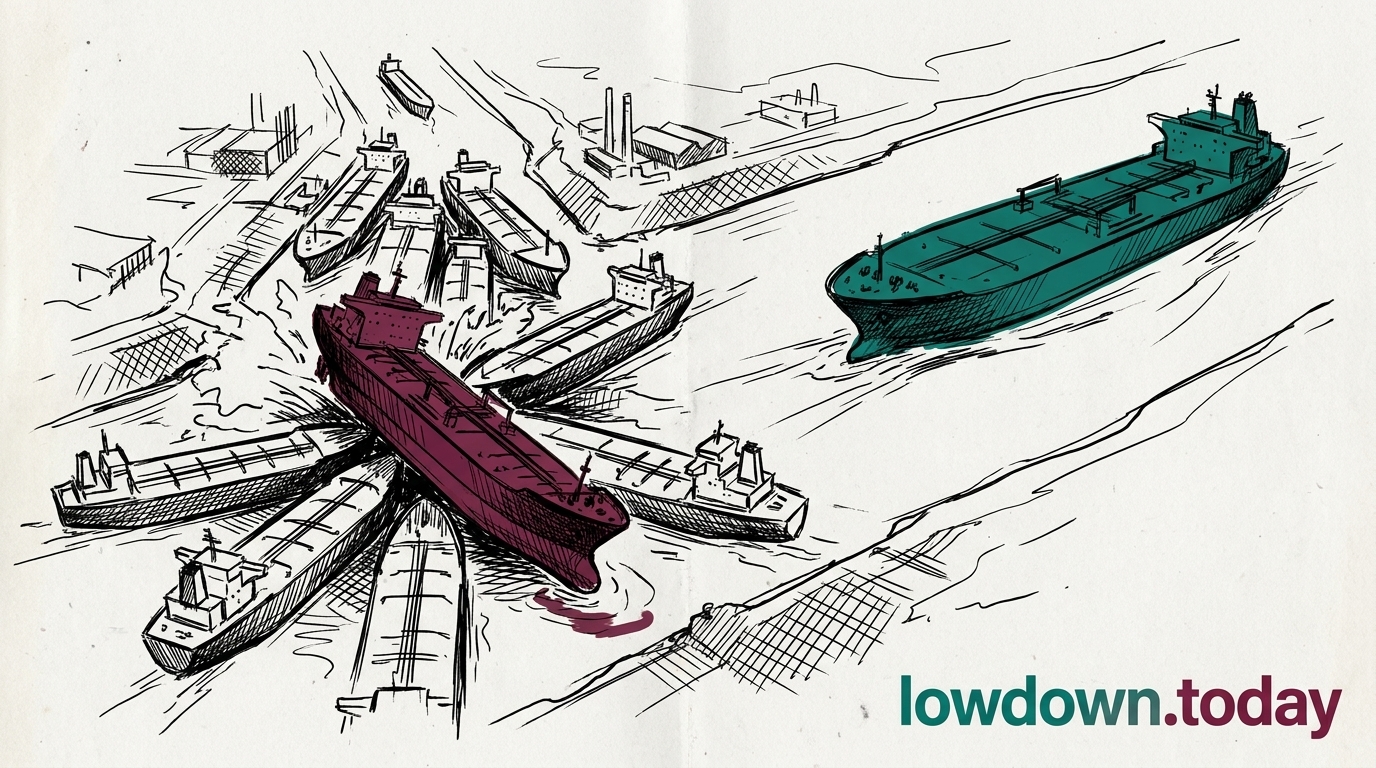
Iran launched attack drones at commercial ships in the Strait of Hormuz on 12 and 13 June; CENTCOM said US forces downed all of them both nights.

EconomicDeveloping
Key takeaway

Iran is firing drones at the Hormuz shipping it once tried to close; the US shoots them down.

Iran launched one-way attack drones at commercial ships in the Strait of Hormuz on both 12 and 13 June, a second consecutive night. CENTCOM (US Central Command), the US military command for the region, said its forces downed all of them and that "traffic flow through the strait continues unimpeded". 1 The naval blockade ran on alongside the drone combat: 139 vessels redirected, 9 disabled. 2

Iran spent the war as the blockade's target, its oil traffic strangled by US enforcement. This weekend it fired drones at the very commercial ships using the strait, while Washington shot those drones down to keep the lane open. The same waterway Iran tried to deny the world it is now trying to make dangerous instead, a shift from interdiction to harassment, the posture of a party that cannot hold the water but can still raise the insurance premium on it.

This is distinct from the 11 June CENTCOM strike on the MT Settebello that killed three Indian sailors and put US firepower on a tanker , and from the IRGC Navy's Telegram order barring all Hormuz traffic that CENTCOM rejected as ineffective . No new CENTCOM strikes hit Iranian soil in the window, so the land stand-down held across the weekend. All drones downed, no US casualties, contained but brittle: a single hit on a crewed commercial vessel would end the contained status overnight.


Deep Analysis

In plain English

Iran sent one-way attack drones, small remote-controlled aircraft loaded with explosives, at commercial ships passing through the Strait of Hormuz on the nights of 12 and 13 June. CENTCOM, the US military's regional command, shot down every single drone on both nights. Every targeted ship continued its voyage. Even so, the attacks matter. Insurance companies charge ship owners extra to sail through the strait because of the threat of attack. Every drone launch, even one that gets shot down, keeps that extra charge in place. Already 139 ships have been diverted around the strait and nine have been disabled. A fifth of the world's oil passes through Hormuz, so keeping the risk premium high gives Iran leverage in the deal negotiations even without a single successful strike.

Deep Analysis
Root Causes

The IRGC's drone campaign against commercial shipping operates independently of the civilian diplomatic track because the corps' provincial launch authority, established under the Decentralised Mosaic Defence doctrine, does not require Foreign Ministry approval or Supreme Leader instruction for each sortie.

Iran's strategic incentive to sustain the campaign holds even at 0 per cent hit rate: every drone launched forces CENTCOM to expend interceptors whose Camden, South Carolina production line runs on a multi-year backlog, and each launch extends the insurance premium that redirects traffic regardless of military outcome.

What could happen next?
  • Risk

    A single Iranian drone hitting a crewed commercial vessel would cross the threshold that ended the 2019 tanker harassment campaign; Brent would reprice sharply above $90 within one trading session.

    Immediate · Assessed
  • Consequence

    Two consecutive nights of drone intercepts at 100 per cent success depletes US Navy interceptor stocks; the Camden PAC-3 production backlog means replacements run on a multi-year timeline.

    Medium term · Suggested
  • Meaning

    Iran's switch from blockade target to strait attacker on commercial vessels signals the IRGC is running a parallel military track to the diplomatic one, each serving a different factional audience.

    Immediate · Assessed
  • Precedent

    The two-night drone campaign against commercial shipping while the land stand-down holds sets a pattern: the IRGC can escalate kinetically at sea without triggering US airstrikes on Iranian soil.

    Short term · Suggested
First Reported In

Update #126 · The weekend signing that never reached paper

NBC News· 13 Jun 2026
Read original
Different Perspectives
US money managers (CFTC-tracked)
US money managers had trimmed WTI net long positioning into July's rally, doubting the Hormuz premium would hold without freight or war-risk confirmation, and the crude stock build reported for the week to 17 July gives that scepticism a fundamentals basis. The 25 July CFTC data will show whether Brent's move above $100 changed their calculus.
Asian distillate buyers (Singapore)
Singapore's distillate holders kept retaining middle-distillate barrels as the East-West arbitrage window narrowed further this week, a pattern that sharpened as Fujairah light distillates hit a record low. Cargoes are being held rather than released west into the tightening Mediterranean market.
Bulgaria
Bulgaria
Bulgaria secured the removal of Lukoil founder Vagit Alekperov and Patriarch Kirill from the 21st package, with President Rumen Radev calling a personal listing 'shooting ourselves in the foot'. Sofia is protecting its position in Lukoil's EUR 3bn compensation claim over the 2023 Neftohim Burgas nationalisation.
Russia
Russia
Russia loses the roughly $14 a barrel of legal headroom the price-cap formula would have released toward $58, even as Urals continues trading below Moscow's $59 budget floor. The shadow-fleet insurance workaround that lets sanctioned crude clear above $44 in practice remains untouched by the freeze itself.
European Union
European Union
The EU adopted its 21st sanctions package on 23 July, freezing the $44 Russia oil cap for 12 months rather than letting the formula drift it toward $58, and listed shadow-fleet support vessels for the first time. The package cleared only after three failed Coreper votes.
Marine war-risk underwriters (Lloyd's-linked syndicates)
War-risk syndicates lifted southern Red Sea hull premiums 150% to about 0.75% of hull value after the 20 July blockade declaration, still a seventh of the roughly 5% Hormuz band. Underwriters reset on realised loss, not declared threat, so the 23 July Encelia and Layla strikes set up the next re-mark.