Skip to content
You can now search across every topic, entity and event.What's new
European Oil Markets
23JUL

Houthis fire on the Saudi tanker Encelia

2 min read
19:27UTC

Houthi forces fired missiles and drones at the Saudi tanker Encelia in the Bab al-Mandab on 22 July; Saudi state media confirmed a bow fire with the crew safe.

EconomicDeveloping
Key takeaway

A missile has replaced the radio warning in the Bab al-Mandab, opening a second contested strait south of Hormuz.

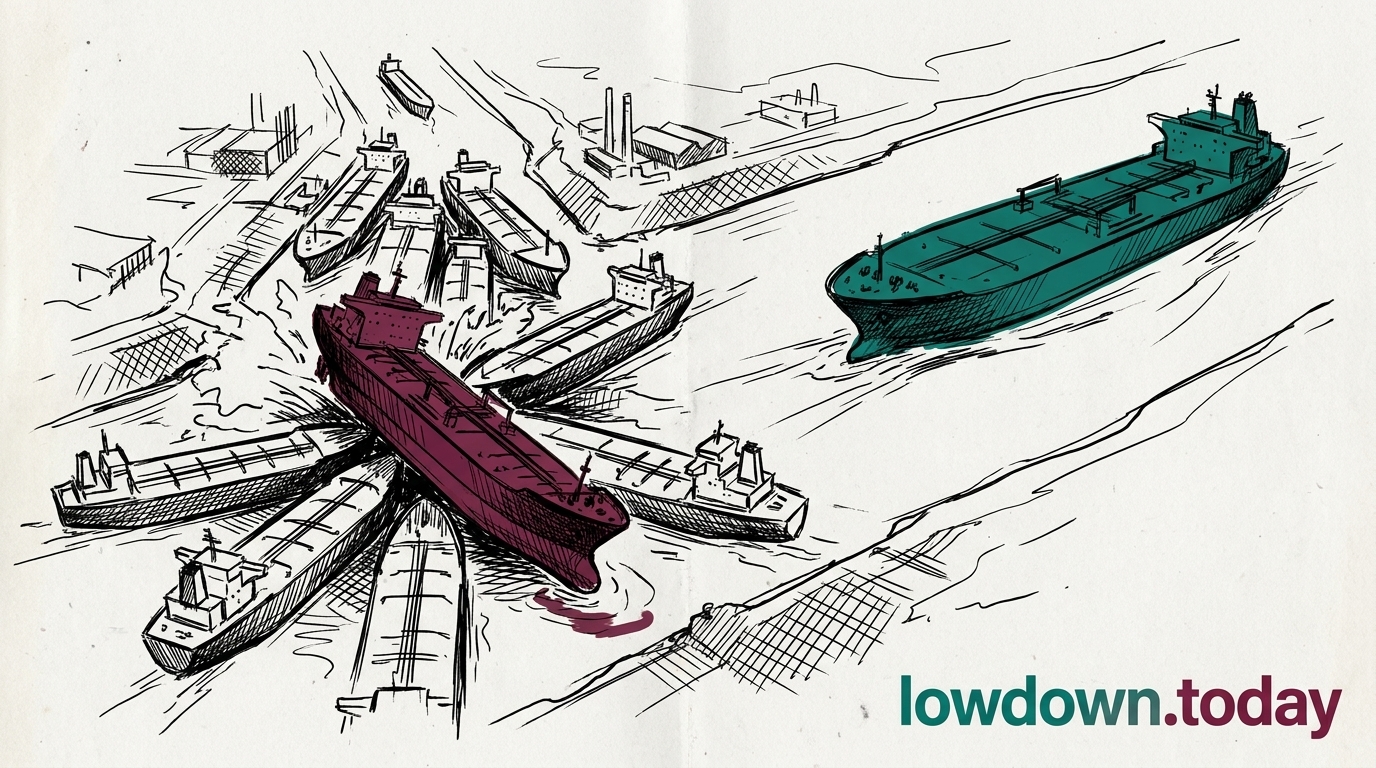
Houthi forces fired ballistic and cruise missiles and drones at the Saudi tanker Encelia in the Bab al-Mandab on 22 July, and Saudi Arabia's state news agency confirmed a fire on the vessel's bow with the crew safe and no casualties recorded 1. Yahya Saree, the Houthi military spokesman, announced the strike, calling it a response to what he termed a violation of the movement's blockade decision 2.

The Bab al-Mandab is the strait between Yemen and the Horn of Africa where the Red Sea narrows towards the Suez Canal, the southern gate for oil leaving the Gulf. It had been the quiet alternative to the Strait of Hormuz, the water Gulf barrels slipped through when the northern chokepoint tightened. Until 22 July the Houthis had closed it to Saudi shipping by radio warning alone, a broadcast rather than a weapon .

A hit in the south changes the shape of the war rather than its intensity. For a fortnight the fighting had climbed vertically, more nights and heavier targets inside Iran, while crude still slipped out through the southern route. Firing on the Encelia closes that back door, and it draws Saudi Arabia, which had wanted the maritime war held to hailing calls, into the shooting. The General Transport Authority, cited by the Saudi Press Agency, is the only official confirmation so far, and it covers the Encelia alone.


Deep Analysis

In plain English

The Houthis are an armed group that controls most of Yemen, including its Red Sea coastline. Bab al-Mandab is the narrow strait between Yemen and Djibouti that ships must pass through to reach the Suez Canal from the Gulf. On 22 July the Houthis fired missiles and drones at a Saudi oil tanker called the Encelia as it moved through that strait, and the tanker's bow caught fire. Saudi officials confirmed the Encelia's crew survived unhurt. This matters because Bab al-Mandab is one of only a few sea routes ships can use to move Gulf oil to the rest of the world. When it becomes dangerous, ships either pay much higher insurance to use it anyway or take a longer, costlier route around Africa.

Deep Analysis
Root Causes

Houthi reach into the Bab al-Mandab rests on a decade of arsenal-building that survived Saudi-led bombardment, giving a non-state force based in Sanaa the same anti-ship missile and drone capability that once belonged only to states.

The strait itself has no alternative deep-water route for eastbound Gulf traffic. The only way around it is the far longer passage round the Cape of Good Hope, which is why price, rather than distance, has become the rationing mechanism.

What could happen next?
  • Consequence

    Sustained Houthi strikes on Saudi-flagged tankers push more owners to reroute around the Cape of Good Hope, adding roughly two weeks to Asia-Europe crude and product voyages.

  • Risk

    If war-risk premiums keep rising, some smaller tanker owners may withdraw capacity from the route rather than pay for cover, tightening the deep-water fleet available just as Gulf supply is most constrained.

First Reported In

Update #160 · Houthis hit Saudi tankers; Brent tops $100

Al Jazeera· 23 Jul 2026
Read original
Different Perspectives
US money managers (CFTC-tracked)
US money managers had trimmed WTI net long positioning into July's rally, doubting the Hormuz premium would hold without freight or war-risk confirmation, and the crude stock build reported for the week to 17 July gives that scepticism a fundamentals basis. The 25 July CFTC data will show whether Brent's move above $100 changed their calculus.
Asian distillate buyers (Singapore)
Singapore's distillate holders kept retaining middle-distillate barrels as the East-West arbitrage window narrowed further this week, a pattern that sharpened as Fujairah light distillates hit a record low. Cargoes are being held rather than released west into the tightening Mediterranean market.
Bulgaria
Bulgaria
Bulgaria secured the removal of Lukoil founder Vagit Alekperov and Patriarch Kirill from the 21st package, with President Rumen Radev calling a personal listing 'shooting ourselves in the foot'. Sofia is protecting its position in Lukoil's EUR 3bn compensation claim over the 2023 Neftohim Burgas nationalisation.
Russia
Russia
Russia loses the roughly $14 a barrel of legal headroom the price-cap formula would have released toward $58, even as Urals continues trading below Moscow's $59 budget floor. The shadow-fleet insurance workaround that lets sanctioned crude clear above $44 in practice remains untouched by the freeze itself.
European Union
European Union
The EU adopted its 21st sanctions package on 23 July, freezing the $44 Russia oil cap for 12 months rather than letting the formula drift it toward $58, and listed shadow-fleet support vessels for the first time. The package cleared only after three failed Coreper votes.
Marine war-risk underwriters (Lloyd's-linked syndicates)
War-risk syndicates lifted southern Red Sea hull premiums 150% to about 0.75% of hull value after the 20 July blockade declaration, still a seventh of the roughly 5% Hormuz band. Underwriters reset on realised loss, not declared threat, so the 23 July Encelia and Layla strikes set up the next re-mark.