Skip to content
You can now search across every topic, entity and event.What's new
European Oil Markets
16JUL

China crude imports hit decade low

3 min read
09:39UTC

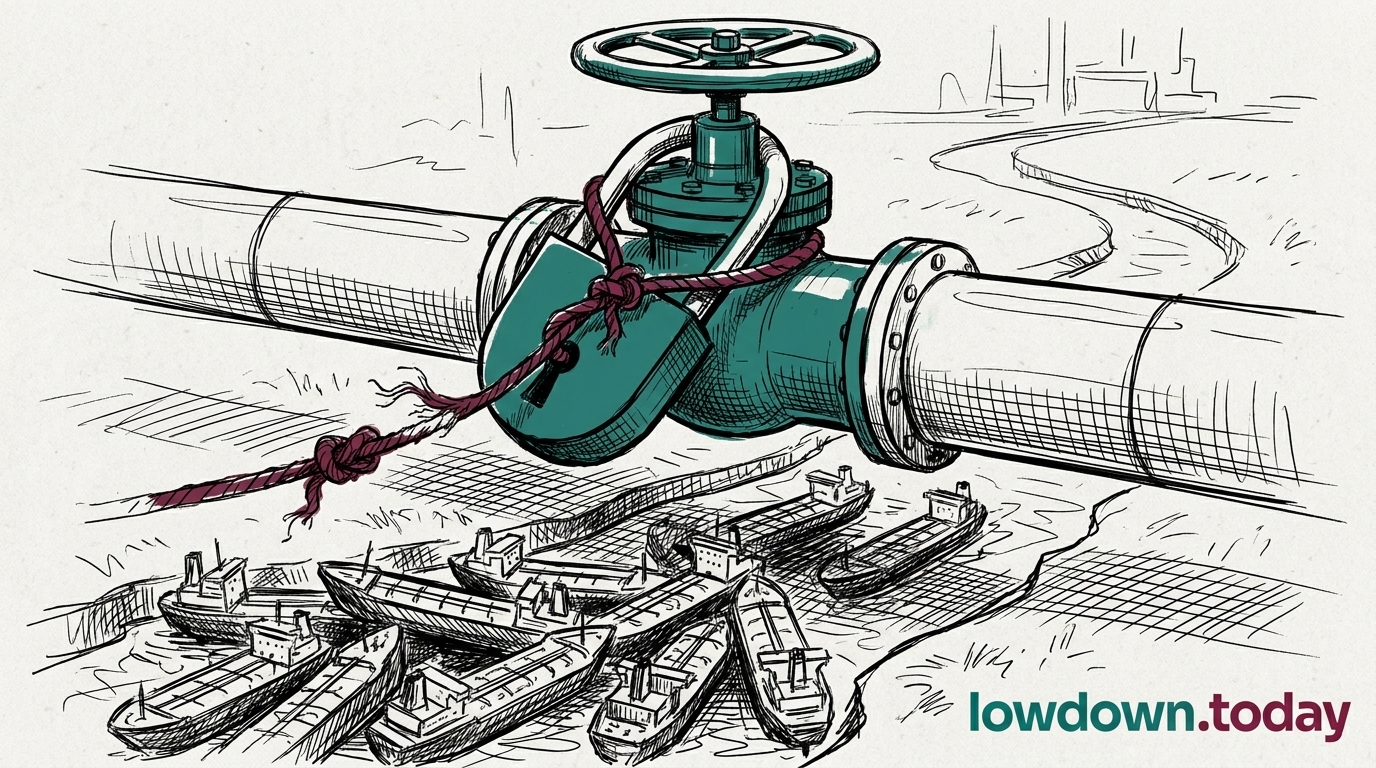
Kpler logged Chinese seaborne crude at 6.78 million barrels a day in May 2026, the lowest May reading in almost a decade and 3.88 mbd below the 2025 average. The Brent-Dubai EFS compression is a demand hole, not a deflating Hormuz premium.

EconomicDeveloping
Key takeaway

The EFS narrowed because the marginal Eastern buyer vanished, not because Hormuz reopened.

Kpler put Chinese seaborne crude imports at roughly 6.78 million barrels a day in May 2026, against 8.5 mbd in April and a 10.66 mbd 2025 average 1. It is the lowest May print in almost a decade. Onshore crude stocks slipped to about 1,232 million barrels from the 1,251mb early-May peak, and state-refiner margins clawed back to around -$2/bbl from -$60 in mid-April.

That withdrawal is the driver behind the Brent-Dubai EFS (the Exchange of Futures for Swaps that prices Atlantic-basin Brent against Middle Eastern Dubai crude) pulling off its $6-plus peak . Trading desks read the compression as the Hormuz war premium deflating on the 23 May Iran memorandum that took Brent down $14 . The barrels say otherwise: Dubai-linked demand collapsed while Dubai supply held, so the spread narrowed because the marginal Eastern buyer vanished, not because Hormuz reopened.

State-refiner margins at -$2/bbl stay negative, giving Chinese runs no economic pull to restock, and onshore stocks have barely drawn from the peak. A move back toward the 2025 average is a 3.9 mbd swing, north of 200 incremental VLCC (Very Large Crude Carrier) liftings a year on the Middle East-China leg, enough to snap the EFS wider before the freight curve can reprice.

Goldman Sachs argued in a late-May note that demand destruction at $90-100 Brent is keeping China sidelined for longer 2, the counter-case worth tracking. Kpler, a flow-analytics vendor, also has a commercial reason to frame a pause as a coiled spring. Beijing's return is a question of when rather than whether, and the EFS screen at this level is pricing never.


Deep Analysis

In plain English

China is the world's biggest buyer of crude oil by sea, taking roughly one barrel in every four shipped globally. In May 2026 it bought the least it has in almost ten years. The reason is simple: Chinese refineries were barely breaking even on their fuel sales, so they stopped buying new crude and used up what they already had stored. Because China stepped back, the price gap between oil priced in the Atlantic (Brent) and oil priced in the Middle East (Dubai) shrank. Most people assumed that gap shrank because the Gulf war tensions were easing. The physical data says the opposite: China just stopped buying, which removed the demand that normally keeps Middle Eastern prices firm. When China starts buying again, that gap could snap back hard and quickly.

Deep Analysis
Root Causes

The EFS compression mechanism runs through the Brent-Dubai spread and the TD3C freight route. When the marginal Eastern buyer (China, representing roughly 40% of global seaborne crude imports) steps back, Dubai-linked demand falls faster than Dubai supply because Gulf exporters cannot instantly redirect barrels West. The EFS narrows not because Brent falls but because Dubai holds on constrained physical supply while the freight demand that would otherwise pull Dubai barrels East has evaporated.

State-refiner margin economics are the proximate gating mechanism: at -$60/bbl in mid-April, CNPC and Sinopec had no P&L logic to lift spot cargoes. At -$2/bbl the logic is still negative. Historically the restart threshold for Chinese spot buying has been around +$3-5/bbl margin, meaning the market needs another $5-7/bbl of crack recovery before the demand hole fills.

What could happen next?
  • Risk

    Positions short the Brent-Dubai EFS on a deflating-war-premium thesis face asymmetric re-tightening the moment a single Kpler print shows Chinese imports recovering toward 8-9 mbd.

    Short term · Reported
  • Consequence

    TD3C VLCC freight and the ME-China route remain structurally suppressed until Chinese refiner margins recover above roughly +$3-5/bbl, which requires a further $5-7/bbl crack improvement from current -$2/bbl.

    Short term · Reported
  • Opportunity

    Atlantic-basin light-sweet grades staying West tighten the NWE crude supply picture, supporting European refiner margins independently of any Hormuz development.

    Immediate · Reported
First Reported In

Update #4 · EFS compression is a China hole, not Hormuz

Kpler· 1 Jun 2026
Read original
Different Perspectives
Indian refiners
Indian refiners
Indian refiners kept lifting discounted Urals as the India/Baltic price split widened past $9-10 a barrel, a gap that only grows as GL X1's Iranian wind-down cuts an alternative discounted grade off the market by 17 July. Cheaper Russian feedstock is being locked in while it lasts.
Chinese refiners
Chinese refiners
Chinese refiners gain leverage as the Urals-Brent discount widens, since Beijing's state buyers already source discounted Russian barrels near the fiscal floor unaffected by Western insurance costs. A wider discount, if it holds past 23 July, lets them lock in cheaper term contracts regardless of the cap's outcome.
US money managers (CFTC-tracked)
Managed money trimmed WTI net length into the rally, positioning that reflects doubt the Hormuz premium survives without freight or war-risk confirmation. The Brent-WTI spread widening almost entirely on the Brent leg supports that scepticism about a broad-based repricing.
OPEC+ (Saudi-led subgroup)
Saudi Arabia is defending market share through a fourth straight 188kbd August hike even as OPEC's own July MOMR cut 2026 demand growth for the fourth consecutive month. At a $108-111 fiscal breakeven, every added barrel costs Riyadh revenue it cannot recoup, so the hike reads as a positioning signal, not a demand bet.
Greek shipping registries
Greece, backed by Cyprus and Malta, is pushing a three-month cap-freeze compromise against the Commission's freeze to January 2027 ahead of the 23 July vote. Athens' and Valletta's combined tanker registrations mean a shorter review gives their insurers more frequent chances to reprice risk on Russian cargoes.
Russia (Deputy PM Alexander Novak)
Novak extended the diesel export restriction to producers on 8 July, the first producer-binding curb of the war, protecting the domestic pump price ahead of any refinery repair timeline. Urals still trades below Russia's $59 budget floor even as Brent gained, so the ban trades export revenue for fiscal stability at home.