Skip to content
You can now search across every topic, entity and event.What's new
European Oil Markets
13JUL

Iran misses MOU deadline; verifier locked out

4 min read
10:34UTC

Tehran let a two-day US reply window lapse on 9 May. The MOU asks Iran to surrender 440.9 kg of 60%-enriched uranium that no inspector has been allowed to count for eight months.

EconomicDeveloping
Key takeaway

Iran missed the reply window on a deal that asks for an uncountable handover.

Iran's Foreign Ministry let the 9 May two-day reply window lapse on the Memorandum of Understanding (MoU) the United States transmitted through Pakistan earlier this week . The text demands Tehran surrender 440.9 kg of 60%-enriched uranium, freeze all enrichment for twelve to fifteen years, and reopen the Strait of Hormuz within thirty days, in return for sanctions relief and the release of frozen assets. The body that would normally certify any of this, the International Atomic Energy Agency (IAEA), has had no on-site access to any Iranian nuclear site for eight months, since the Majlis voted 221-0 on 11 April to suspend cooperation. Tehran is being asked to surrender 440.9 kg of material whose location no independent inspector has been allowed to confirm since September 2025.

Arms Control Association (ACA) analysis published in April reports that Steve Witkoff, the US Special Envoy who led the only substantive US-Iran nuclear session on 26 February, raised no monitoring or verification mechanisms at the table 1. The same analysis records Witkoff describing Natanz and Fordow, Iran's two principal enrichment plants, as "industrial reactors", and expressing surprise that Iran manufactures its own centrifuges. The deal Witkoff drafted asks for an inventory nobody can count, monitored by an agency nobody invited, in a text the US side never wrote to be checkable.

Speaker Mohammad Bagher Ghalibaf posted on his public account that "Operation Trust Me Bro failed" 2. Parliamentary spokesperson Ebrahim Rezaei called the US demands "unreasonable, unrealistic and maximalist". Foreign Ministry spokesman Esmaeil Baqaei said Tehran was "still reviewing". Donald Trump told ABC News the same day that Iran had "agreed to it but the next day they forget", and described the document as "more than one page", contradicting the "one-page memo" framing Axios ran on 6 May. Two parties are publicly contradicting each other in real time about a paper neither has signed.

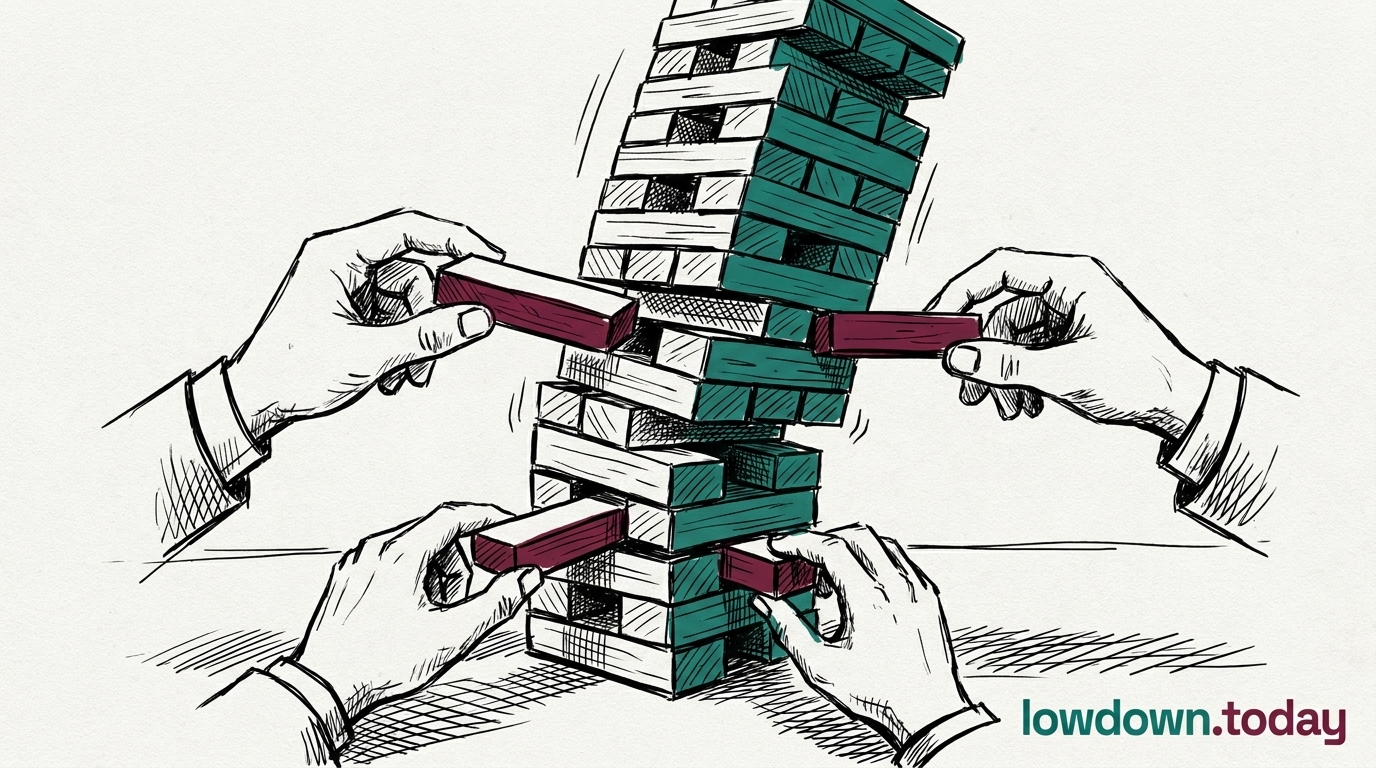
The 2015 JCPOA spent eighteen months operationalising its monitoring architecture after signature, and that was with continuous IAEA presence at Natanz throughout the negotiation. Comparable settlements (Libya 2003, the 1994 Agreed Framework with North Korea) all began with verifier access established, then negotiated quantities. The 2026 MoU inverts that order. The peace document Trump transmitted on 5 May and the EPIC FURY conclusion Rubio declared on 5 May sit on top of an empty inspection framework, and a counter-party whose parliament has now publicly mocked the text.


Deep Analysis

In plain English

Iran and the United States have been negotiating through Pakistan to try to end the war. The US sent Iran a document called a Memorandum of Understanding (MOU), essentially a draft agreement, asking Iran to hand over a large stockpile of enriched uranium (the material that can be turned into a nuclear weapon) and to stop enriching more of it for the next 12-15 years. The agency that would normally check whether Iran actually has that uranium is the International Atomic Energy Agency (IAEA), a United Nations body whose inspectors verify nuclear stockpiles worldwide. Iran kicked the IAEA out eight months ago. So the US is asking Iran to surrender 440.9 kg of material that nobody outside Iran has been allowed to count or verify since September 2025. Iran let the two-day response deadline pass without replying. Iran's parliament speaker mocked the document publicly, calling it 'Operation Trust Me Bro failed'. The US negotiator who drafted the deal reportedly called Iran's main nuclear plants 'industrial reactors', a basic factual error that undermined confidence in the technical grounding of the proposal.

Deep Analysis
Root Causes

The verification void has two structural origins that the MOU text does not address.

First, the **Witkoff channel** operates on personal-diplomacy logic, not arms-control institutional logic. Steve Witkoff's authority derives from his relationship with Donald Trump, not from any inter-agency process involving the State Department's Bureau of Arms Control or the IAEA Secretariat.

Arms-control negotiations that have produced verifiable outcomes (JCPOA, START, the Chemical Weapons Convention) all ran through interagency processes that embedded technical verification requirements into early draft texts. Witkoff's February session produced no verification mechanism because there was no State Bureau Arms Reduction team in the room.

Second, the **Majlis vote of 221-0 on 11 April** to suspend IAEA cooperation was a constitutional act under Iran's domestic law, not a rogue IRGC unilateral move. Reversing it requires another Majlis vote, which in turn requires sufficient political cover from Khamenei's office.

The MOU's deadline mechanism (a two-day reply window via Pakistan) is a document from a real-estate negotiator's toolkit applied to a body that operates on revolutionary-legitimacy timelines, not contract-completion calendars.

What could happen next?
  • Risk

    Without verifier access re-established before any text is signed, any deal is structurally unenforceable; a signed MOU without IAEA baseline access would replicate the 2002 Agreed Framework collapse on a faster timeline.

    Short term · 0.85
  • Consequence

    The 14 May Trump-Xi summit now carries the verification architecture question: if Beijing can broker IAEA re-access as a confidence measure before any signing, it changes China's leverage position in the talks.

    Immediate · 0.72
  • Precedent

    A US negotiating team drafting nuclear surrender demands without engaging the IAEA's safeguards division sets a template that undermines the NPT verification framework globally, regardless of whether this specific deal collapses.

    Long term · 0.78
First Reported In

Update #92 · An MOU asking Iran to surrender what nobody can count

The War Zone· 9 May 2026
Read original
Causes and effects
This Event
Iran misses MOU deadline; verifier locked out
A nuclear settlement drafted without verifier access has no successful precedent; both sides are now contradicting each other on whether a deal exists.
Different Perspectives
Indian refiners
Indian refiners
Indian refiners kept lifting discounted Urals as the India/Baltic price split widened past $9-10 a barrel, a gap that only grows as GL X1's Iranian wind-down cuts an alternative discounted grade off the market by 17 July. Cheaper Russian feedstock is being locked in while it lasts.
Chinese refiners
Chinese refiners
Chinese refiners gain leverage as the Urals-Brent discount widens, since Beijing's state buyers already source discounted Russian barrels near the fiscal floor unaffected by Western insurance costs. A wider discount, if it holds past 23 July, lets them lock in cheaper term contracts regardless of the cap's outcome.
US money managers (CFTC-tracked)
Managed money trimmed WTI net length into the rally, positioning that reflects doubt the Hormuz premium survives without freight or war-risk confirmation. The Brent-WTI spread widening almost entirely on the Brent leg supports that scepticism about a broad-based repricing.
OPEC+ (Saudi-led subgroup)
Saudi Arabia is defending market share through a fourth straight 188kbd August hike even as OPEC's own July MOMR cut 2026 demand growth for the fourth consecutive month. At a $108-111 fiscal breakeven, every added barrel costs Riyadh revenue it cannot recoup, so the hike reads as a positioning signal, not a demand bet.
Greek shipping registries
Greece, backed by Cyprus and Malta, is pushing a three-month cap-freeze compromise against the Commission's freeze to January 2027 ahead of the 23 July vote. Athens' and Valletta's combined tanker registrations mean a shorter review gives their insurers more frequent chances to reprice risk on Russian cargoes.
Russia (Deputy PM Alexander Novak)
Novak extended the diesel export restriction to producers on 8 July, the first producer-binding curb of the war, protecting the domestic pump price ahead of any refinery repair timeline. Urals still trades below Russia's $59 budget floor even as Brent gained, so the ban trades export revenue for fiscal stability at home.