Skip to content
You can now search across every topic, entity and event.What's new
European Oil Markets
13JUL

Brent below $100 on ceasefire rumours

4 min read
10:34UTC

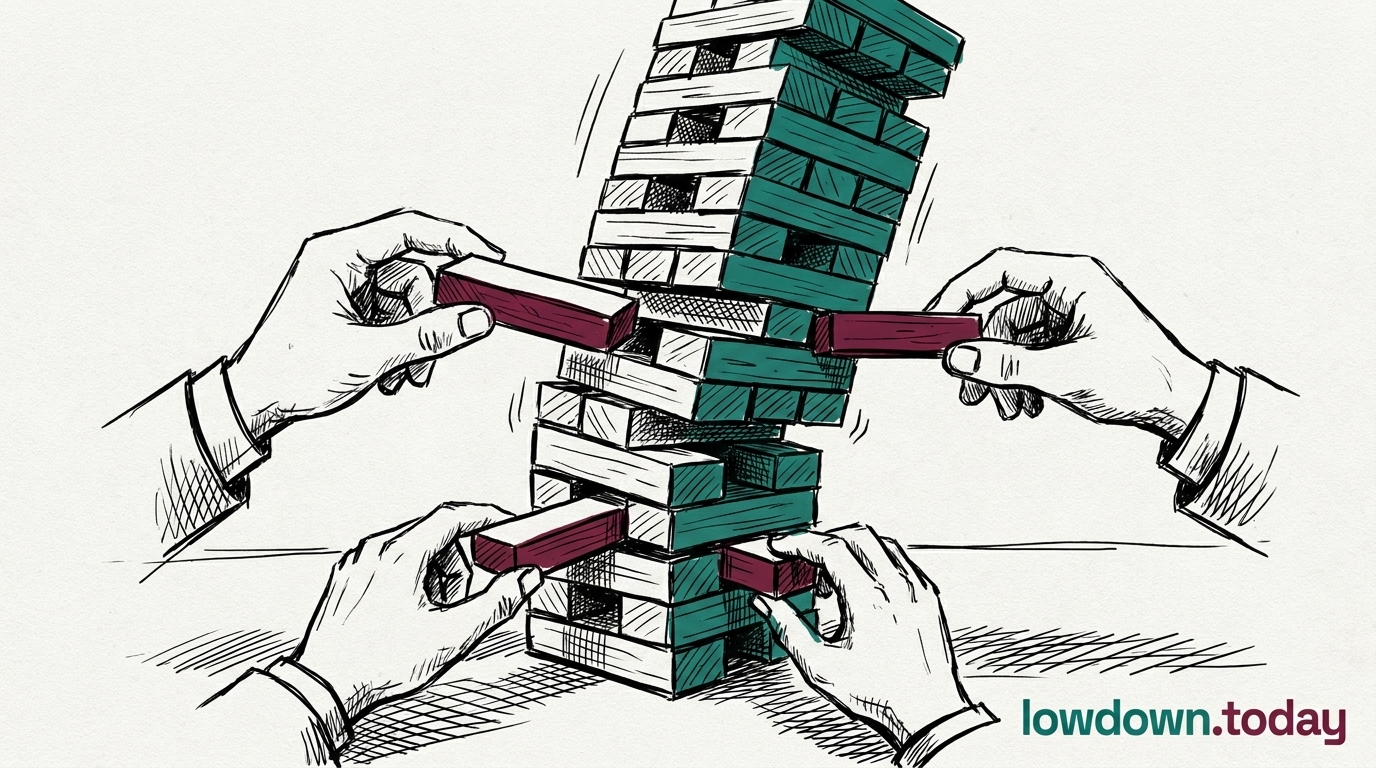
Brent crude dropped $12.25 in a single session — the war's largest daily fall — on Trump's claim of productive negotiations with Iran. The supply disruption that drove prices to $126 four days earlier has not changed.

EconomicDeveloping
Key takeaway

Markets priced out $26/barrel of war risk in one session, but a $32 residual premium signals structural Gulf risk persists.

Brent Crude fell $12.25 — 10.9% — to close at $99.94 per barrel, its first settlement below $100 since 11 March and a 14% intraday swing — the largest single-day oil price drop since the war began. WTI fell 10.3% to $88.13. European gas futures dropped 9%. The trigger: Trump's Truth Social post claiming productive conversations with Iran and postponing strikes on Iranian power plants for five days.

Four days earlier, Brent had peaked at $126 . The swing from peak to Monday's close — roughly 21% in under a week — occurred with no change in the physical supply picture. the strait of Hormuz remains under IRGC operational control. The 8-million-barrel-per-day supply disruption documented by the IEA has not eased. More than 3,000 vessels remain stranded across the Middle East . UBS economist Paul Donovan attributed the volatility to "different and at times contradictory assessments of the war" from senior US officials 1 — a diagnosis that applies with equal force to the $126 peak, which was driven by Trump's 48-hour strike ultimatum .

Even after Monday's drop, Brent at $99.94 sits roughly 50% above the pre-war price of $67.41. American households still pay an additional $300 million per day at the pump compared to pre-conflict levels . Goldman Sachs's Daan Struyven had raised US recession probability to 25% at lower price levels than Monday's settlement ; Oxford Economics assessed that sustained Brent at $140 triggers a mild global recession at negative 0.7% GDP .

Monday's market priced in a diplomatic resolution that does not yet exist. Iran denies negotiations have occurred. If the proposed Islamabad meeting fails to materialise, or if Trump's five-day postponement expires on 28 March without progress, the conditions that produced $126 remain intact — and the snap-back would be equally abrupt.


Deep Analysis

In plain English

Oil affects almost everything: petrol, heating, food production, shipping, and manufactured goods. When oil falls sharply, costs ripple down through the whole economy over several weeks. Monday's crash happened because Trump announced talks with Iran, causing traders who had bet on continued war to rapidly unwind those positions — creating a cascade of selling. But even after the largest single-day drop since the war began, oil remains 50% above pre-war levels. The economic damage to households and businesses is ongoing; Monday provided relief, not a return to normal.

Deep Analysis
Synthesis

The Russell 2000's 2.7% outperformance versus the S&P 500's 1.1% gain is analytically significant and unremarked in the body. Small-cap domestic US firms are less exposed to energy input costs and international trade disruption than large-cap multinationals. The spread between the two indices is a real-time market verdict on who bears the war's economic burden — Monday's session shows large, globally-exposed firms carry it disproportionately, while domestically-focused US businesses benefit more from any de-escalation signal.

Root Causes

The 14% intraday swing reflects not only the diplomatic news but the forced liquidation of speculative long positions accumulated as Brent rose from $67 to $126. The body attributes volatility to 'contradictory assessments from US officials' — but the structural amplifier is an abnormally crowded long position in crude futures, meaning any de-escalation signal triggered cascading stop-loss selling well beyond what fundamental price adjustment warranted. The speed of the move is diagnostic of leverage unwinding, not sentiment alone.

What could happen next?
  • Risk

    If the talks narrative collapses before 28 March, speculative long positions will rebuild rapidly, potentially driving Brent back toward $120–126 within days.

    Immediate · Assessed
  • Meaning

    The $32/barrel residual premium above pre-war levels signals markets assess the IRGC toll system as a semi-permanent structural feature of Gulf transit, not a transient wartime measure.

    Short term · Assessed
  • Consequence

    Compressed refinery crack spreads following Monday's crude crash may delay consumer petrol price relief by two to four weeks relative to the futures market move.

    Short term · Suggested
  • Opportunity

    Collapsed implied volatility on crude options temporarily reduces forward fuel-hedging costs for airlines and shipping firms, providing operational planning relief even before physical prices normalise.

    Immediate · Suggested
First Reported In

Update #46 · Trump delays strikes; oil crashes to $99

Bloomberg· 24 Mar 2026
Read original
Causes and effects
This Event
Brent below $100 on ceasefire rumours
Energy markets are now a direct transmission mechanism for US presidential statements about the war, with billions of dollars in value moving on a single social media post. The crash briefly took Brent below $100 for the first time since 11 March, but the physical supply disruption — 8 million barrels per day offline, 3,000 vessels stranded, Hormuz under IRGC control — remains identical to the conditions that produced the $126 peak.
Different Perspectives
Indian refiners
Indian refiners
Indian refiners kept lifting discounted Urals as the India/Baltic price split widened past $9-10 a barrel, a gap that only grows as GL X1's Iranian wind-down cuts an alternative discounted grade off the market by 17 July. Cheaper Russian feedstock is being locked in while it lasts.
Chinese refiners
Chinese refiners
Chinese refiners gain leverage as the Urals-Brent discount widens, since Beijing's state buyers already source discounted Russian barrels near the fiscal floor unaffected by Western insurance costs. A wider discount, if it holds past 23 July, lets them lock in cheaper term contracts regardless of the cap's outcome.
US money managers (CFTC-tracked)
Managed money trimmed WTI net length into the rally, positioning that reflects doubt the Hormuz premium survives without freight or war-risk confirmation. The Brent-WTI spread widening almost entirely on the Brent leg supports that scepticism about a broad-based repricing.
OPEC+ (Saudi-led subgroup)
Saudi Arabia is defending market share through a fourth straight 188kbd August hike even as OPEC's own July MOMR cut 2026 demand growth for the fourth consecutive month. At a $108-111 fiscal breakeven, every added barrel costs Riyadh revenue it cannot recoup, so the hike reads as a positioning signal, not a demand bet.
Greek shipping registries
Greece, backed by Cyprus and Malta, is pushing a three-month cap-freeze compromise against the Commission's freeze to January 2027 ahead of the 23 July vote. Athens' and Valletta's combined tanker registrations mean a shorter review gives their insurers more frequent chances to reprice risk on Russian cargoes.
Russia (Deputy PM Alexander Novak)
Novak extended the diesel export restriction to producers on 8 July, the first producer-binding curb of the war, protecting the domestic pump price ahead of any refinery repair timeline. Urals still trades below Russia's $59 budget floor even as Brent gained, so the ban trades export revenue for fiscal stability at home.