Skip to content
You can now search across every topic, entity and event.What's new
European Oil Markets
10JUL

Urals discount splits by delivery basis

2 min read
09:40UTC

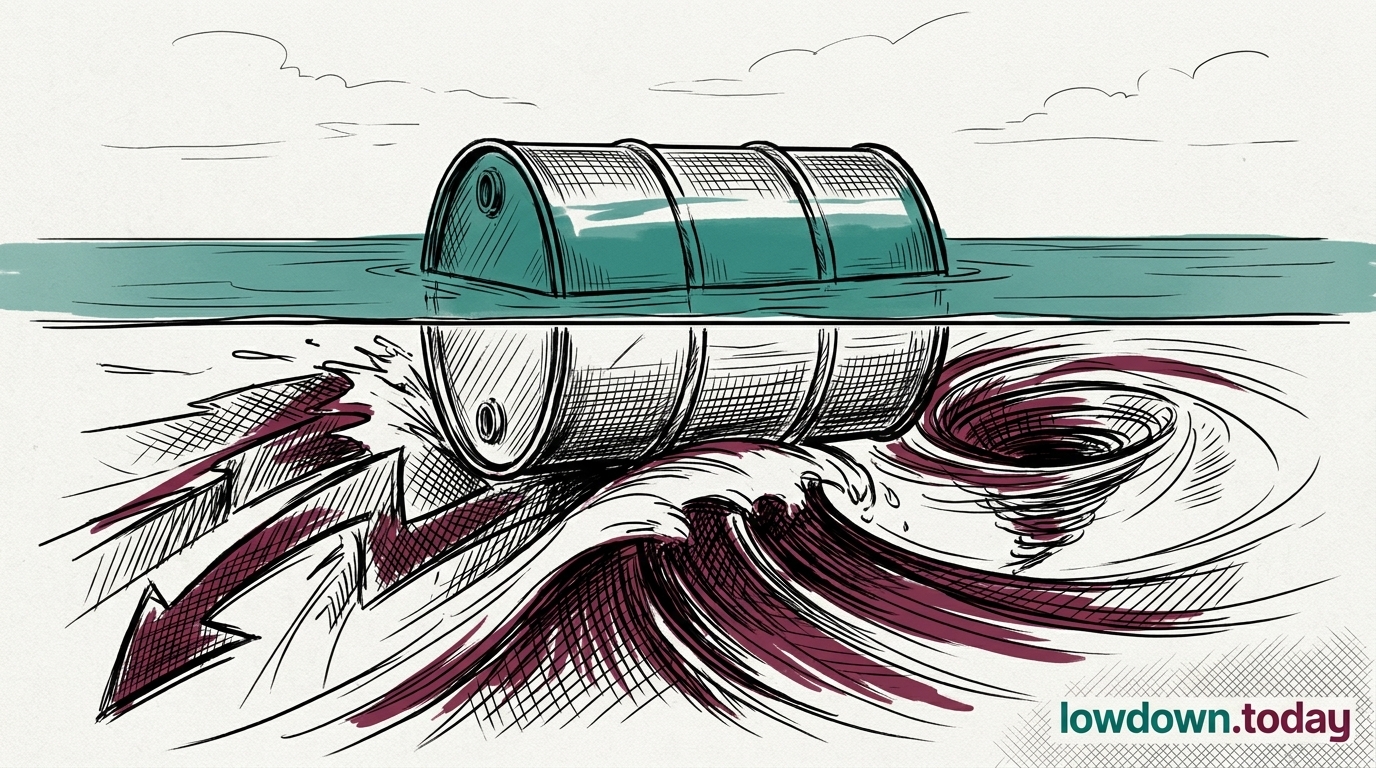
The Urals discount to Dated Brent split by route, past $10 a barrel delivered into India on 7 July against a wider $20 discount loading in the Baltic.

EconomicDeveloping
Key takeaway

The Urals discount is splitting by route, near $10 delivered into India against $20 loading in the Baltic.

The Urals discount to Dated Brent widened past $10 a barrel at Indian ports on Tuesday 7 July, Reuters reported, as Asian refinery demand cooled and alternative supply returned 1. Urals is Russia's main export crude grade, and its discount is the sanctions barometer traders watch; a wider discount means Moscow is selling cheaper to keep barrels moving.

That $10 figure is a destination-basis number, priced delivered at an Indian port (DAP India), and it sits alongside, not against, the roughly $20 Baltic loading-basis discount at Primorsk the desk tracked last week . The single Urals discount the wires quote does not hold up. It is splitting by route as freight and shadow-fleet insurance enforcement reprice unevenly.

Indian buyers regain leverage as Gulf and Iranian barrels return to the market, while Baltic-loading cargoes stay tight to the sanctions plumbing. Fujairah product stocks rebuilding 27% to a three-month high, with heavy distillates up 38%, shows East-of-Suez refiners maximising diesel yield into the same demand pull 2.

Deep Analysis

In plain English

Urals is Russia's main crude oil grade, and it normally sells below the Brent benchmark because of sanctions on Russian oil. That discount is not one fixed number, it depends where and how the price is measured. On 7 July, the discount measured at Indian ports (after shipping costs) was over $10 a barrel, while the discount measured at the Russian port of Primorsk (before shipping) was closer to $20. The gap looks alarming side by side but mostly reflects the cost of the tanker journey between the two points, not two different prices for the same barrel.

Deep Analysis
Root Causes

Comparing a delivered-at-place price in India with a free-on-board price at Primorsk without adjusting for the Hormuz-to-India voyage, which shadow-fleet freight has priced at $8-10 a barrel since the cap regime began, overstates any claim that Indian buyers are getting a worse deal than Baltic loaders.

The more durable driver is that Fujairah's product stocks rebuilt 27% to a three-month high as East-of-Suez refiners maximised diesel yield from cheap Urals feedstock, a structural pull on Gulf-basis crude that the Baltic loading price does not capture.

What could happen next?
  • Meaning

    A narrowing of the India-Baltic gap in coming weeks would suggest shadow-fleet freight costs are easing, while a widening gap would point to genuine tightening buyer risk on the Indian side.

First Reported In

Update #15 · Three shocks, one week, across the oil spreads

Reuters· 10 Jul 2026
Read original
Different Perspectives
Indian refiners
Indian refiners
Indian refiners kept lifting discounted Urals as the India/Baltic price split widened past $9-10 a barrel, a gap that only grows as GL X1's Iranian wind-down cuts an alternative discounted grade off the market by 17 July. Cheaper Russian feedstock is being locked in while it lasts.
Chinese refiners
Chinese refiners
Chinese refiners gain leverage as the Urals-Brent discount widens, since Beijing's state buyers already source discounted Russian barrels near the fiscal floor unaffected by Western insurance costs. A wider discount, if it holds past 23 July, lets them lock in cheaper term contracts regardless of the cap's outcome.
US money managers (CFTC-tracked)
Managed money trimmed WTI net length into the rally, positioning that reflects doubt the Hormuz premium survives without freight or war-risk confirmation. The Brent-WTI spread widening almost entirely on the Brent leg supports that scepticism about a broad-based repricing.
OPEC+ (Saudi-led subgroup)
Saudi Arabia is defending market share through a fourth straight 188kbd August hike even as OPEC's own July MOMR cut 2026 demand growth for the fourth consecutive month. At a $108-111 fiscal breakeven, every added barrel costs Riyadh revenue it cannot recoup, so the hike reads as a positioning signal, not a demand bet.
Greek shipping registries
Greece, backed by Cyprus and Malta, is pushing a three-month cap-freeze compromise against the Commission's freeze to January 2027 ahead of the 23 July vote. Athens' and Valletta's combined tanker registrations mean a shorter review gives their insurers more frequent chances to reprice risk on Russian cargoes.
Russia (Deputy PM Alexander Novak)
Novak extended the diesel export restriction to producers on 8 July, the first producer-binding curb of the war, protecting the domestic pump price ahead of any refinery repair timeline. Urals still trades below Russia's $59 budget floor even as Brent gained, so the ban trades export revenue for fiscal stability at home.
