Skip to content
You can now search across every topic, entity and event.What's new
European Oil Markets
6JUL

Iran threatens to mine the Persian Gulf

4 min read
09:52UTC

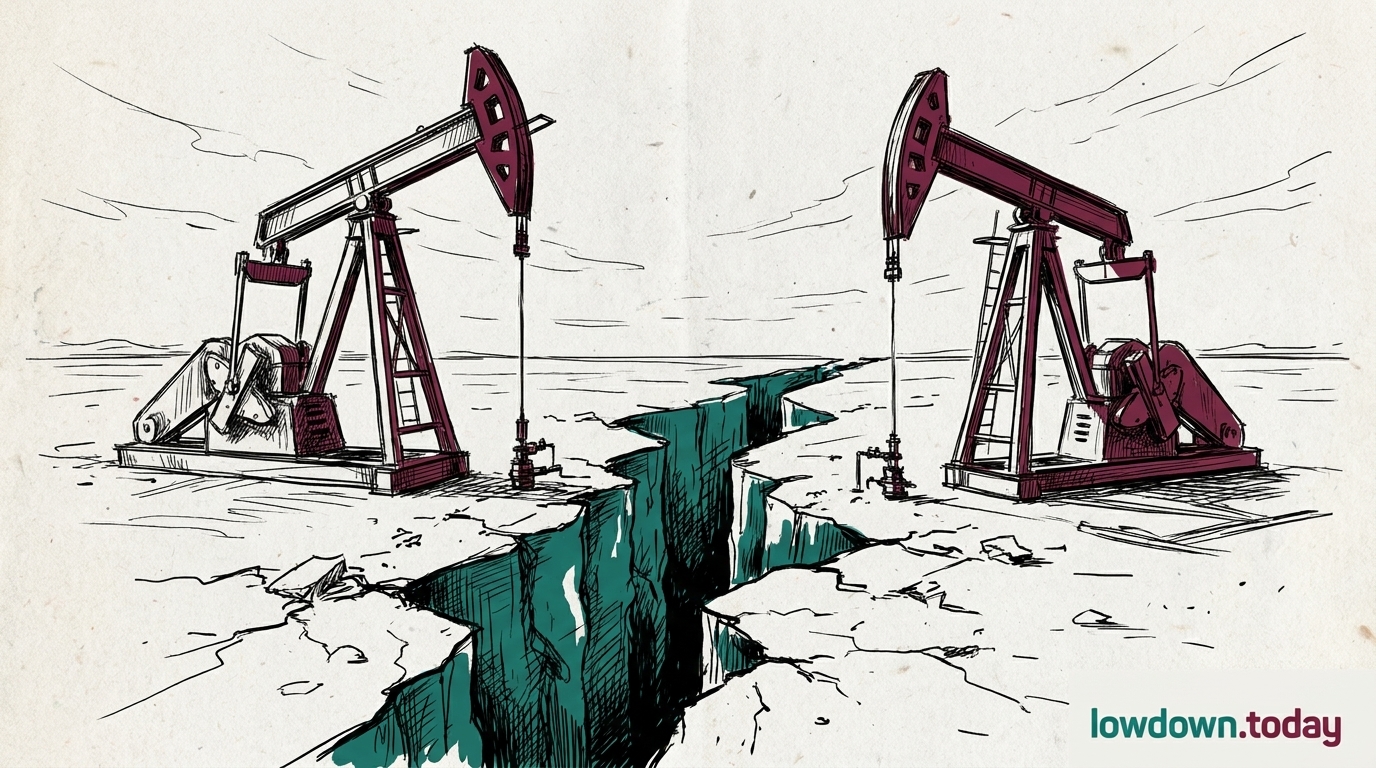
Iran's Defence Council reached back to the 1980s Tanker War — when a single mine nearly sank a US frigate — and warned that any strike on Iranian coasts will trigger mine-laying across all Gulf access routes.

EconomicDeveloping
Key takeaway

Iran's mining capability is historically proven and doctrinely established; the real question is US response speed.

Iran's Defence Council issued a formal statement on Sunday: any attack on Iranian coasts or islands will "lead to the mining of all access routes in the Persian Gulf." The Council cited Iran's mining of these waters during the 1980–88 war with Iraq as "established military practice" 1. The statement arrived while Trump's 48-hour ultimatum to strike Iranian power plants — many of which sit on or near the coast — was still nominally active, though he postponed strikes hours later.

The historical reference is precise. During the Tanker War phase of the Iran-Iraq conflict (1984–88), Iran deployed mines across Gulf shipping lanes using naval vessels, civilian dhows, and the converted landing ship Iran Ajr. In April 1988, the frigate USS Samuel B. Roberts struck an Iranian contact mine in the central Gulf, nearly sinking the vessel and triggering Operation Praying Mantis — the largest US naval surface engagement since the Second World War. Mine clearance continued for months after the July 1988 ceasefire. The lesson Iran's military establishment drew was specific: mines imposed costs on a vastly superior navy disproportionate to their price, and their effect on commercial shipping — through insurance withdrawal rather than physical destruction — exceeded their direct military damage.

Mines would alter the conflict's maritime dimension in a way that missiles and drones have not. Iran's ballistic stockpiles are a depreciating asset under sustained attrition. Mines are the opposite: cheap, locally manufactured, deployable from small boats in quantities that overwhelm clearance capacity. The US Navy's mine countermeasures force — the subject of repeated Government Accountability Office warnings about readiness gaps and ageing platforms — would require weeks to months to clear a mined Gulf. Lloyd's of London war-risk premiums already run between $3.6 million and $6 million per voyage for very large crude carriers . Confirmed mines would not raise those premiums; they would suspend coverage entirely.

The Defence Council's threat extends a pattern of graduated maritime escalation: from initial strait closure, to selective passage for non-hostile nations, to the IRGC's operational toll system, to conditional permanent closure if power plants are struck . Mining would be the next stage — and the hardest to reverse. Missiles stop when launchers are destroyed or stockpiles run out. Mines do not stop being dangerous when a ceasefire is declared.


Deep Analysis

In plain English

Iran is threatening to place underwater mines across the Persian Gulf — the same waterway through which roughly 20% of the world's oil travels daily. Unlike a military blockade, mines are passive weapons: once laid, they damage or destroy any vessel that triggers them, regardless of nationality. Clearing them requires specialist vessels working slowly over weeks or months. Even the announcement of mining typically causes insurers to suspend cover and shipping companies to halt sailings immediately — meaning the economic damage begins before a single mine is laid.

Deep Analysis
Synthesis

The Defence Council's public statement has a secondary legal function beyond deterrence. Under international law, mining international waterways requires prior notification to protect neutral shipping. Iran's formal public statement could be construed as partial compliance with that requirement, deliberately lowering the legal barrier to execution while creating ambiguity about when notification was 'sufficient.' This is a signal aimed as much at maritime insurers and neutral Asian importers as at US military planners.

Root Causes

Iran's mining threat reflects a structural asymmetric calculation: it cannot match US air power, so it seeks to impose costs where it retains comparative advantage — maritime disruption. Mine deployment is operationally cheap relative to the diplomatic and economic damage it causes, and it places the compliance burden on neutral states dependent on Gulf shipping rather than requiring Iran to sustain offensive action under air superiority.

Escalation

The Defence Council statement — a formal institutional communiqué, not an individual official's remark — represents an escalation in commitment level above previous individual warnings. The explicit citation of the 1980-88 mining as 'established military practice' is doctrinal framing, reducing the political cost of execution. The same figure (Ghalibaf) simultaneously issuing mining threats and reportedly conducting diplomacy signals that Iran's military and parliamentary wings may be operating with different mandates.

What could happen next?
  • Risk

    Any US strike on Iranian coastal installations could trigger mine deployment within hours, given Iran's documented capability for covert dhow-based minelaying.

    Immediate · Assessed
  • Consequence

    Confirmed mining would force global tanker reroutes around Africa, adding weeks to journey times and raising commodity prices across all Gulf-dependent import economies.

    Short term · Assessed
  • Risk

    Mine-clearance operations in the Gulf would require months of specialist naval work, sustaining elevated insurance premiums and reduced transit volumes throughout.

    Medium term · Assessed
  • Precedent

    If Iran mines the Gulf without a decisive US countermeasure that restores full transit, it establishes that medium powers can impose maritime costs on global trade during active conflict with a superpower.

    Long term · Suggested
First Reported In

Update #46 · Trump delays strikes; oil crashes to $99

Time· 24 Mar 2026
Read original
Causes and effects
This Event
Iran threatens to mine the Persian Gulf
Mining the Persian Gulf would shift the conflict from a contest of missile stockpiles — where US attrition has clear advantage — to a contest of clearance capacity, where Iran holds the asymmetry. A single confirmed mine would freeze commercial insurance markets and close the Gulf to unescorted traffic for weeks to months, regardless of US air and naval superiority.
Different Perspectives
Greek shipping registries
Flag states dominating the tanker fleet await the EU's 15 July cap-freeze vote. A formula unlock toward $75 would loosen the ceiling squeezing insurance and crewing costs on their registered hulls.
US money managers
US money managers
NYMEX WTI managed-money net long fell 23% to +64,041 in the week to 7 July, trimming length into the rally on doubt the Hormuz premium survives without freight or war-risk confirmation.
European refiners (ARA)
ARA refiners are capturing an $80/bbl US diesel crack as Russian gasoil loadings collapsed to 234kbd before Novak's 31 July export ban even bites, widening the arbitrage straight into refining margins.
OPEC+
OPEC+
The seven-member group confirmed a fourth consecutive 188kbd August hike on 5 July, defending market share even though Saudi Arabia's $108-111/bbl breakeven means every added barrel costs Riyadh revenue it cannot recoup.
Indian refiners
Indian refiners
Refiners kept lifting discounted Urals as the India/Baltic split widened past $9-10 a barrel on 7 July. A wider Urals-Brent gap means cheaper feedstock locked in against Baltic buyers.
Russia
Russia
Urals traded $48.95-55.12 on 12-13 July, below Moscow's $59 budget floor even as Brent gained $6. Oil and gas fund roughly 30% of federal revenue, and Novak's diesel export ban is rationing a shrinking export base.