Skip to content
You can now search across every topic, entity and event.What's new
European Oil Markets
22JUN

Riyadh names energy, port and airport targets

2 min read
09:55UTC

Saudi officials published an intelligence assessment naming energy facilities, ports and airports as the next things to be hit, and said the attacks are expected in the very near future.

EconomicDeveloping
Key takeaway

Riyadh has published a target list it must now be seen to defend.

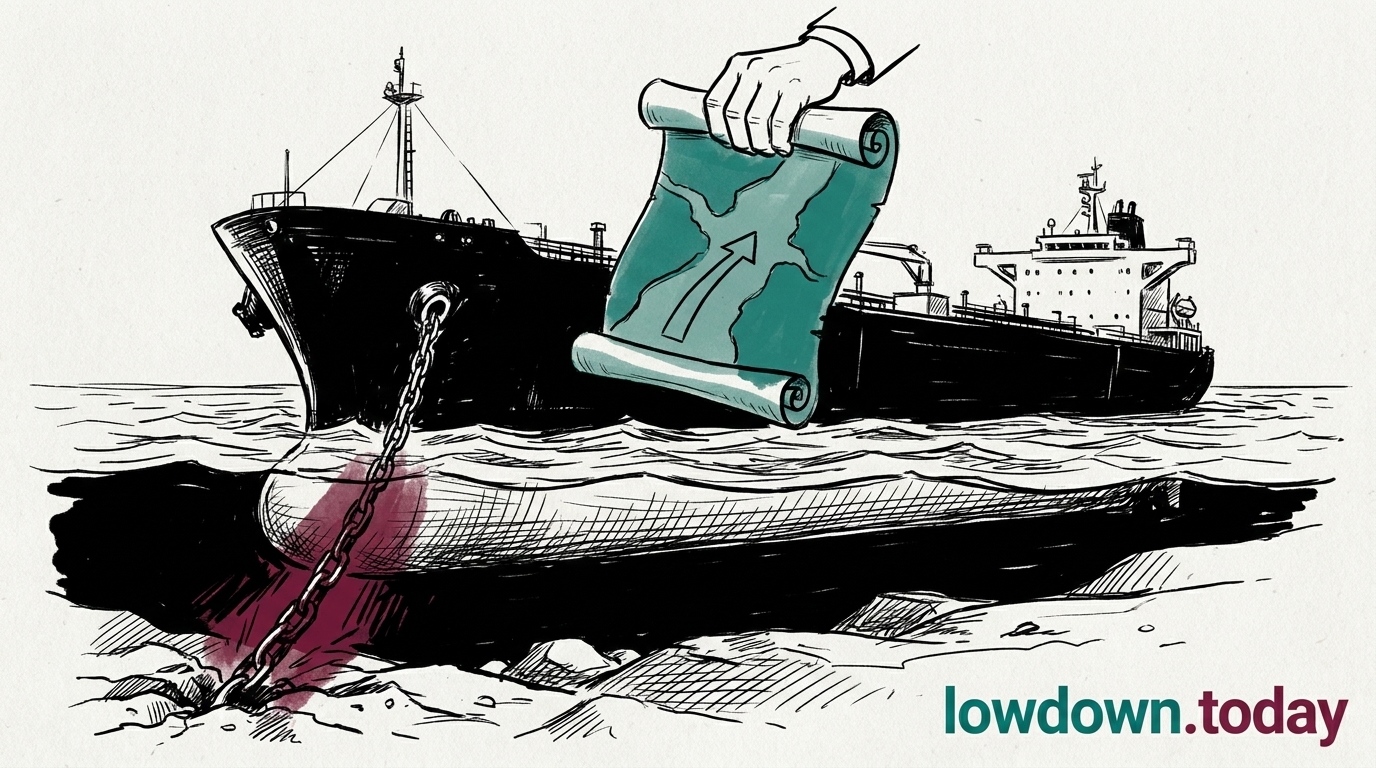
Saudi Arabia published an intelligence assessment on Thursday 6 August naming energy facilities, ports and airports as the next targets of attacks it expects "in the very near future" 1. Saudi officials said the assessment draws on Saudi, American and regional services, and points at Iraqi militia members working with the Houthis, Yemen's Iran-aligned armed movement, under the guidance of the IRGC (Islamic Revolutionary Guard Corps), Iran's ideological military force 2. Riyadh's list names civilian and economic infrastructure, not air defence sites or bases.

Governments normally keep an assessment of that kind inside the building. Publishing it does three jobs at once. It warns the operators who can actually move aircraft, reroute vessels and thicken perimeter security. It signals to Tehran that Saudi intelligence claims to have mapped the coordination structure Riyadh has just described in public. And it commits The Kingdom, because a warning issued to its own population converts a private judgement into a public promise to respond.

Weigh the claim carefully all the same. Iran-aligned Iraqi factions denied launching the drones Riyadh attributed to Iraqi territory on Monday 27 July and called the Saudi account a fabrication, and no attribution evidence for those launches has been published since. This warning rests on unnamed intelligence, names no specific group, and points at no recovered debris. Read it as Riyadh's assessment rather than as established fact, while noting what followed the last time The Kingdom named Iraq as a launch point: Saudi jets were over Iraqi territory two days later, citing Article 51 of the UN Charter .


Deep Analysis

In plain English

Saudi Arabia says it has intelligence that a network of armed groups is about to attack its energy plants, ports and airports. The groups named are Iraqi Shia militias (armed factions in Iraq aligned with Iran) and the Houthis (Yemen's Iran-backed movement), and Riyadh says Iran's Islamic Revolutionary Guard Corps, the country's most powerful military and security force, is coordinating them. This is a warning, not a confirmed attack. Saudi Arabia made a similar accusation after a drone attack in July, which the groups it named have denied.

Deep Analysis
Root Causes

Iraqi Shia militias operate with only partial answerability to Baghdad's central government, which is why Riyadh's warning names the militias and their Iranian coordination directly rather than routing a diplomatic protest through the Iraqi state.

The IRGC's foreign operations run through its own chain of command rather than Iran's foreign ministry, so a diplomatic denial from Tehran does not constrain what the Guard's regional network does next.

Escalation

Direction: rising rhetoric with no confirmed strike yet. Riyadh has paired a prior attribution with a military response before , so this warning sits one step behind that pattern rather than ahead of it.

What could happen next?
  • Risk

    War-risk insurers may reprice cover for Saudi energy, port and airport infrastructure on the strength of the warning alone, before any strike occurs.

  • Precedent

    If Riyadh strikes inside Iraq again on the strength of this warning, it repeats the attribution-then-strike sequence set on 27 and 29 July.

First Reported In

Update #167 · Riyadh names its next targets; Najran is hit

The National· 7 Aug 2026
Read original
Causes and effects
This Event
Riyadh names energy, port and airport targets
A government that has told its own citizens which installations are at risk cannot absorb a hit on one of them quietly.
Different Perspectives
Gulf oil producer
Gulf oil producer
Secured OPEC's confirmed 188,000 b/d September increment with the next meeting set for 6 September, but the Secretariat's own 2 August release says nothing about the fourth quarter. Output guidance beyond September remains undisclosed even as delegate sourcing keeps filling that gap.
Money manager positioned in WTI
Added 21,402 lots to a 108,307 net long in NYMEX WTI in the week to 28 July, against just 1,485 added to Brent's 15,740, a roughly fourteen-to-one split. Conviction sits in the American benchmark even as the European diesel story sets the record.
Indian refiner buying Urals
Bought Russian crude at a discount that narrowed to $1-2 a barrel in the week to 29 July from over $10, as Hormuz risk pushed it toward Urals. If that risk eases with the strike now called off, the discount it is currently enjoying could re-widen just as fast.
Russian diesel exporter
Novak tied any lifting of the diesel export ban, due to lapse 31 July, to an unspecified market recovery with no date, and pushed the gasoline ban to end-2026. An open-ended constraint suits an exporter benefiting from the record European crack it feeds.
War-risk underwriter
Withdrew war-risk cover for Saudi-linked hulls on 24 July and has not reinstated it, holding Bab el-Mandeb tanker transits near 7.5 a day. A cancelled strike does not by itself trigger the committee review needed to re-accept the class.
Northwest European refiner
Sources only 17% of diesel imports from Saudi Red Sea ports against the Mediterranean's 24%, so the ARA crack at $85.86 trails the Med print by $5.81. Lower Red Sea exposure is cushioning it against the rerouting cost, not eliminating it.



