Skip to content
You can now search across every topic, entity and event.What's new
European Oil Markets
22JUN

Qatar mediates in Beijing, files at UN

3 min read
09:55UTC

Qatar's foreign ministry said on 8 September it was working with China to restart negotiations, and in the same briefing rejected Iran's account of what its missiles hit.

EconomicAssessed
Key takeaway

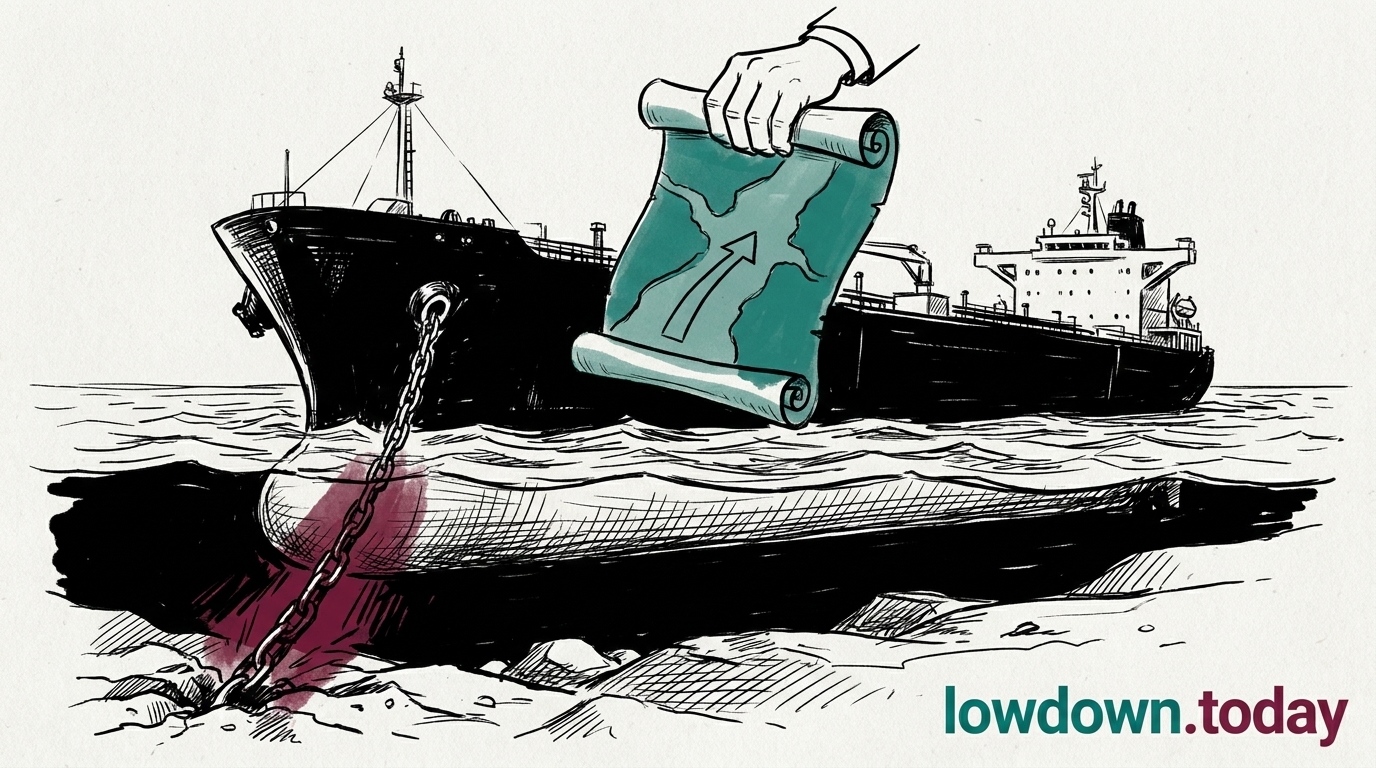
Doha is banking a documentary record against the failure of the talks it is convening.

Qatar's Ministry of Foreign Affairs said at its weekly briefing on 8 September, a Tuesday, that Doha was coordinating with regional and international partners, including China during the prime minister and foreign minister's visit to Beijing, to restart negotiations, and called the immediate and unconditional reopening of the Strait of Hormuz a priority 1.

The same briefing rejected Iran's account of its own targeting. Doha said hundreds of Qatari letters to the United Nations document direct Iranian hits on Qatari civilian and economic facilities, against Tehran's claim that it struck only US military sites 2. Qatar joined the United Arab Emirates and Saudi Arabia in condemning Iranian attacks on their neighbours on 2 September . This is the first time it has answered the targeting claim with a documentary record rather than a condemnation.

A letter to the Security Council becomes a United Nations document with a symbol and a date, and Doha has filed hundreds of them. Mediation can collapse in an afternoon; the filings outlive it. A claims Commission or a tribunal reads it years later, when the ministry that filed it may want compensation rather than a ceasefire. A filed letter cannot be withdrawn, which means Doha is banking evidence against the very outcome it says it is working to prevent.

Qatar's position explains the caution. It hosts US Central Command's forward headquarters at Al Udeid Air Base and shares the world's largest gas field with Iran, so it can afford a rupture with neither Washington nor Tehran. Choosing Beijing as the venue fits the same logic: China buys most of Iran's exported crude and is the one major power Tehran cannot simply ignore. That is why the paperwork is doing the work the rhetoric cannot.


Deep Analysis

In plain English

Qatar is a small, gas-rich Gulf state that hosts the largest US military base in the Middle East while also maintaining a channel to Iran, giving it an unusual role as a go-between in this war. This week Qatar's foreign ministry said it was working with China, during a visit to Beijing, to help restart stalled negotiations to end the conflict. At the same time, it pushed back publicly on Iran's own account of the war, saying hundreds of Qatari letters filed at the United Nations document direct Iranian strikes on Qatari civilian and economic sites, contradicting Iran's account that its strikes hit only US military facilities. Doing both at once, mediating and formally objecting, shows how difficult Qatar's position is: it needs Iran to trust it enough to negotiate, while also needing the world to know it has itself been a target.

What could happen next?
  • Meaning

    Qatar is running mediation and formal grievance in parallel rather than choosing between them, a sign that neither track alone has been enough to move talks forward.

First Reported In

Update #177 · 23 to 3: Iran goes to the Security Council

Qatar Ministry of Foreign Affairs· 11 Sept 2026
Read original
Different Perspectives
Gulf oil producer
Gulf oil producer
Secured OPEC's confirmed 188,000 b/d September increment with the next meeting set for 6 September, but the Secretariat's own 2 August release says nothing about the fourth quarter. Output guidance beyond September remains undisclosed even as delegate sourcing keeps filling that gap.
Money manager positioned in WTI
Added 21,402 lots to a 108,307 net long in NYMEX WTI in the week to 28 July, against just 1,485 added to Brent's 15,740, a roughly fourteen-to-one split. Conviction sits in the American benchmark even as the European diesel story sets the record.
Indian refiner buying Urals
Bought Russian crude at a discount that narrowed to $1-2 a barrel in the week to 29 July from over $10, as Hormuz risk pushed it toward Urals. If that risk eases with the strike now called off, the discount it is currently enjoying could re-widen just as fast.
Russian diesel exporter
Novak tied any lifting of the diesel export ban, due to lapse 31 July, to an unspecified market recovery with no date, and pushed the gasoline ban to end-2026. An open-ended constraint suits an exporter benefiting from the record European crack it feeds.
War-risk underwriter
Withdrew war-risk cover for Saudi-linked hulls on 24 July and has not reinstated it, holding Bab el-Mandeb tanker transits near 7.5 a day. A cancelled strike does not by itself trigger the committee review needed to re-accept the class.
Northwest European refiner
Sources only 17% of diesel imports from Saudi Red Sea ports against the Mediterranean's 24%, so the ARA crack at $85.86 trails the Med print by $5.81. Lower Red Sea exposure is cushioning it against the rerouting cost, not eliminating it.



