Skip to content
You can now search across every topic, entity and event.What's new
European Oil Markets
18MAY

Iranian missile hits Haifa oil refinery

3 min read
17:30UTC

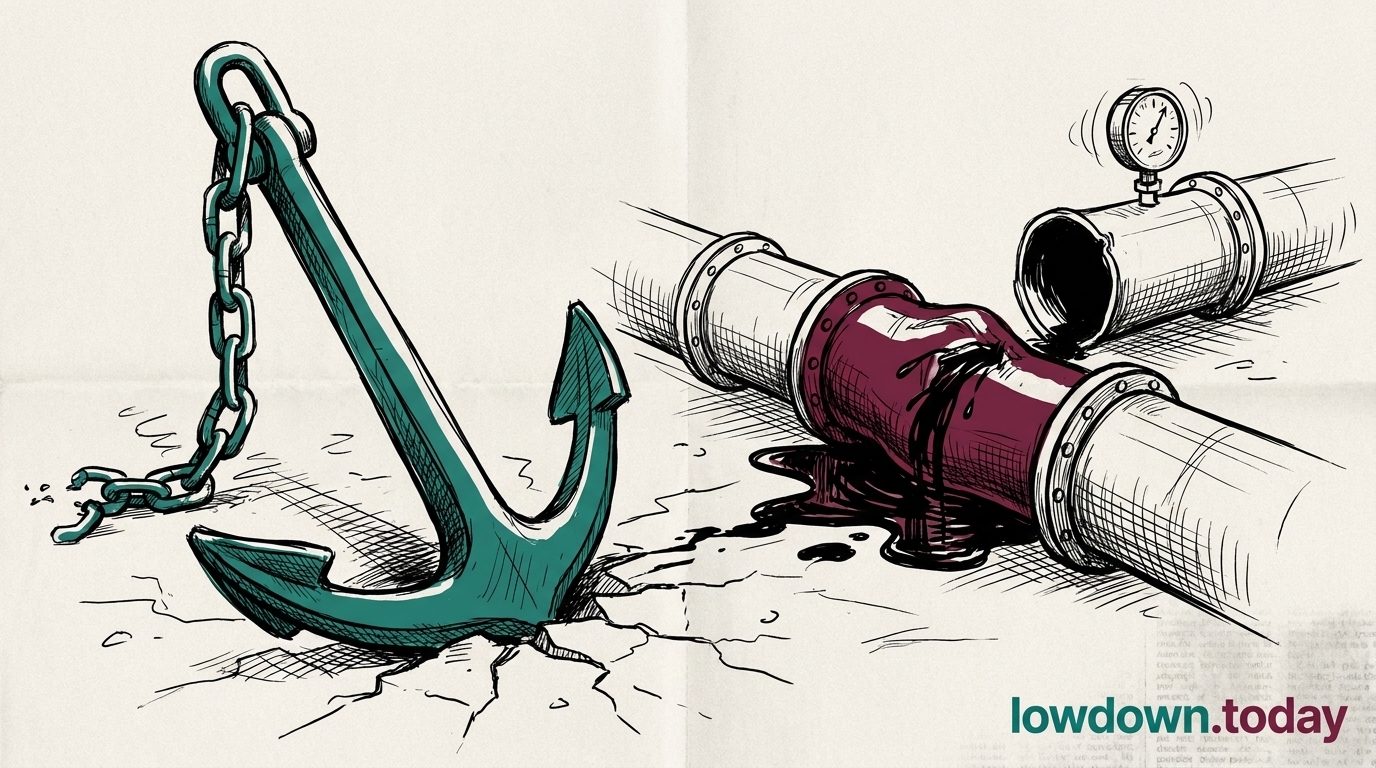
The Bazan oil refinery in Haifa — responsible for half of Israel's domestic fuel — took a direct hit from an Iranian missile on 19 March. The IDF said damage was not significant.

EconomicDeveloping
Key takeaway

Iran's successful reach to Israel's primary fuel refinery reveals a capability evolution since the intercepted April 2024 salvo.

An Iranian missile struck the Bazan oil refinery in Haifa on 19 March, briefly disrupting power to the facility that produces half of Israel's domestic fuel 1. The IDF stated the damage was not significant. The strike was one component of the IRGC's simultaneous attacks on Energy infrastructure across four countriesSaudi Arabia, Kuwait, Qatar, and Israel — the broadest coordinated assault on hydrocarbon facilities since the war began on 28 February.

The IDF's characterisation of the damage as minor warrants scrutiny against the target's value. Bazan is Israel's only major refinery complex, supplying jet fuel, diesel, and petrol to the domestic market. A sustained disruption would force Israel to import refined products rather than crude — a logistically harder proposition when regional shipping is constrained by the effective closure of the strait of Hormuz, where daily transits are in single digits against a historical average of 138 . That the missile reached Haifa at all extends the pattern established when eleven Iranian cluster missiles penetrated Israeli air defences over central Israeli towns on 14 March , and the Khorramshahr-4 and Qadr warheads that struck Ramat Gan killing a couple in their 70s three days ago .

The strike fits Iran's declared retaliatory framework precisely. After the US struck military positions on Kharg Island on 14 March , Iran's state media warned that if its oil infrastructure were hit, it would strike Saudi, Emirati, Kuwaiti, and Israeli energy facilities in return . Israel's strike on the South Pars gas field on 16 March — the first direct hit on Iranian energy production — activated that threat. The Haifa hit is the Israeli component of what is now a region-wide energy-for-energy exchange.

Israel's offensive posture — more than 7,000 targets struck across Iran — has not yet eliminated Iran's capacity to hit Israeli industrial infrastructure. Israel's energy base remains concentrated in a handful of coastal facilities within Iranian missile range. Each successful penetration of air defences, even one the IDF classifies as minor, demonstrates that cost-imposition runs in both directions. The gap between the IDF's reassurance and the target's strategic weight — half the country's fuel supply in a single compound — is one the Israeli public will judge for itself.


Deep Analysis

In plain English

Israel imports almost all of its crude oil and processes it domestically. The Haifa Bazan refinery produces roughly half of all the petrol, diesel, and jet fuel used inside Israel. On 19 March, an Iranian missile got through Israeli air defences and struck it. The IDF said damage was minimal. But the strategic point is the penetration itself: in April 2024, Iran fired a large salvo at Israel and nearly everything was shot down by a multi-nation coalition. This time, a missile reached a major industrial target without being intercepted. Whether the damage is significant or not, Iran has demonstrated it can hit Israeli civilian energy infrastructure when it chooses to.

Deep Analysis
Synthesis

The muted physical damage at Haifa, set against the extensive destruction at Ras Laffan and Yanbu, may reflect deliberate Iranian calibration: sufficient to demonstrate reach and impose vulnerability psychology on the Israeli public, but not enough to trigger an Israeli domestic demand for immediate maximum-force retaliation. Iran appears to be managing escalation tempo — demonstrating capability selectively across targets — rather than maximising destruction uniformly.

Root Causes

Iran's targeting of Bazan mirrors the Israeli strike on South Pars: both are domestic energy production assets whose disruption imposes civilian economic cost. The symmetry is deliberate — Tehran is establishing an infrastructure reciprocity doctrine intended to raise the political cost of future Israeli energy targeting.

Escalation

The IDF's 'damage not significant' assessment warrants analytical scepticism: Israeli authorities carry institutional incentives to minimise reported damage for domestic morale and to avoid signalling vulnerability to further strikes. The strike's strategic significance lies in the capability demonstration, not exclusively the physical output.

What could happen next?
  • Meaning

    A successful Iranian missile strike on Israeli mainland industrial infrastructure confirms a capability gap that the April 2024 operation did not expose.

    Immediate · Assessed
  • Risk

    If domestic fuel supply is disrupted in a future strike, Israeli public pressure for ceasefire or escalation could intensify rapidly depending on political framing.

    Short term · Suggested
  • Precedent

    Successful penetration of Israeli air defence over a major industrial target establishes a vulnerability threshold that adversaries beyond Iran will study and attempt to replicate.

    Medium term · Assessed
First Reported In

Update #42 · Iran hits four countries; Brent at $119

Alma Research Center· 20 Mar 2026
Read original
Causes and effects
This Event
Iranian missile hits Haifa oil refinery
Iran demonstrated it can strike Israel's most critical energy infrastructure despite weeks of Israeli air campaign against Iranian military assets. The concentration of half of Israel's fuel production in a single coastal facility exposes a structural vulnerability that air defences have not fully closed.
Different Perspectives
Indian refiners
Indian refiners
Indian refiners kept lifting discounted Urals as the India/Baltic price split widened past $9-10 a barrel, a gap that only grows as GL X1's Iranian wind-down cuts an alternative discounted grade off the market by 17 July. Cheaper Russian feedstock is being locked in while it lasts.
Chinese refiners
Chinese refiners
Chinese refiners gain leverage as the Urals-Brent discount widens, since Beijing's state buyers already source discounted Russian barrels near the fiscal floor unaffected by Western insurance costs. A wider discount, if it holds past 23 July, lets them lock in cheaper term contracts regardless of the cap's outcome.
US money managers (CFTC-tracked)
Managed money trimmed WTI net length into the rally, positioning that reflects doubt the Hormuz premium survives without freight or war-risk confirmation. The Brent-WTI spread widening almost entirely on the Brent leg supports that scepticism about a broad-based repricing.
OPEC+ (Saudi-led subgroup)
Saudi Arabia is defending market share through a fourth straight 188kbd August hike even as OPEC's own July MOMR cut 2026 demand growth for the fourth consecutive month. At a $108-111 fiscal breakeven, every added barrel costs Riyadh revenue it cannot recoup, so the hike reads as a positioning signal, not a demand bet.
Greek shipping registries
Greece, backed by Cyprus and Malta, is pushing a three-month cap-freeze compromise against the Commission's freeze to January 2027 ahead of the 23 July vote. Athens' and Valletta's combined tanker registrations mean a shorter review gives their insurers more frequent chances to reprice risk on Russian cargoes.
Russia (Deputy PM Alexander Novak)
Novak extended the diesel export restriction to producers on 8 July, the first producer-binding curb of the war, protecting the domestic pump price ahead of any refinery repair timeline. Urals still trades below Russia's $59 budget floor even as Brent gained, so the ban trades export revenue for fiscal stability at home.