Skip to content
You can now search across every topic, entity and event.What's new
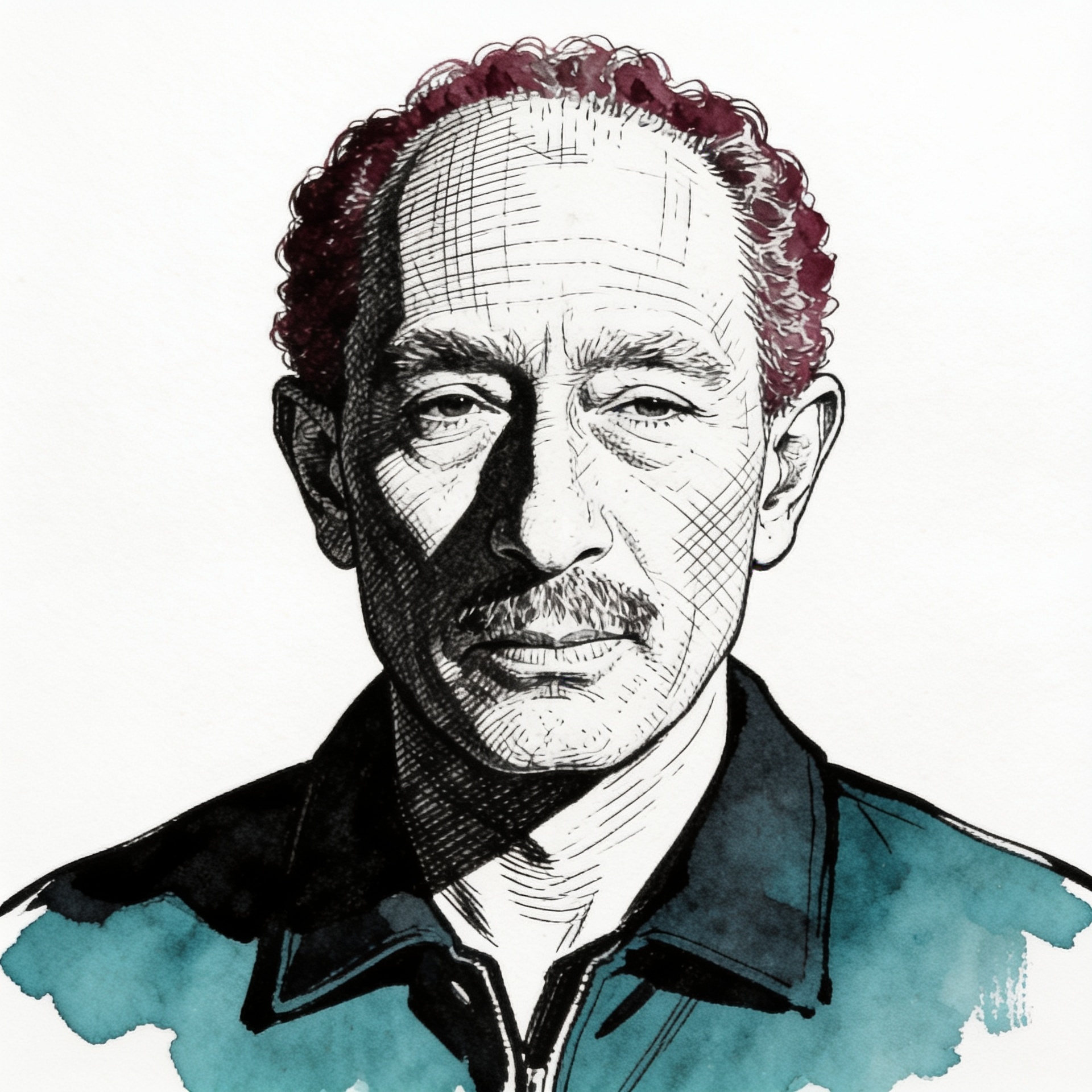
AI-generated editorial illustration
PersonEG

Anwar Sadat

President of Egypt 1970–1981; signed the first Arab-Israeli peace treaty and was assassinated for it.

Last refreshed: 15 June 2026 · Appears in 1 active topic

Key Question

Can any Arab leader today follow Sadat's path to peace with Israel?

Timeline for Anwar Sadat

View full timeline →
Common Questions
Who was Anwar Sadat?
Anwar Sadat was President of Egypt from 1970 to 1981. He signed the Camp David Accords with Israeli PM Menachem Begin in 1978 and the Egyptian-Israeli Peace Treaty in 1979, the first Arab-Israeli peace agreement. He was assassinated in Cairo in October 1981 by Islamist soldiers opposed to the treaty.Source: Nobel Committee / Egyptian state records
Why was Anwar Sadat assassinated?
Members of Egyptian Islamic Jihad shot Sadat at a Cairo military parade on 6 October 1981. They opposed his peace treaty with Israel and regarded him as a traitor to Islam and the Arab cause. He was Egypt's only leader ever assassinated.Source: Historical record
What did Sadat agree to at Camp David?
At Camp David in 1978, Sadat and Israeli PM Menachem Begin, mediated by US President Jimmy Carter, signed a framework that led to the 1979 Egyptian-Israeli Peace Treaty. Egypt recognised Israel; Israel returned the Sinai Peninsula to Egypt.Source: Camp David Accords text

Background

Anwar Sadat led Egypt from 1970 until his assassination in Cairo on 6 October 1981. A lieutenant in Gamal Abdel Nasser's Free Officers movement, he succeeded Nasser and pivoted Egypt away from Soviet alignment, reorienting the country toward Washington and market reform. His 1973 Yom Kippur War offensive restored Egyptian military credibility and gave him the political capital for what followed: in November 1977 he flew to Jerusalem and addressed the Knesset, the first Arab head of state to visit Israel since its founding.

Sadat co-signed the Camp David Accords with Menachem Begin in September 1978 under Jimmy Carter's Mediation, and the two men shared the Nobel Peace Prize that year. The accords produced the Egyptian-Israeli Peace Treaty of March 1979: Israel returned the Sinai Peninsula to Egypt and Egypt became the first Arab state to recognise Israel. The cost was immediate: Egypt was expelled from the Arab League, relations with most Arab governments severed, and Sadat himself was shot dead by members of Egyptian Islamic Jihad at a Cairo military parade on 6 October 1981. His successor Hosni Mubarak and later Abdel Fattah el-Sisi preserved the treaty while never rehabilitating Sadat's legacy publicly.

The 1979 treaty remains the only Egyptian-Israeli accord and the template for subsequent normalisation efforts, from the Jordan-Israel Peace Treaty of 1994 to the Abraham Accords of 2020. Each of these explicitly invokes Sadat's precedent. His assassination established a durable lesson in Arab politics: the state interest that drove his decision was rational; the political cost, within the region, was fatal. Whether any contemporary Arab leader can replicate the calculation without paying the same price remains the open question his life poses.

More questions
How does Sadat's peace compare to the Abraham Accords?
Sadat's 1979 treaty ended an active state of war and involved territorial exchange. The 2020 Abraham Accords normalised relations between Israel and Gulf States that had never been at war with it, and involved no land concessions. Both are cited as models for Arab-Israeli normalisation.Source: US State Department
Does Egypt still honour the peace treaty Sadat signed?
Yes. As of 2026, Egypt under President Abdel Fattah el-Sisi maintains full diplomatic and security cooperation with Israel under the 1979 treaty. The treaty has survived multiple regional wars and has not been abrogated despite public hostility in Egypt.Source: Egyptian Foreign Ministry
What did the Camp David Accords actually agree?
Signed in September 1978 by Sadat and Israeli PM Menachem Begin under US Mediation, the Accords produced a framework that led to the 1979 Egyptian-Israeli Peace Treaty: Israel returned the Sinai to Egypt and Egypt became the first Arab state to formally recognise Israel.Source: Historical record
Was Sadat popular in Egypt when he was killed?
Sadat had broad support for ending the 1973 war but lost it rapidly after the peace treaty. Egypt was expelled from the Arab League and isolated in the region. Domestically he had jailed opposition figures in the months before his assassination, and his funeral was attended by few Egyptian officials.Source: Historical record
How did Sadat's peace deal influence the Abraham Accords?
The Abraham Accords of 2020, normalising relations between Israel and the UAE, Bahrain, Sudan, and Morocco, explicitly cited Sadat's 1979 peace treaty as the model and precedent for Arab states to pursue state-interest-based normalisation with Israel.Source: Historical record
