Skip to content
Briefings are running a touch slower this week while we rebuild the foundations.See roadmap
European Energy Markets
8MAY

EU LNG terminals drew 163kt in three days

2 min read
11:12UTC

Terminal stocks funded the marginal molecule into pipeline storage as Atlantic cargoes kept missing the basin.

EconomicDeveloping
Key takeaway

Terminal stocks are now the marginal supplier; the buffer is finite and shrinking.

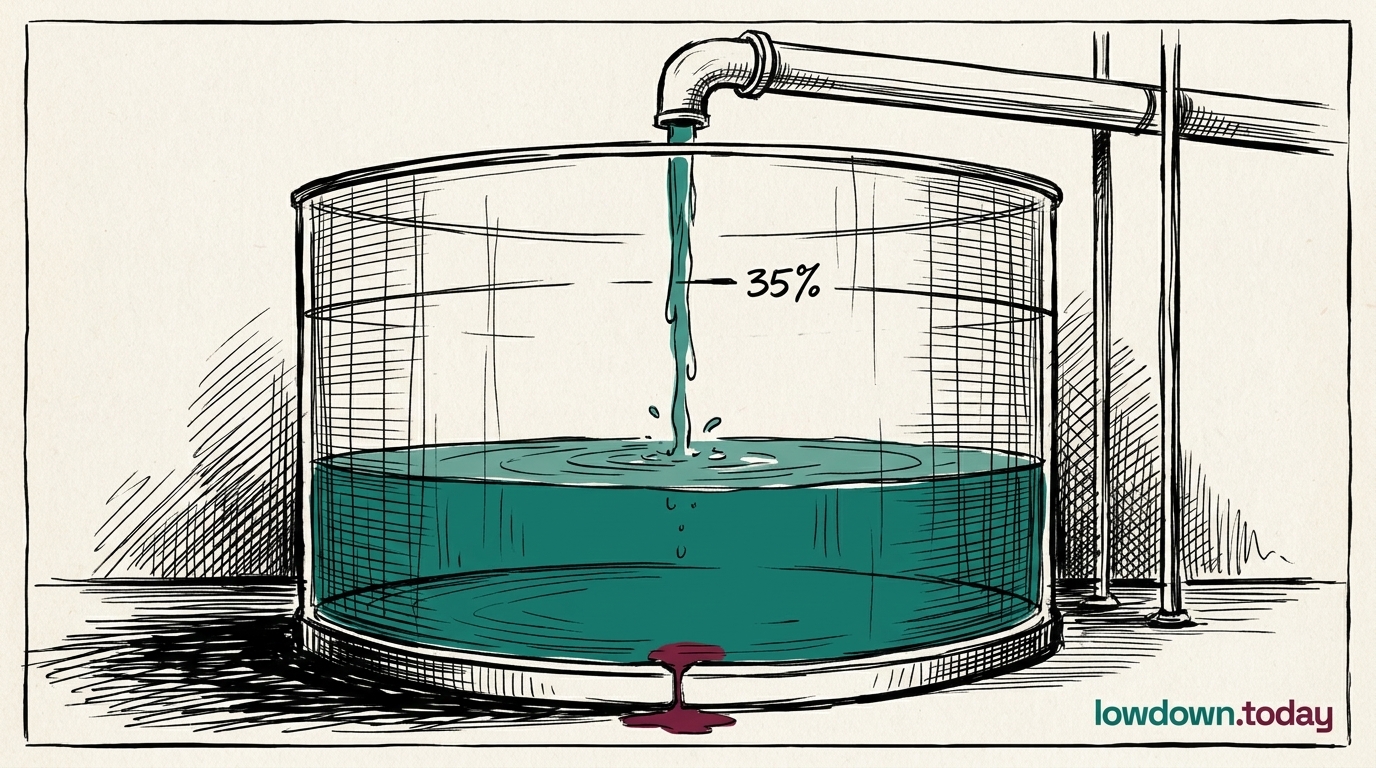
Gas Infrastructure Europe's ALSI (Aggregated LNG Storage Inventory, the terminal-stocks companion to AGSI+) showed aggregate EU terminal inventory falling from 5,929 thousand tonnes on 10 April to 5,766 thousand tonnes on 13 April, a draw of 163 kt over three days 1. Daily send-out averaged 4,348 GWh, with no evident new cargo arrivals landing in the window.

Around a dozen Atlantic LNG cargoes had already diverted to Asia since early March , compressing the JKM-TTF spread to near parity and removing the arbitrage that would ordinarily pull reload cargoes back into European terminals. QatarEnergy's Ras Laffan force majeure takes out the other direction of flexible supply. With Atlantic inflow thin and Qatari inflow blocked, terminal buffer is the only variable left, and it is being drawn at roughly 50 kt per day to keep pipeline send-out steady.

That dynamic has a short runway. ALSI carries finite stock, and drawing it during peak reload season means Europe enters May with a thinner LNG cushion against any late-April supply shock. With the Russian LNG cutoff arriving on 25 April and no replacement supply publicly named, the buffer question becomes a May question rather than a June one.


Deep Analysis

In plain English

LNG, liquefied natural gas, arrives at European ports as a super-cooled liquid in specialised tankers. It is stored at coastal terminals before being sent inland through pipelines as regular gas. Think of the terminals as the first link in the chain between ships arriving from Qatar, the US, or Nigeria, and the heating systems of European homes. Between 10 and 13 April, EU terminals collectively drew down their stocks by 163,000 tonnes in three days, and no new tankers appear to have docked to refill them. That is because LNG ships have been diverting from Europe to Asia, where buyers are paying slightly more. European terminals were funding their pipeline obligations by drawing on reserves, not new deliveries.

What could happen next?
  • Risk

    The Russian LNG ban on 25 April removes a portion of the terminal replenishment flow while injection season demand for send-out rises, accelerating the terminal drawdown rate beyond the current 54 kt/day.

First Reported In

Update #2 · TTF EUR 42 as Russian LNG ban enters range

Gas Infrastructure Europe· 15 Apr 2026
Read original
Causes and effects
Different Perspectives
Hungarian and Slovak gas buyers and regulators
Hungary cleared EUR 123.23/MWh on 12 May, EUR 54 above Spain's same-day clearing and the largest single-market premium of the briefing series, as ACER named it among seven NRAs in TurkStream derogation opinions with the 5 August EC ruling pending. A denial of derogation removes the only available pipeline substitute for Russian LNG banned since 25 April.
Norwegian upstream producers (Equinor, ORLEN Upstream Norway)
Equinor started the Eirin field on 5 May (27.6 mmboe via Gassled) and signed NOK 17bn of Q1 drilling contracts on USD 9.77bn adjusted operating income. These are long-horizon defences against the Sodir-confirmed Norwegian production decline, not molecules deliverable inside the 2026 injection window.
European Commission (DG Energy)
The Commission cut the storage target from 90% to 80% in April without enforcement teeth; a second formal cut requires Council unanimity not currently available, leaving silent acceptance of a sub-80% landing as the operative policy posture. The AccelerateEU package offered no storage injection mechanism, confirming consumer-relief tools as the preferred instrument.
Major LNG buyers (Japanese and Korean utilities)
With JKM-TTF at USD 2.30/MMBtu, Asian buyers retain the routing premium on flexible Atlantic cargoes by a margin of USD 0.80 to 1.10/MMBtu above the cargo-diversion breakeven. The spring demand softening that compressed the spread from USD 3 or more has not reversed the routing direction, and Asian buyers face no material competitive threat from European procurement at prevailing TTF.
Industrial gas consumers (BASF, Yara, Cefic members)
BASF flagged Verbund site production freezes and Yara curtailed 25% of European output at EUR 47 TTF, confirming that the industrial demand destruction threshold has migrated EUR 23 below the 2022 ceiling. Without a gas price subsidy instrument or trade protection on fertiliser imports, further curtailment is the rational response to any TTF move above EUR 50.
National energy regulators (BNetzA, CRE, ACER)
ACER's 6 May TurkStream derogation opinions put seven NRAs on notice that the 5 August EC ruling window is live; the concurrent Hungary EUR 123/MWh single-market premium compounds the political pressure on the Commission to either grant or formally deny the derogations before the code application date.
